

7 Facts About Charcot-Marie-Tooth Disease
Quick answer: Charcot-Marie-Tooth (CMT) disease affects approximately 1 in 2,500 people, making it the most common inherited neurological disorder. Caused by genetic mutations affecting peripheral nerves, CMT is slowly progressive and currently lacks a cure. Treatment focuses on symptom management through physical therapy, orthotics, and adaptive equipment to maintain mobility and independence.
Charcot-Marie-Tooth disease is a genetically inherited condition affecting peripheral nerves and characterized by progressive muscle weakness, particularly in the feet and lower legs. Understanding CMT’s genetics, progression, and management strategies enables individuals and families to navigate treatment options effectively and maintain quality of life throughout the disease course.
1. What Causes Charcot-Marie-Tooth Disease?
Charcot-Marie-Tooth disease results from mutations in genes controlling peripheral nerve structure and function. These genetic mutations disrupt nerve cell biology, leading to progressive nerve damage and muscle weakness.
Key Genetic Features:
- Genetic Mutations: Over 100 genetic variants associated with CMT have been identified.
- Inheritance Patterns: CMT follows autosomal dominant (50% transmission from affected parent), autosomal recessive, or X-linked inheritance patterns.
- CMT1A Subtype: CMT1A, caused by duplication of the PMP22 gene, accounts for approximately 70% of CMT1 cases, making it the most common CMT variant.
- Variable Penetrance: The same mutation produces different severity levels across family members, reflecting genetic and environmental modifying factors.
2. How Common is Charcot-Marie-Tooth Disease?
Charcot-Marie-Tooth affects approximately 1 in 2,500 people worldwide, making it the most prevalent inherited neurological disorder. Despite this prevalence, many cases remain undiagnosed or initially misidentified as other conditions. CMT affects people of all ethnic backgrounds and genders equally, though some variants show population-specific distributions.
3. What Are the Symptoms of CMT?
CMT symptoms vary in onset, severity, and progression, even within families. However, characteristic features typically emerge, beginning in childhood or early adulthood:
- Distal Muscle Weakness: Begins in feet and lower legs, progressively involving hands and upper limbs.
- Foot Deformities: High arches (pes cavus) and hammer toes develop due to muscle imbalance.
- Foot Drop: Difficulty lifting the front of the foot, causing tripping and gait abnormalities.
- Sensory Changes: Reduced sensation progressing from distal to proximal areas.
- Loss of Coordination: Balance difficulties and reduced fine motor control.
- Progressive Fatigue: Energy depletion with activity.
CMT is a slowly progressive condition. Some individuals experience minimal functional decline over decades, while others progress to significant disability requiring mobility aids.
4. What Treatment Options Are Available?
While CMT currently lacks a cure, evidence-based interventions effectively manage symptoms and optimize function:
- Physical Therapy: Stretching, strengthening, and gait training prevent contractures and maximize functional capacity.
- Orthopedic Devices: Ankle-foot orthoses (AFOs), foot braces, and custom orthotics improve stability and reduce injury risk.
- Pain Management: Medications, acupuncture, and massage address neuropathic pain.
- Surgical Interventions: Foot and ankle surgery corrects deformities when they limit function.
- Lifestyle Optimization: Regular, appropriate exercise maintains strength and endurance.
- Genetic Counseling: Families benefit from counseling to understand inheritance patterns and reproductive implications.
Emerging gene therapies and other disease-modifying treatments are under active investigation.
5. How Does CMT Impact Families?
CMT’s hereditary nature creates multifaceted impacts across family systems:
- Emotional and Psychological Burden: Families navigate diagnosis, symptom progression, and uncertain trajectories.
- Caregiving Demands: As mobility declines, family members provide increasing physical and emotional support.
- Genetic Implications: Family members face testing decisions and inheritance risk awareness.
- Financial Stress: Treatments, therapies, and adaptive equipment create significant financial burden.
- Relationship Dynamics: Progressive disability affects spousal relationships, parenting roles, and sibling relationships.
- Medical Complexity: Coordinating specialist care and managing multiple symptoms demands substantial time and resources.
Support groups and genetic counseling provide essential resources for families navigating CMT.
6. When Does CMT Require Wheelchair Use?
Mobility aid requirements vary based on CMT severity and disease progression. As weakness and balance difficulties advance, wheelchairs become necessary:
- Progressive Mobility Decline: Severe muscle weakness makes walking unsafe or impossible.
- Energy Conservation: Wheelchair use preserves energy for activities of daily living.
- Fall Prevention: Poor balance and proprioception create fall risk that wheelchairs mitigate.
- Disease Stage Variability: Some individuals require wheelchairs in their 30s-40s; others remain ambulatory into later decades.
- Terrain Considerations: Standard wheelchairs restrict outdoor exploration. All-terrain wheelchairs enable trail access and nature engagement.
7. Why Outdoor Activity Matters for Individuals with CMT
Outdoor engagement provides critical physical and psychological benefits for CMT management:
- Mental Health Support: Nature exposure reduces depression, anxiety, and stress associated with chronic illness.
- Gentle Movement: Outdoor activities facilitate light exercise supporting circulation and joint flexibility.
- Social Inclusion: Parks and natural spaces enable family gatherings and community participation.
- Vitamin D Synthesis: Sunlight supports bone health, immune function, and mood regulation.
- Psychological Resilience: Outdoor adventures foster confidence and a sense of accomplishment.
- Quality of Life: Access to nature directly correlates with improved overall wellbeing and life satisfaction.
All-terrain wheelchairs transform outdoor access from aspirational to practical, enabling full nature engagement regardless of weakness or balance impairment.
Frequently Asked Questions
Is CMT hereditary?
Yes. CMT is inherited through genetic mutations passed from parents to children. Inheritance patterns vary—autosomal dominant (50% risk per pregnancy), autosomal recessive (25% if both parents are carriers), or X-linked. Genetic counseling helps families understand transmission risks.
Can CMT be cured?
Currently, no cure exists for CMT. However, emerging gene therapies and pharmacological treatments show promise. Current management focuses on symptom control, preventing complications, and maintaining function through physical therapy and adaptive equipment.
Is CMT always progressive?
CMT typically progresses slowly. Some individuals experience minimal changes over decades, while others progress to significant disability. Progression rates vary by CMT subtype, genetic mutation, and individual factors. Regular follow-up with neurology specialists monitors disease course.
What is the life expectancy for someone with CMT?
CMT does not significantly affect life expectancy. Most individuals with CMT have normal lifespans. However, severe variants can affect breathing or swallowing muscles, requiring specialized care. Most CMT patients live full, productive lives with appropriate symptom management.
Can children with CMT participate in sports?
Yes, within limitations. Physical activity is beneficial. Children should work with physical therapists and neurologists to identify safe activities. Low-impact activities like swimming, cycling, and recreational walking are often suitable. High-impact contact sports may pose injury risk for children with poor balance or weakness.
How is CMT diagnosed?
Diagnosis involves clinical evaluation, electrodiagnostic testing (EMG/NCS), and genetic testing. Neuroimaging rules out other conditions. Genetic testing confirms the specific CMT mutation, enabling accurate counseling and prognosis. Early diagnosis facilitates early intervention and family planning decisions.
Conclusion
Charcot-Marie-Tooth disease presents ongoing management challenges, but evidence-based treatment combined with adaptive equipment enables individuals to live active, fulfilling lives. Understanding CMT genetics, recognizing variable disease progression, and accessing comprehensive care including physical therapy and appropriate mobility aids optimize long-term outcomes. All-terrain wheelchairs specifically remove barriers to outdoor participation, restoring access to the physical and psychological benefits of nature engagement.
Ryan Grassley · ryan@extrememotus.com

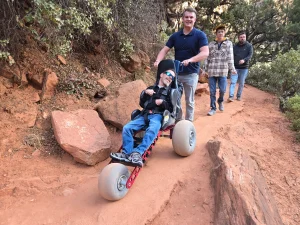

How it all started - Meet Sam & Ryan
Since 2019, Sam and Ryan have been demonstrating that nature is wheelchair accessible with the Extreme Motus All Terrain Wheelchair. From National Parks to Skateparks, their adventures prove that a manual off-road wheelchair can offer laughter and joy while navigating diverse terrains.
Join us as we continue to share these inspiring journeys.
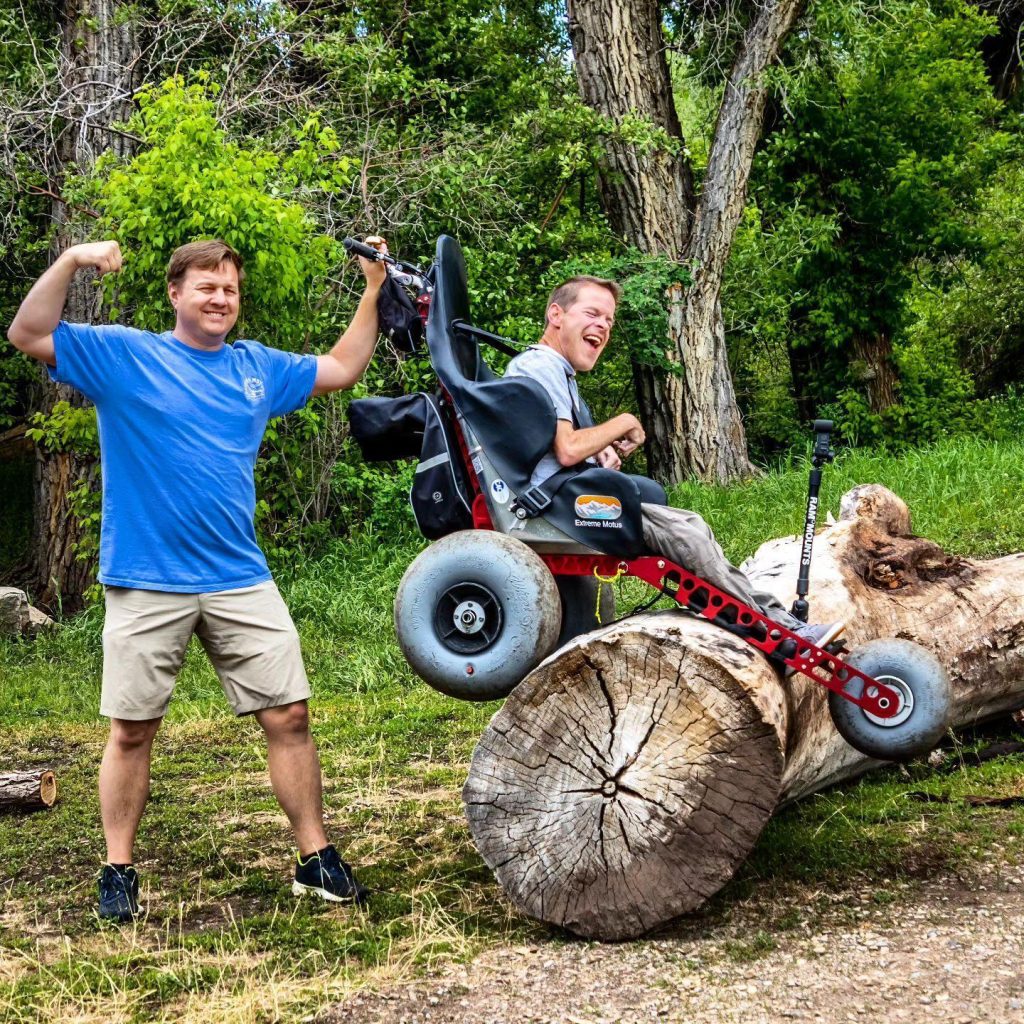
Discover Freedom with the Extreme Motus All Terrain Wheelchair
Light, comfortable, and compact, the Extreme Motus glides over sand, rocks, grass, gravel, and even floats in water.
It's more than a outdoor wheelchair; it's your ticket to freedom. Embrace the outdoors with confidence, knowing our off-road wheelchair is engineered for durability and ease of use.
Be the first to hear about new gear, upcoming adventures, and exclusive offers. As a welcome gift, you'll get a $100 coupon toward the Motus All-Terrain Wheelchair — delivered straight to your inbox.
By subscribing you agree to receive marketing communications from Extreme Motus, including product updates, promotions, and special offers. I understand I can unsubscribe at any time.