

Quick answer: The wheelchair’s history spans from King Philip II’s elaborate chair (1595) through Stephen Farfler’s self-propelled design (1655) to the folding wheelchair (1933), motorized chairs (1950s), and modern all-terrain innovations. The ADA (1990) transformed accessibility worldwide, and today smart wheelchairs with AI control continue the evolution.
The wheelchair has been a transformative invention for people with mobility challenges—but its history is far more interesting than you might think. From royal handcrafted chairs to today’s AI-powered devices, the story shows human ingenuity at its best.
The earliest wheeled mobility aids (1595–1655)
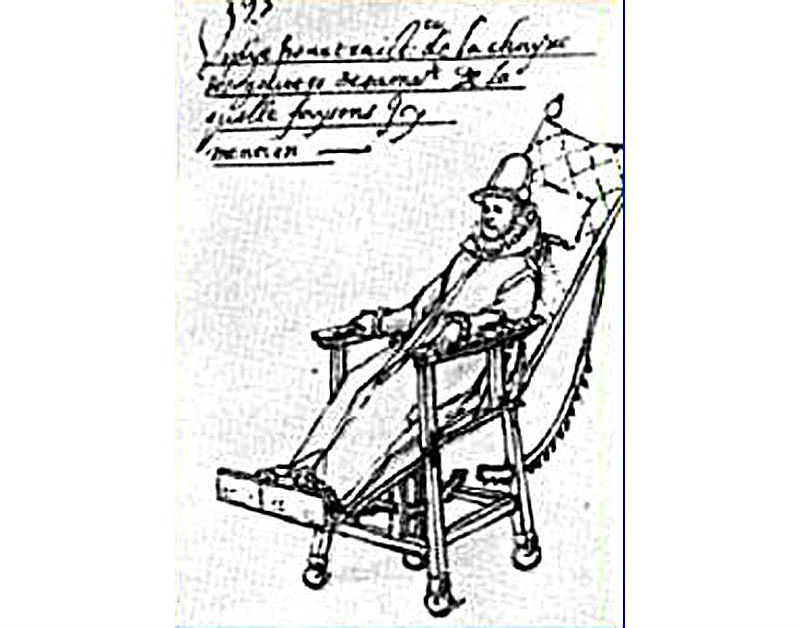
The first recorded wheeled chair belonged to King Philip II of Spain around 1595. Suffering from severe gout, Philip II commissioned an elaborate wheeled chair that let him move around his palace. But here’s what makes it interesting: it wasn’t self-propelled. Someone had to push him.
The real breakthrough came 60 years later in 1655, when Stephen Farfler, a paralyzed German watchmaker, invented the first self-propelled wheelchair. Farfler’s design used hand cranks connected to the wheels—basically turning his hands into pedals. He could finally move without help. This design principle would influence wheelchairs for the next 300 years.
The age of improvement (1783–1933)
By the 1700s, wheeled chairs were more common among wealthy Europeans. A notable design from around 1783 was the Bath Chair, popularized in the English spa town of Bath. It was lightweight, easy to maneuver, and pushed by attendants—a design that remained popular into the Victorian era.
Then came the folding wheelchair in 1933, invented by Herbert Everest and Harry Jennings. Everest was a paraplegic, and Jennings was an engineer. Their design was revolutionary: the chair could fold in half for storage and transport. Before this, wheelchairs were heavy, rigid furniture—basically indoor-only. Folding changed everything. Suddenly, people could take their chairs places.
The motorized revolution (1950s–1980s)
George Klein, working for the U.S. government in the 1950s, invented the first motorized wheelchair. Now someone didn’t need to push anymore. A joystick or button control gave riders independence—a massive quality-of-life shift. By the 1970s and 1980s, aluminum and later titanium frames made wheelchairs lighter, faster, and more durable than earlier steel designs.
Modern milestones: ADA, sports, and specialization (1990–present)
The Americans with Disabilities Act (1990) was a legal turning point. For the first time, public spaces had to be accessible—curb cuts, ramps, accessible bathrooms, elevators. This legal infrastructure transformed not just access but also wheelchair innovation. Manufacturers knew riders could actually use their products in more places.
The 1990s and 2000s saw specialization explode:
- Sports wheelchairs – Ultra-lightweight three-wheel designs for basketball, tennis, and racing.
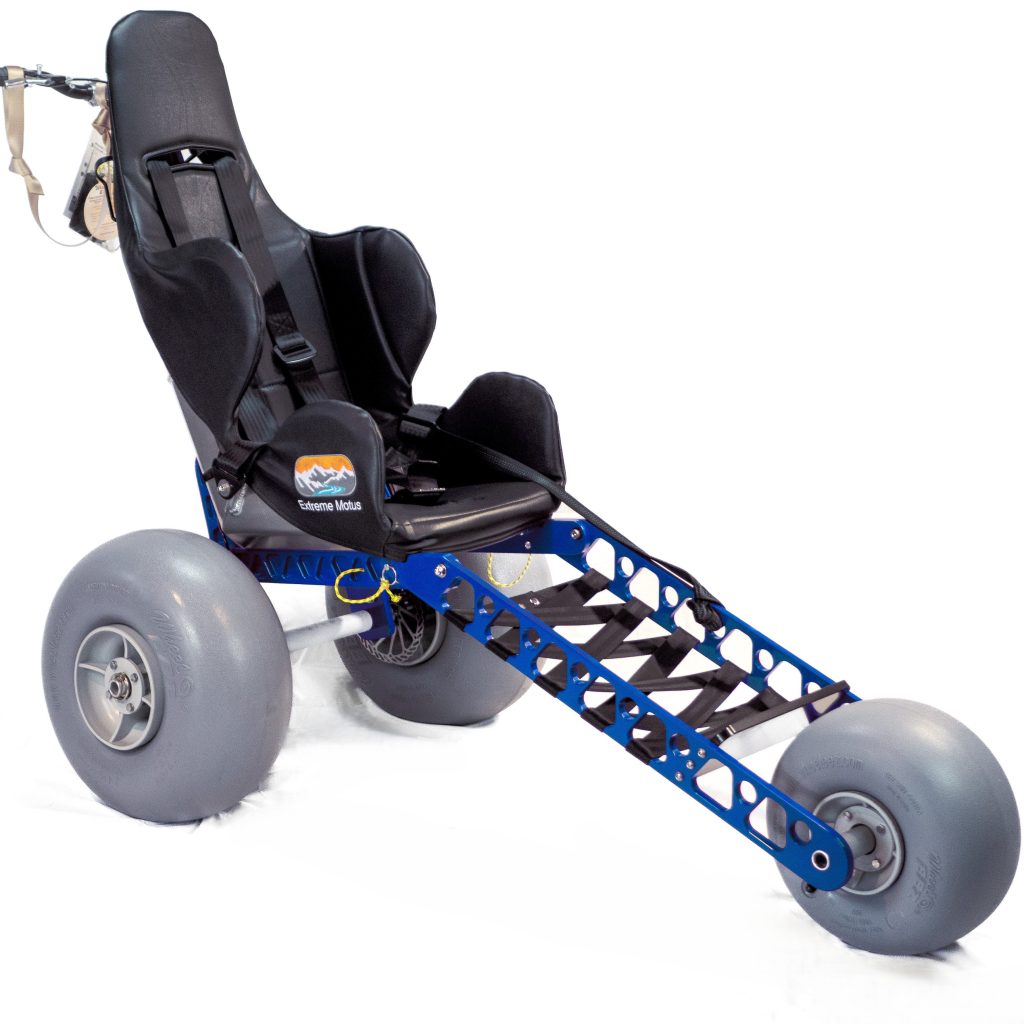
- All-terrain wheelchairs – Balloon tires, suspension, and durable frames for hiking, beaches, and off-road use.
- Smart wheelchairs – Voice control, obstacle avoidance, and in some labs, brainwave interfaces.
- Powered tracked chairs – Tank tread systems for deep snow, mud, and steep terrain.
The Extreme Motus (2015–present) is a modern example of this specialization—a lightweight manual chair with balloon tires specifically designed for rough terrain, beaches, and snow.
Why accessibility laws matter: The ADA’s impact
Before 1990, accessibility wasn’t required. Wheelchair users faced barriers everywhere—no ramps, no accessible bathrooms, no curb cuts. The ADA changed that legally, and the change was enormous:
- Curb cuts and ramps – Public infrastructure adapted to wheelchair users (and accidentally became essential for strollers, walkers, and people with crutches too).
- Public transit – Buses and trains now have wheelchair lifts and designated spaces.
- Workplace rights – Employers must provide reasonable accommodations.
- Business access – Restaurants, shops, and entertainment venues must be accessible or face penalties.
The ADA proved that accessibility isn’t charity—it’s civil rights. And it inspired similar laws in other countries.

The future: AI, autonomy, and adventure
Today’s frontier is autonomy. Researchers are developing wheelchairs that:
- Navigate obstacles using lidar and machine learning
- Respond to voice commands and eye-tracking
- Adjust in real time to uneven terrain
- Integrate with smart home systems
But innovation isn’t just about high-tech labs. Real-world innovations—like all-terrain chairs, sports-specific designs, and user-driven improvements—show that the most important breakthroughs often come from listening to what wheelchair users actually need and want.
Frequently asked questions
What’s the oldest wheelchair in existence?
King Philip II’s 1595 chair is among the earliest documented wheeled chairs, though simple hand-pushed wheeled seats likely existed before written records.
Who invented the self-propelled wheelchair?
Stephen Farfler, a German watchmaker with paraplegia, designed the first self-propelled wheelchair in 1655 using hand cranks.
When was the folding wheelchair invented?
Herbert Everest and Harry Jennings designed the collapsible wheelchair in 1933, revolutionizing portability.
What did the ADA change about wheelchairs and accessibility?
The 1990 Americans with Disabilities Act required public spaces, transit, workplaces, and businesses to provide accessible features—curb cuts, ramps, lifts, and accommodations—making wheelchairs genuinely usable in public life.
Are modern wheelchairs AI-powered?
Some are. Researchers are developing wheelchairs with obstacle detection, voice control, and autonomous navigation. Most wheelchairs in use are still manual or joystick-controlled, but AI integration is growing.
What’s different about all-terrain wheelchairs?
All-terrain wheelchairs use large balloon tires, suspension, and durable frames to handle sand, snow, gravel, and rough terrain—terrain that standard wheelchairs can’t navigate. The Extreme Motus is a modern example.
Conclusion
The wheelchair’s evolution reflects a bigger story: when we design for people with disabilities, everyone benefits. Curb cuts help not just wheelchair users but also parents with strollers and people on crutches. Motorized controls influenced adaptive gaming and robotics. All-terrain wheelchairs proved that leisure and adventure aren’t just for able-bodied people.
As technology advances, the real question isn’t just “what’s technically possible?” It’s “what do wheelchair users actually want to do?” The answers to that question will drive the next chapter of the wheelchair’s history.
Ryan Grassley · ryan@extrememotus.com



How it all started - Meet Sam & Ryan
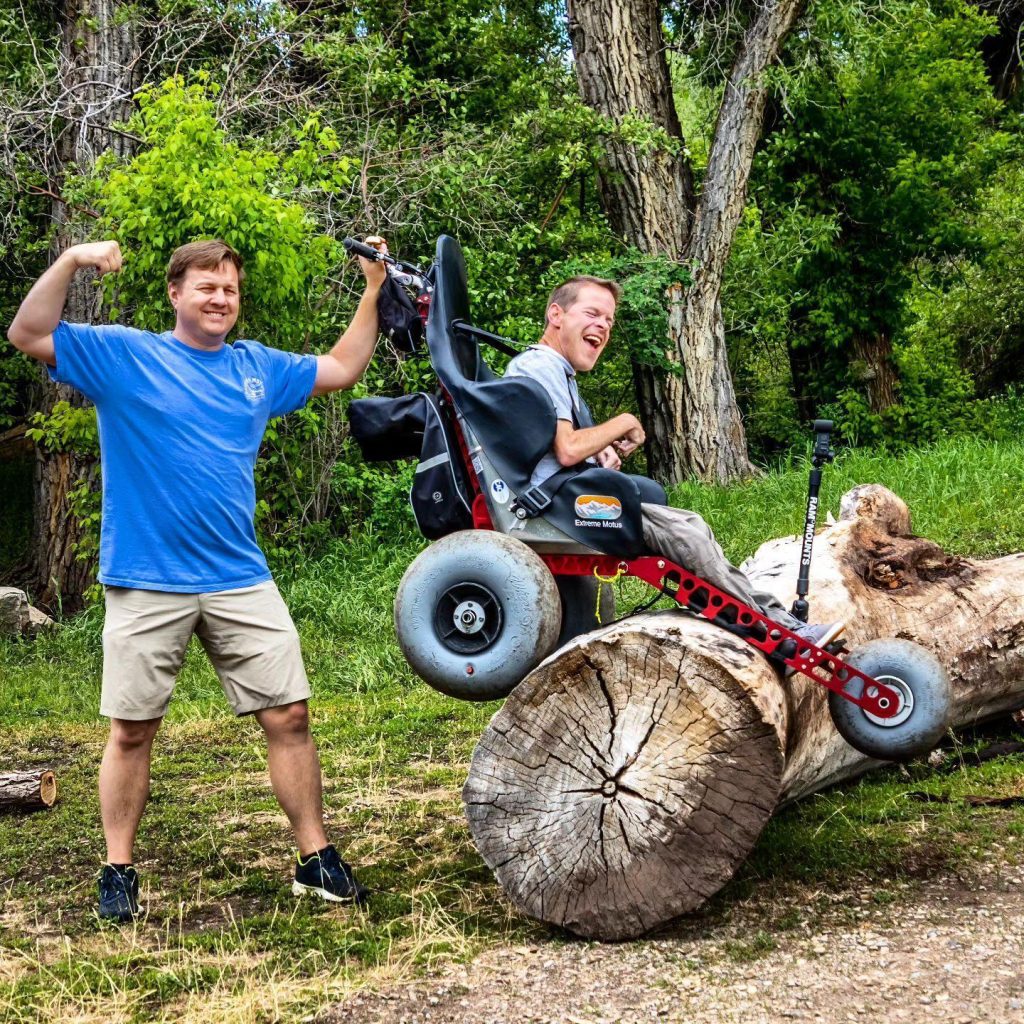
Since 2019, Sam and Ryan have been demonstrating that nature is wheelchair accessible with the Extreme Motus All Terrain Wheelchair. From National Parks to Skateparks, their adventures prove that a manual off-road wheelchair can offer laughter and joy while navigating diverse terrains.
Join us as we continue to share these inspiring journeys.
Discover Freedom with the Extreme Motus All Terrain Wheelchair
Light, comfortable, and compact, the Extreme Motus glides over sand, rocks, grass, gravel, and even floats in water.
It's more than a outdoor wheelchair; it's your ticket to freedom. Embrace the outdoors with confidence, knowing our off-road wheelchair is engineered for durability and ease of use.
Be the first to hear about new gear, upcoming adventures, and exclusive offers. As a welcome gift, you'll get a $100 coupon toward the Motus All-Terrain Wheelchair — delivered straight to your inbox.
By subscribing you agree to receive marketing communications from Extreme Motus, including product updates, promotions, and special offers. I understand I can unsubscribe at any time.