

7 Essential Facts About Spinal Cord Injury and How to Enjoy the Outdoors
Quick answer: Spinal cord injury (SCI) disrupts communication between the brain and body, affecting roughly 300,000 Americans. Motor vehicle accidents and falls cause approximately 68% of cases. With proper rehabilitation and assistive devices like all-terrain wheelchairs, individuals with SCI can reclaim outdoor access and independence in natural environments.

Find your grant in 90 seconds
Answer 5–7 quick questions and we’ll narrow 50+ adaptive-equipment grants down to the ones you’re most likely to win.
Free. No email required. Plus a 30-min strategy call with Kenny if you want help applying.
Take the Grant Match Quiz →A spinal cord injury is a medical event that can reshape physical and emotional life, yet individuals with SCI can maintain active outdoor engagement through proper treatment, rehabilitation, and mobility solutions. This guide covers the essential facts about spinal cord injury and pathways to outdoor exploration.
1. Spinal Cord Injury Disrupts Brain-Body Communication
A spinal cord injury occurs when trauma damages the spinal cord, interrupting signals between the brain and the rest of the body. This disruption leads to:
- Partial or Complete Paralysis: Severity depends on injury location and extent.
- Loss of Sensation: Below the injury site.
- Impaired Autonomic Functions: Affecting bladder and bowel control, blood pressure, and breathing.
2. Motor Vehicle Accidents and Falls Are the Leading Causes
Two primary causes account for the majority of SCIs in the United States:
- Motor Vehicle Accidents: Responsible for approximately 38% of new SCI cases annually (CDC data).
- Falls: Account for roughly 30% of cases, with rates increasing significantly in adults over 65.
- Other Causes: Sports injuries, acts of violence, and non-traumatic conditions like tumors or degenerative diseases.
Age significantly influences causation: motor vehicle accidents lead among younger populations, while falls predominate in adults over 45.
3. SCI Affects Hundreds of Thousands in the United States
Approximately 17,000 new spinal cord injuries occur annually in the United States, with an estimated 282,000 people currently living with SCI (NICHD/NIH data). The condition predominantly affects young to middle-aged adults and increasingly older populations. Males experience SCI at roughly 3 times the rate of females.
4. Treatment Focuses on Stabilization, Rehabilitation, and Function Maximization
While no cure currently exists for SCI, treatment strategies address managing symptoms, preventing complications, and restoring independence:
- Emergency Care: Stabilization to prevent additional spinal damage.
- Rehabilitation Programs: Physical therapy, occupational therapy, and psychological support to regain mobility and adapt.
- Medications: Managing pain, muscle spasticity, infections, and secondary conditions.
- Assistive Devices: Wheelchairs, braces, and adaptive technologies enabling independence.
- Surgical Intervention: When necessary to stabilize the spine or relieve pressure.
5. Time Outdoors Significantly Improves Physical and Mental Well-Being
Outdoor activity offers measurable benefits for individuals with SCI:
- Mental Health: Nature exposure reduces stress, anxiety, and depression—common psychological impacts of SCI.
- Social Connection: Outdoor spaces facilitate family and community engagement, combating isolation.
- Physical Benefits: Even gentle outdoor movement improves circulation, bone health, and overall conditioning.
- Psychological Freedom: Natural environments foster independence and reconnection with personal identity beyond injury.
6. All-Terrain Wheelchairs Enable Unrestricted Outdoor Access
All-terrain wheelchairs remove environmental barriers, making diverse landscapes accessible:
- Terrain Navigation: Designed for grass, trails, sand, gravel, and rocky terrain unsuitable for standard wheelchairs.
- Enhanced Stability: Provides secure, stable support on uneven surfaces.
- Comfort and Shock Absorption: Ergonomic design with suspension systems reduces vibration and strain.
- Independence: Users explore natural spaces with minimal dependence on caregivers.
- Activity Participation: Enables hiking, fishing, beach outings, and nature exploration previously impossible.
7. Safe and Confident Outdoor Exploration Requires Planning and Preparation
Maximizing outdoor experiences with SCI involves practical preparation:
- Choose Accessible Locations: Research parks and trails with wheelchair-friendly pathways.
- Plan Thoroughly: Check weather, terrain conditions, and pack appropriate medical supplies and hydration.
- Use Appropriate Equipment: Invest in an all-terrain wheelchair suited to intended environments.
- Bring Support: Include companions for safety and social engagement.
- Start Gradually: Begin with shorter trips, building endurance and confidence progressively.
Frequently Asked Questions About Spinal Cord Injury
What is the difference between complete and incomplete SCI?
Complete SCI results in total loss of sensation and motor function below the injury site. Incomplete SCI preserves some neural function, with potential for greater recovery and retained mobility in some areas.
How long does SCI rehabilitation typically take?
Initial intensive rehabilitation often lasts 2-6 months, with continued therapy extending for years. Recovery is dynamic; neuroplasticity enables ongoing improvement, particularly with consistent engagement in physical and cognitive activity.
Can people with SCI return to work?
Many individuals with SCI successfully return to employment, particularly with workplace accommodations, assistive technology, and employer support. Outcomes depend on injury severity, pre-injury abilities, and available resources.
What secondary complications should SCI patients monitor?
Common complications include pressure ulcers, urinary tract infections, respiratory issues, blood clots, and muscle contractures. Preventive care, regular medical monitoring, and lifestyle management significantly reduce risk.
Are there new treatments on the horizon for SCI?
Ongoing research into regenerative medicine, neuroplasticity, and spinal cord stimulation shows promise. Clinical trials continue exploring stem cell therapy and pharmacological interventions to enhance recovery and functional restoration.
How does outdoor recreation benefit SCI recovery and long-term health?
Outdoor activity addresses both physical and psychological aspects of SCI recovery: strengthening the cardiovascular system, improving bone density, reducing secondary health complications, and supporting mental health through nature exposure and social connection.
Conclusion
Living with spinal cord injury presents genuine challenges, yet outdoor engagement remains entirely possible with proper planning, equipment, and support. All-terrain wheelchairs have transformed accessibility to natural environments, enabling individuals with SCI to reclaim the independence and restorative benefits that outdoor exploration provides. With advances in rehabilitation, assistive technology, and growing outdoor infrastructure, individuals with SCI continue redefining what active life looks like.
Ryan Grassley · ryan@extrememotus.com
How it all started - Meet Sam & Ryan
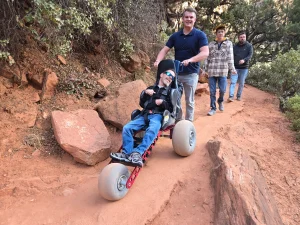
Since 2019, Sam and Ryan have been demonstrating that nature is wheelchair accessible with the Extreme Motus All Terrain Wheelchair. From National Parks to Skateparks, their adventures prove that a manual off-road wheelchair can offer laughter and joy while navigating diverse terrains.
Join us as we continue to share these inspiring journeys.
Discover Freedom with the Extreme Motus All Terrain Wheelchair
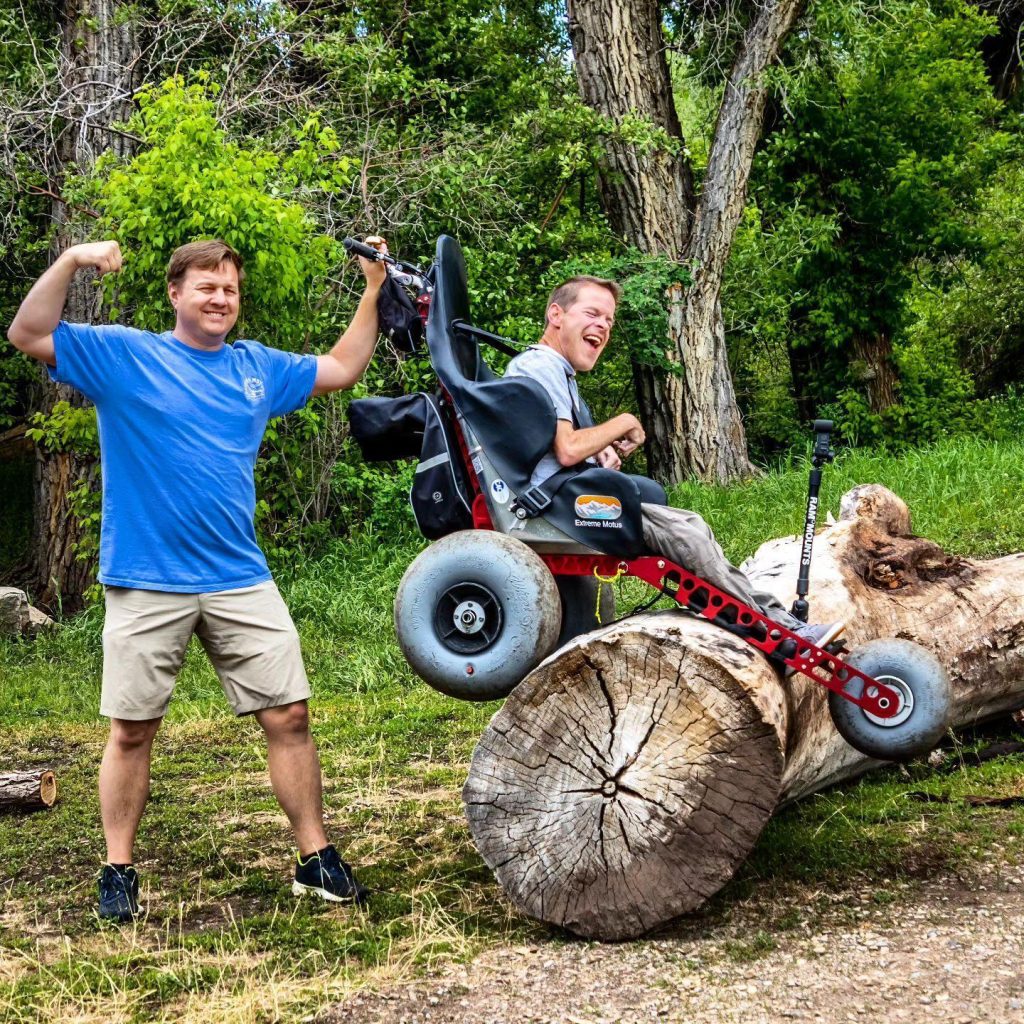
Light, comfortable, and compact, the Extreme Motus glides over sand, rocks, grass, gravel, and even floats in water.
It's more than a outdoor wheelchair; it's your ticket to freedom. Embrace the outdoors with confidence, knowing our off-road wheelchair is engineered for durability and ease of use.
Be the first to hear about new gear, upcoming adventures, and exclusive offers. As a welcome gift, you'll get a $100 coupon toward the Motus All-Terrain Wheelchair — delivered straight to your inbox.
By subscribing you agree to receive marketing communications from Extreme Motus, including product updates, promotions, and special offers. I understand I can unsubscribe at any time.