

Quick answer: Ehlers-Danlos Syndrome (EDS) is a group of 13 genetic connective-tissue disorders causing joint hypermobility, fragile skin, and chronic pain. The most common type, hEDS, affects approximately 1 in 500-5,000 people. Though incurable, physical therapy, pain management, and assistive devices enable individuals with severe EDS to access outdoors safely and improve quality of life.
Ehlers-Danlos Syndrome (EDS) is a group of genetic connective-tissue disorders characterized by defective collagen production, leading to severe mobility challenges, chronic pain, and other complications. For those with severe cases, accessing nature safely is transformative for both physical and mental well-being. Here’s what you need to know about EDS and how outdoor activities, supported by adaptive mobility aids, can significantly enhance quality of life.
1. What Causes Ehlers-Danlos Syndrome?
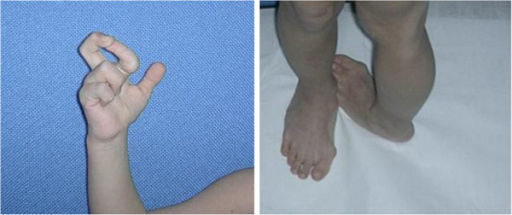
EDS is caused by genetic mutations that affect the structure and production of collagen, the primary protein in connective tissues throughout the body. These mutations result in defective collagen that weakens connective tissues, leading to joint hypermobility, fragile and bruisable skin, and compromised blood vessel integrity.
Key Causes:
- Genetic Mutations: Most forms of EDS are inherited in an autosomal dominant or recessive pattern; some cases result from spontaneous mutations.
- Collagen Structural Defects: Mutations in genes encoding collagen types I, III, V, or other collagen-related proteins weaken connective tissues throughout the body.
2. How Many People Are Affected by Ehlers-Danlos Syndrome?
EDS is a rare group of disorders, though prevalence varies significantly by subtype. Hypermobile EDS (hEDS), the most common form, is estimated to affect approximately 1 in 500 to 1 in 5,000 people, though recent studies suggest the true prevalence may be higher due to underdiagnosis. In contrast, vascular EDS (vEDS), the rarest and most life-threatening subtype, occurs in approximately 1 in 100,000 to 1 in 200,000 people. Classical EDS (cEDS) affects approximately 1 in 20,000 to 1 in 40,000 individuals. The 2017 International Classification recognizes 13 distinct subtypes of EDS, each with unique genetic causes and clinical presentations.
3. What Are the Treatments for EDS?
While there is no cure for EDS, a multidisciplinary approach to symptom management can help prevent complications and improve quality of life:
- Physical Therapy: Improves muscle strength, joint stability, and proprioception, reducing dislocation risk and chronic pain.
- Pain Management: Includes medications (neuropathic pain agents, analgesics) and non-pharmacological approaches such as heat therapy and mindfulness.
- Joint Protection: Strategic use of braces, compression garments, and taping to stabilize hypermobile joints during daily activities and exercise.
- Surgical Intervention: Rarely performed due to tissue fragility and poor wound healing, but may be necessary for life-threatening vascular complications or severe joint instability.
- Lifestyle Modifications: Low-impact exercises, activity pacing, and avoidance of high-impact or contact activities that strain connective tissues.
4. Is There a Cure for Ehlers-Danlos Syndrome?
Currently, there is no cure for EDS. However, ongoing research efforts focus on understanding the genetic mechanisms underlying each subtype and developing targeted treatments. Gene therapy approaches, antisense oligonucleotide therapies, and pharmacological interventions to strengthen connective tissues show promise in preclinical and early clinical studies. Until curative treatments are available, symptom management and lifestyle adaptation remain the primary approaches to improving quality of life for people with EDS.
5. Why Is Spending Time Outdoors Important for People with EDS?
For individuals with severe EDS, safe access to nature offers significant physical, emotional, and social benefits:
- Low-Impact Physical Activity: Outdoor environments allow for gentle, graded movement—walking, gentle stretching, or breathing exercises—that improve circulation and muscle tone without overstraining joints.
- Mental Health Benefits: Exposure to natural surroundings reduces stress, anxiety, and depression, which are prevalent in chronic illness populations managing ongoing pain and disability.
- Immune and Bone Health: Sunlight exposure stimulates vitamin D synthesis, supporting bone health and immune function—particularly important for individuals with EDS who may have secondary bone density concerns.
- Social Connection: Parks and outdoor spaces provide accessible venues for family and community interaction, reducing social isolation.
- Psychological Resilience: Spending time in nature fosters a sense of normalcy and agency, providing respite from medical appointments and the emotional weight of managing a chronic condition.
6. How Does Spending Time Outdoors Affect Mental and Physical Health?
Research consistently demonstrates that nature exposure improves both physical and psychological outcomes for individuals managing chronic conditions:
- Mood Improvement: Natural surroundings activate parasympathetic nervous system activity, promoting relaxation and reducing chronic stress hormones.
- Cognitive Enhancement: Nature exposure improves focus, attention, and processing speed, often compromised in chronic pain populations due to pain-related cognitive interference (“brain fog”).
- Physical Conditioning: Even light outdoor activity—gentle movement, supported standing, or mindful observation—maintains joint flexibility and prevents stiffness associated with sedentary lifestyles.
- Pain Modulation: Engaging natural environments and positive experiences can help modulate pain perception through neuroplastic mechanisms.
7. How Does Ehlers-Danlos Syndrome Affect Family Members?
EDS is a lifelong condition that extends beyond the individual affected, impacting entire family systems:
- Emotional and Psychological Burden: Family members often experience caregiver stress, anxiety, and grief related to their loved one’s diagnosis and prognosis.
- Caregiving Demands: Severe cases require significant assistance with activities of daily living, mobility support, and medical management, potentially leading to caregiver burnout.
- Financial Impact: Ongoing costs of physical therapy, medications, assistive devices, home modifications, and specialized care can strain household finances.
- Lifestyle Adjustments: Family routines must adapt to medical appointments, activity limitations, and accessibility needs, affecting leisure activities and social participation.
- Genetic Counseling Needs: Families benefit from understanding inheritance patterns and the implications for siblings and offspring.
Spending time outdoors together—supported by accessible mobility aids—can strengthen family bonds by creating shared positive experiences and moments of joy despite the challenges of EDS.
8. How Can an All-Terrain Wheelchair Help People with Ehlers-Danlos Syndrome Enjoy the Outdoors?
For individuals with severe EDS experiencing significant joint instability, pain, and fatigue, an all-terrain wheelchair can be transformative, enabling safe and comfortable outdoor access:
- Terrain Accessibility: Engineered to navigate gravel, sand, dirt paths, grass, and uneven terrain that standard wheelchairs cannot access, opening trails, parks, and natural areas previously inaccessible.
- Shock Absorption and Stability: Advanced suspension systems minimize vibration and impact, reducing strain on hypermobile joints and fragile connective tissues.
- Ergonomic Support: Customizable seating, postural support, and proper weight distribution prevent secondary pain from prolonged sitting and support proper body mechanics.
- Independence and Autonomy: Allows users to explore outdoor spaces with minimal assistance, supporting psychological autonomy and self-determination.
- Energy Conservation: Reduces the physical demand of mobility, allowing individuals to extend outdoor time and participation in activities without exacerbating fatigue or pain.
- Social Participation: Facilitates full participation in family outings, community events, and group activities, reducing social isolation and supporting emotional well-being.
What is the Extreme Motus All-Terrain Wheelchair?
The Extreme Motus All-Terrain Wheelchair is an innovative mobility solution purpose-built for individuals with Ehlers-Danlos Syndrome and other conditions causing joint instability and chronic pain. Combining advanced suspension technology, ergonomic design, and all-terrain capability, it enables safe, comfortable, and independent outdoor access—directly addressing the unique mobility challenges that EDS presents.
How the Extreme Motus Wheelchair Benefits People with Ehlers-Danlos Syndrome
1. Reduces Joint Strain and Pain
- Shock-Absorbing Suspension: Minimizes vibrations and impact forces on uneven terrain, reducing strain on hypermobile or fragile joints during outdoor mobility.
- Ergonomic Positioning: Supports proper posture and distributes pressure evenly across the body, alleviating pain caused by joint instability and muscle fatigue inherent to EDS.
2. Provides Safe and Stable Mobility
- Secure, Stable Frame: Ensures steady, predictable motion over challenging terrain, reducing risk of dislocations, subluxations, or injuries common in EDS.
- Confidence Building: A reliable mobility platform empowers individuals to explore outdoors safely, reducing anxiety about physical limitations and enabling greater participation.
3. Expands Outdoor Accessibility
- All-Terrain Capability: Navigates gravel, sand, dirt trails, grass, and rocky paths with engineered precision, opening parks, nature trails, and outdoor spaces previously inaccessible.
- Durable and Lightweight Construction: Built to withstand rugged outdoor environments while remaining maneuverable and transportable, balancing durability with practical usability.
4. Supports Physical and Mental Well-Being
- Facilitates Outdoor Activity: Nature immersion reduces stress, anxiety, and depression while promoting psychological resilience—critical for individuals managing chronic pain and disability.
- Vitamin D and Immune Support: Sunlight exposure strengthens bones and supports immune function, particularly beneficial for EDS populations who may have secondary bone or immune concerns.
- Promotes Gentle Movement: Access to supportive outdoor environments enables light activity that improves circulation, prevents stiffness, and supports metabolic health without exertion-related flares.
5. Fosters Social Inclusion
- Enables Group Participation: Accessible mobility allows attendance and full participation in family outings, community events, and social activities.
- Strengthens Relationships: Shared outdoor experiences create meaningful connections with loved ones, reducing isolation and fostering a sense of belonging and purpose.
6. Promotes Independence and Autonomy
- User-Friendly Operation: Intuitive design and accessible controls empower individuals to navigate independently or with minimal assistance.
- Psychological Empowerment: Overcoming mobility barriers enables individuals to exercise agency, make their own choices, and participate in life on their own terms.
Why the Extreme Motus Wheelchair Is Ideal for Ehlers-Danlos Syndrome
The Extreme Motus wheelchair is engineered to address the specific biomechanical and functional challenges of EDS. Its combination of advanced shock absorption, ergonomic support, all-terrain capability, and user-centered design makes it an optimal solution for individuals seeking safe, comfortable, and independent outdoor access while managing the chronic pain, joint instability, and fatigue inherent to EDS.
Rediscover the Outdoors with Extreme Motus
Living with Ehlers-Danlos Syndrome doesn’t have to limit your outdoor experiences. The Extreme Motus all-terrain wheelchair offers a safe, comfortable, and effective pathway to explore nature, connect with loved ones, and reclaim freedom in natural environments.
Ready to rediscover outdoor adventure? Discover how the Extreme Motus wheelchair can help you or a loved one experience the outdoors without limitations.
Conclusion
Ehlers-Danlos Syndrome presents significant challenges to quality of life, yet evidence demonstrates that safe access to nature and supportive mobility solutions can transform physical and psychological well-being. An all-terrain wheelchair provides the foundation for independent outdoor exploration, social participation, and emotional resilience—empowering individuals with EDS to live fully despite their diagnosis.
Ryan Grassley · ryan@extrememotus.com
How it all started - Meet Sam & Ryan
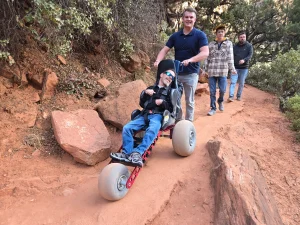
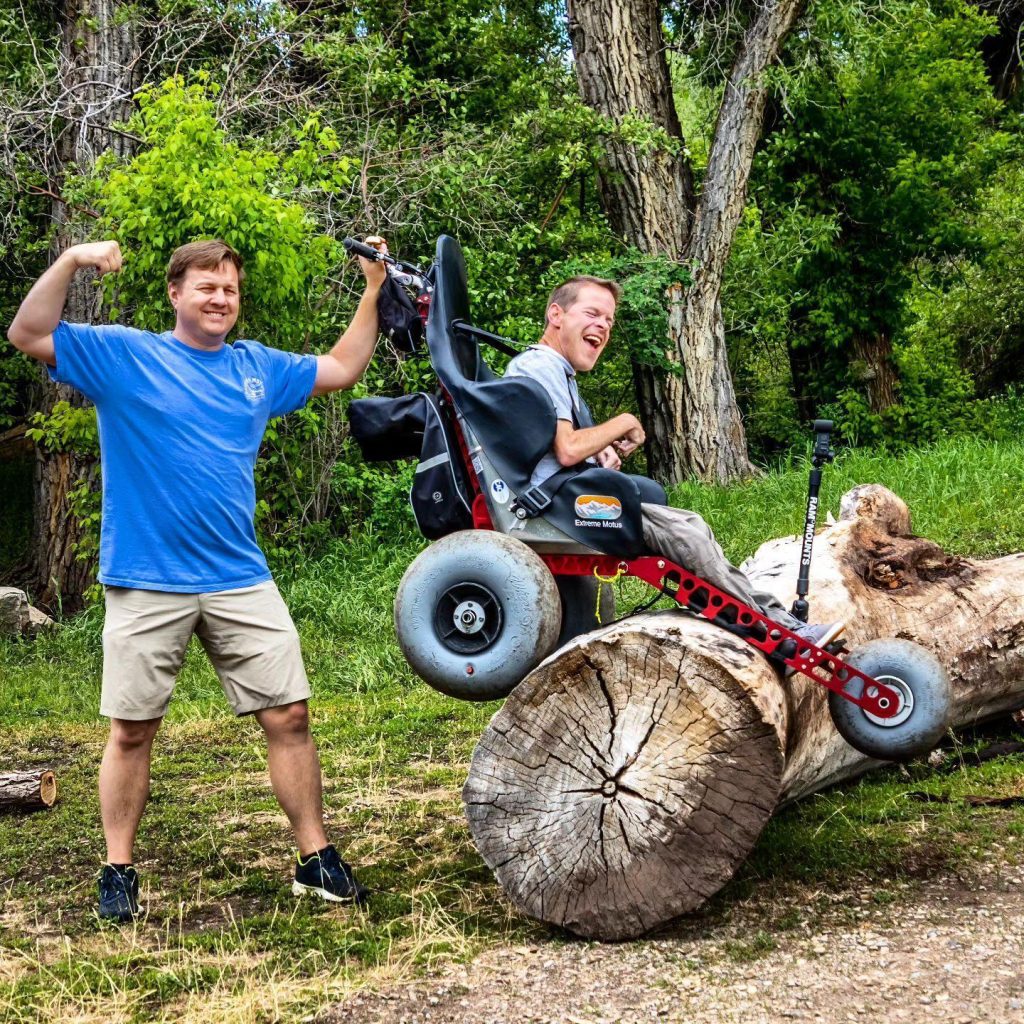
Since 2019, Sam and Ryan have been demonstrating that nature is wheelchair accessible with the Extreme Motus All Terrain Wheelchair. From National Parks to Skateparks, their adventures prove that a manual off-road wheelchair can offer laughter and joy while navigating diverse terrains.
Join us as we continue to share these inspiring journeys.
Discover Freedom with the Extreme Motus All Terrain Wheelchair
Light, comfortable, and compact, the Extreme Motus glides over sand, rocks, grass, gravel, and even floats in water.
It's more than a outdoor wheelchair; it's your ticket to freedom. Embrace the outdoors with confidence, knowing our off-road wheelchair is engineered for durability and ease of use.
Be the first to hear about new gear, upcoming adventures, and exclusive offers. As a welcome gift, you'll get a $100 coupon toward the Motus All-Terrain Wheelchair — delivered straight to your inbox.
By subscribing you agree to receive marketing communications from Extreme Motus, including product updates, promotions, and special offers. I understand I can unsubscribe at any time.