

Quick answer: Dystonia affects about 300,000 people in the U.S. and is the third most common movement disorder after essential tremor and Parkinson’s disease. Involuntary muscle contractions make mobility unpredictable, but treatment like Botox, medications, and physical therapy help manage symptoms. Outdoor access matters because nature reduces stress, encourages gentle movement, and gives people with dystonia the freedom to reconnect with life beyond medical management.
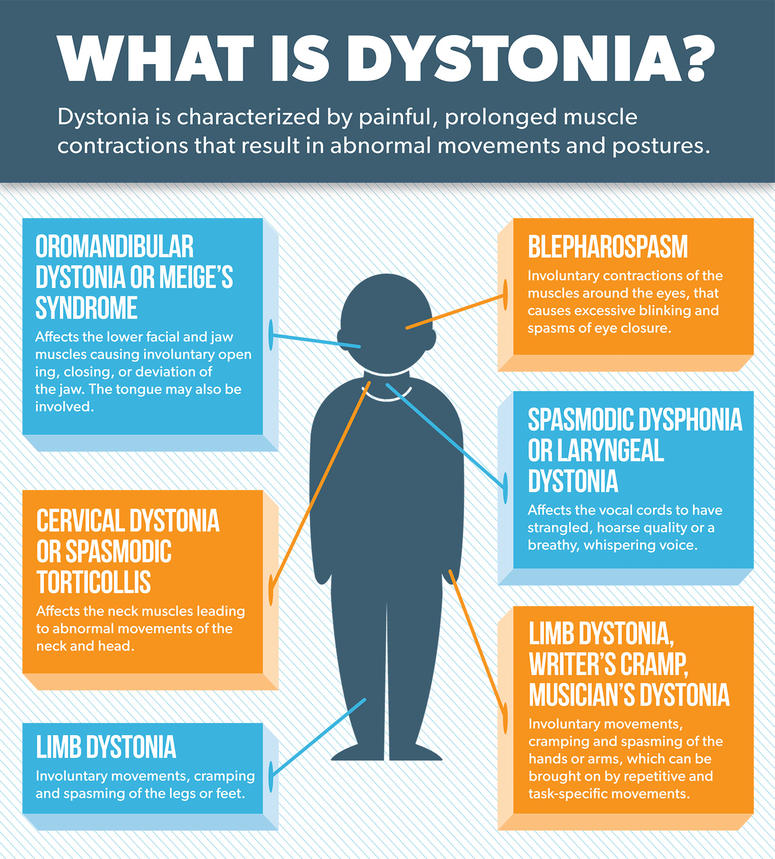
Dystonia is a neurological movement disorder where the brain misfires signals that control muscle movement, causing involuntary, sustained contractions and abnormal postures. It’s not rare—roughly 300,000 people in the U.S. live with it—but it’s often misunderstood. The good news: with the right treatments, adaptive strategies, and the right equipment like an all-terrain wheelchair, people with dystonia can manage symptoms and access outdoor spaces that reduce stress and restore quality of life.
What Causes Dystonia?
Dystonia occurs when the brain misfires signals that control muscle movement, leading to sustained contractions and abnormal postures. The underlying cause varies:
- Genetic factors — Some forms of dystonia are inherited. Genetic mutations affect how the brain regulates movement.
- Brain injury or disease — Parkinson’s disease, stroke, traumatic brain injury, or other neurological conditions can trigger dystonia.
- Medications — Certain psychiatric drugs, anti-nausea medications, or other medicines can cause secondary dystonia as a side effect.
- Idiopathic causes — In many cases, the cause is unknown. These are called primary or idiopathic dystonia.
Dystonia can develop at any age and affect any part of the body—neck (cervical dystonia), face (oromandibular), hands (writer’s or musician’s dystonia), or legs (segmental or generalized dystonia).
How Common Is Dystonia?
Dystonia affects approximately 300,000 people in the United States and is the third most common movement disorder after essential tremor and Parkinson’s disease. It can develop at any age and affects both men and women equally. Because it’s often misdiagnosed as anxiety, a movement quirk, or a psychiatric condition, many people with dystonia go years without proper diagnosis.
Treatment Options
There is no cure for dystonia, but various treatments can manage symptoms and improve quality of life:
- Medications — Muscle relaxants like baclofen and anticholinergic drugs reduce muscle spasms and improve movement control.
- Botulinum toxin (Botox) injections — Weakens overactive muscles to improve posture and reduce pain. Results typically last 3 months, requiring repeat injections.
- Physical and occupational therapy — Stretching, strengthening, and movement retraining enhance mobility and reduce compensatory muscle tension.
- Deep brain stimulation (DBS) — An implanted device that sends electrical signals to the brain. Effective for severe, generalized dystonia when other treatments don’t work.
- Lifestyle modifications and complementary therapies — Yoga, acupuncture, massage, and stress management can provide symptom relief for some individuals.
Treatment is highly individual. What works for one person may not work for another, so finding the right combination often requires trial and adjustment with a movement disorder specialist.
Family Impact and Support
Dystonia affects not just the individual but the entire family system:
- Emotional stress — Loved ones may feel helpless watching involuntary muscle contractions and pain.
- Caregiving demands — Family members may assist with mobility, personal care, and managing medical appointments.
- Financial strain — Botox injections ($1,200-$2,000+ per treatment, every 3 months), medications, therapy, and DBS surgery are costly. Insurance coverage is inconsistent.
- Social adjustments — Families modify activities and routines to accommodate unpredictable symptoms and energy levels.
Support groups and counseling help families understand dystonia and connect with others facing similar challenges. Many find that outdoor time—once made accessible—becomes a therapeutic shared experience.
Wheelchair Mobility and Dystonia
In severe cases, dystonia causes significant mobility challenges, and a wheelchair becomes essential. Some individuals use a wheelchair full-time; others use one for long outings or when symptoms are particularly active. A wheelchair provides:
- Mobility support — When involuntary contractions make walking difficult or unsafe.
- Energy conservation — Dystonia is exhausting. A wheelchair reduces fatigue during daily activities.
- Fall prevention — Reduces the risk of injury from loss of balance or muscle spasms.
- Pain reduction — Reduces strain on affected muscles and joints.
Why Outdoor Access Matters
Outdoor activities provide vital mental and physical health benefits for individuals with dystonia:
- Reduces stress and anxiety — Nature is a proven stress reliever. Lower stress can reduce dystonia symptom severity.
- Encourages gentle movement — Light outdoor activities like strolling maintain muscle flexibility and circulation.
- Boosts mood — Exposure to sunlight increases serotonin, combating depression common in chronic neurological conditions.
- Fosters social connection — Parks and outdoor settings encourage interaction with family and friends, reducing isolation.
- Offers emotional renewal — Being outdoors provides a sense of freedom and normalcy beyond medical management.
How an All-Terrain Wheelchair Opens Doors (and Trails)
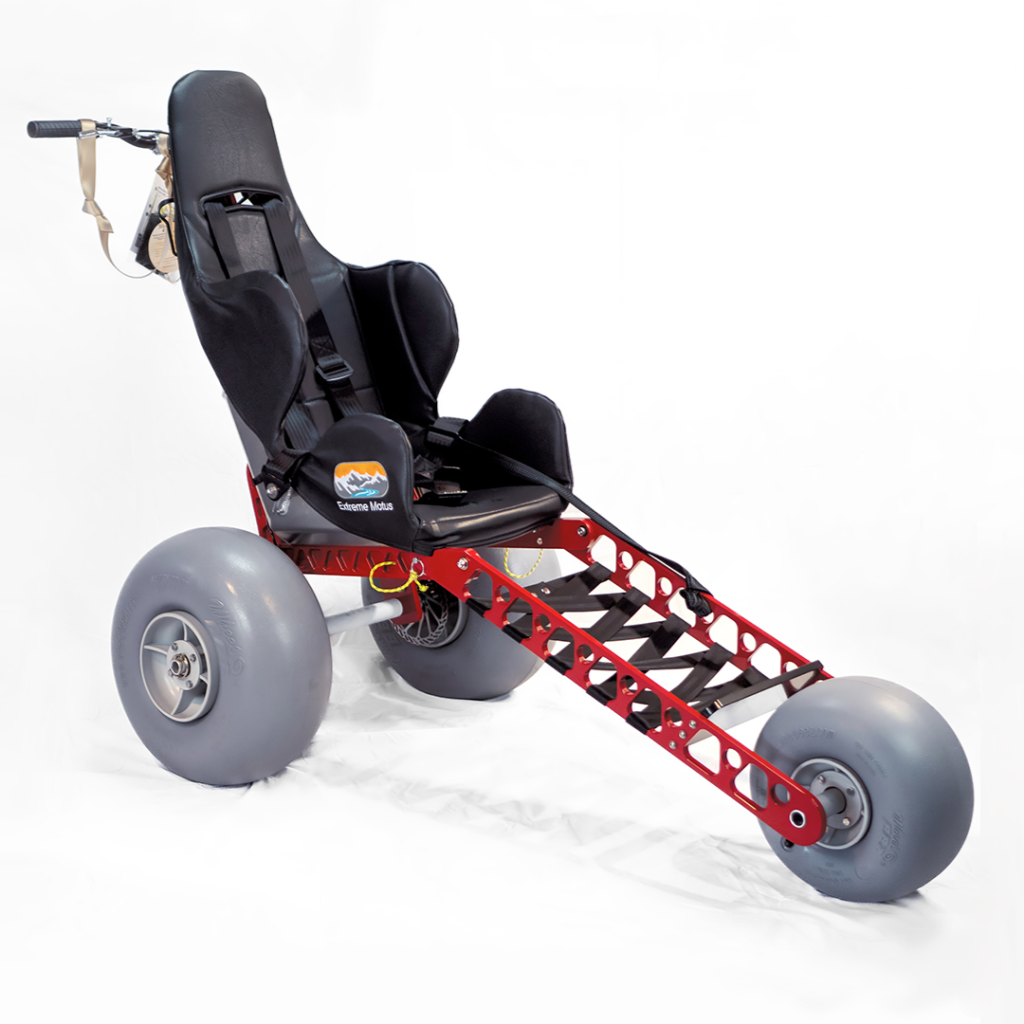
An all-terrain wheelchair like the Extreme Motus all-terrain wheelchair is designed for exactly what standard wheelchairs can’t do: navigate rough terrain, sand, snow, gravel, and water safely and comfortably.
Key features for someone with dystonia:
- Balloon tires (low-pressure, wide) — Roll over sand, mud, gravel, and shallow water without sinking. Essential for beach and trail access.
- Lightweight at 55 lbs — Easy for a caregiver to push or load/transport. No special equipment or vehicle modifications needed.
- Shock-absorbing design — Bumps and uneven ground don’t jar the body or trigger involuntary muscle contractions.
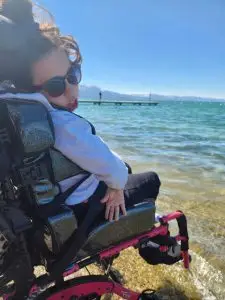
- Floats in water — Allows beach access, wading, and water exploration—therapeutic for many people with dystonia.
- Customizable seating — Adjustable headrest, harness, and cushioning support proper posture and stability during involuntary movements.
- Durable and reliable — Built for real outdoor use and withstands the wear of adventure.
The Extreme Motus gives individuals with dystonia the freedom to visit national parks, hike moderate trails, hit the beach, and experience outdoor life alongside their families—activities that would be impossible in a standard wheelchair.
Real-World Impact
We’ve watched adults with dystonia experience their first hike, first beach day, first real outdoor freedom in an all-terrain wheelchair. Families tell us: “We thought outdoor life was over. Then we realized we just needed the right equipment.” That’s the difference between managing symptoms and actually living.
Frequently Asked Questions
What is dystonia?
Dystonia is a neurological movement disorder where the brain misfires signals controlling muscle movement, causing involuntary, sustained muscle contractions and abnormal postures. It can affect any part of the body—neck (cervical dystonia), face, hands, or legs—and severity ranges from mild to severely disabling. It is not progressive but symptoms fluctuate with stress, fatigue, and activity.
How common is dystonia?
Dystonia affects approximately 300,000 people in the U.S. and is the third most common movement disorder after essential tremor and Parkinson’s disease. It can develop at any age and affects both men and women equally. Many people with dystonia go years without proper diagnosis because it’s often misidentified as anxiety or a psychiatric condition.
Do people with dystonia always need a wheelchair?
No. Dystonia presentation varies widely. Some individuals have mild symptoms affecting only one body part (focal dystonia) and never use a wheelchair. Others have severe, generalized dystonia affecting multiple body parts and require a wheelchair for safety and mobility. Many use a wheelchair for long outings or when symptoms flare up, while walking independently at other times.
What are treatment options for dystonia?
Treatment is individualized and may include medications (muscle relaxants, anticholinergic drugs), Botulinum toxin (Botox) injections to weaken overactive muscles, physical and occupational therapy, and in severe cases, Deep Brain Stimulation (DBS) surgery. Lifestyle modifications, stress management, and complementary therapies like yoga and massage also help manage symptoms. Working with a movement disorder specialist gives the best outcomes.
Can stress trigger dystonia symptoms?
Yes, absolutely. Stress, anxiety, and fatigue are major triggers for dystonia symptom flare-ups. This is one reason outdoor time and nature exposure are so therapeutic—natural environments reduce stress and can minimize symptom severity. Managing stress through exercise, meditation, and outdoor activities is an important part of symptom management.
What is Botox for dystonia, and how does it work?
Botulinum toxin (Botox) injections weaken overactive muscles causing involuntary contractions. The injections work by blocking nerve signals to muscles, reducing spasms and abnormal postures. Results typically appear within 1-2 weeks and last 3-4 months, requiring repeat injections to maintain benefit. Cost is high ($1,200-$2,000+ per treatment) and insurance coverage varies.
How does an all-terrain wheelchair help with dystonia?
It removes the biggest barrier to outdoor life. Balloon tires navigate trails, beaches, and uneven terrain that would be impossible in a standard chair. The shock-absorbing design prevents jarring that could trigger muscle spasms. Most importantly, it gives people with dystonia access to nature—a proven stress reducer that can actually improve symptom management. Being outdoors is therapy.
Conclusion
Living with dystonia presents real challenges—involuntary muscle contractions, unpredictable symptoms, and the emotional weight of managing a chronic neurological condition. But spending time outdoors, with the right mobility solution, can reduce stress, improve mood, and restore a sense of freedom and normalcy. The Extreme Motus all-terrain wheelchair empowers individuals with dystonia to explore nature and create lasting memories with the people who matter most.
Ryan Grassley · ryan@extrememotus.com
How it all started - Meet Sam & Ryan
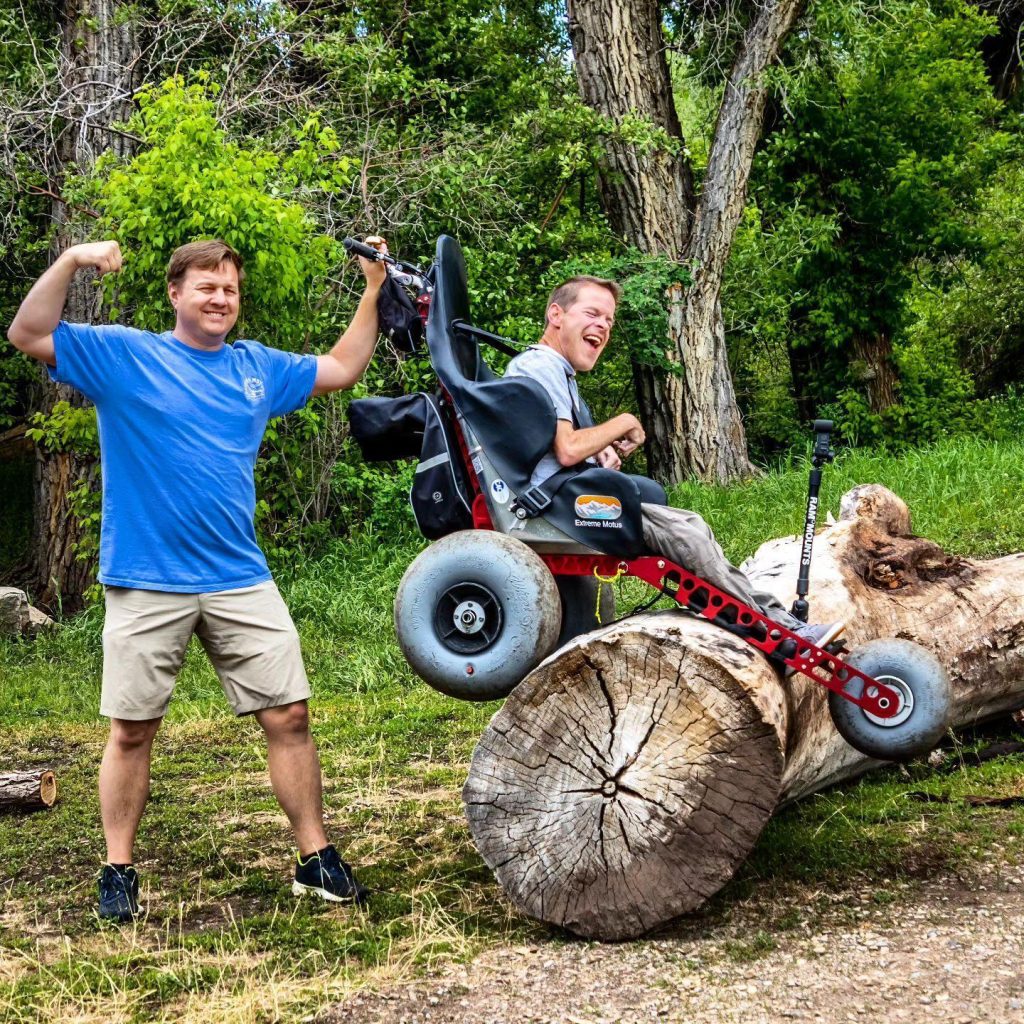
Since 2019, Sam and Ryan have been demonstrating that nature is wheelchair accessible with the Extreme Motus All Terrain Wheelchair. From National Parks to Skateparks, their adventures prove that a manual off-road wheelchair can offer laughter and joy while navigating diverse terrains.
Join us as we continue to share these inspiring journeys.
Discover Freedom with the Extreme Motus All Terrain Wheelchair
Light, comfortable, and compact, the Extreme Motus glides over sand, rocks, grass, gravel, and even floats in water.
It's more than a outdoor wheelchair; it's your ticket to freedom. Embrace the outdoors with confidence, knowing our off-road wheelchair is engineered for durability and ease of use.
Be the first to hear about new gear, upcoming adventures, and exclusive offers. As a welcome gift, you'll get a $100 coupon toward the Motus All-Terrain Wheelchair — delivered straight to your inbox.
By subscribing you agree to receive marketing communications from Extreme Motus, including product updates, promotions, and special offers. I understand I can unsubscribe at any time.