

Quick answer: The 8 best beach wheelchairs for 2026 cover every use case: Extreme Motus ($4,500, all-terrain hybrid that floats), DeBug (clinical seating support), Vipamat Hippocampe (independent self-propulsion), EZ Roller (built for surf), AquaTrek AQ-1000 (pool deck), Sand Rider (most portable), TerraWheels (resort-grade workhorse), and Waterwheels (best for floating). Pick based on whether you need terrain versatility, water flotation, portability, or clinical seat support.

Find your grant in 90 seconds
Answer 5–7 quick questions and we’ll narrow 50+ adaptive-equipment grants down to the ones you’re most likely to win.
Free. No email required. Plus a 30-min strategy call with Kenny if you want help applying.
Take the Grant Match Quiz →A day at the beach is a universal joy, but for wheelchair users, it often ends at the boardwalk. In 2026, “Beach Wheelchair” means more than just big tires — it means salt-water durability, flotation, and portability.
Find your all-terrain wheelchair
We’ve analyzed the market and tested the limits to bring you the definitive ranking of beach-accessible mobility.
2026 Beach Wheelchair Comparison at a Glance
| Model | Best For… | Weight | Float? | Frame Material |
| Extreme Motus | All-Terrain + Floating | 55 lbs | Yes | Aluminum |
| DeBug | Custom Clinical Support | ~60 lbs | No* | Stainless Steel |
| Vipamat Hippocampe | Independent Riders | 37 lbs | Yes* | Stainless Steel |
| EZ Roller | Budget Surf Entry | 35 lbs | Yes | Stainless Steel |
| AquaTrek AQ-1000 | Pool & Sand Cross-over | Variable | No | PVC |
| Sand Rider | High Portability (Foldable) | 55 lbs | Yes | Aluminum |
| TerraWheels | Group/Rental Use | 88 lbs | Yes | Alum/Stainless |
| Waterwheels | Pure Floating Experience | 60 lbs | Yes | Aluminum |
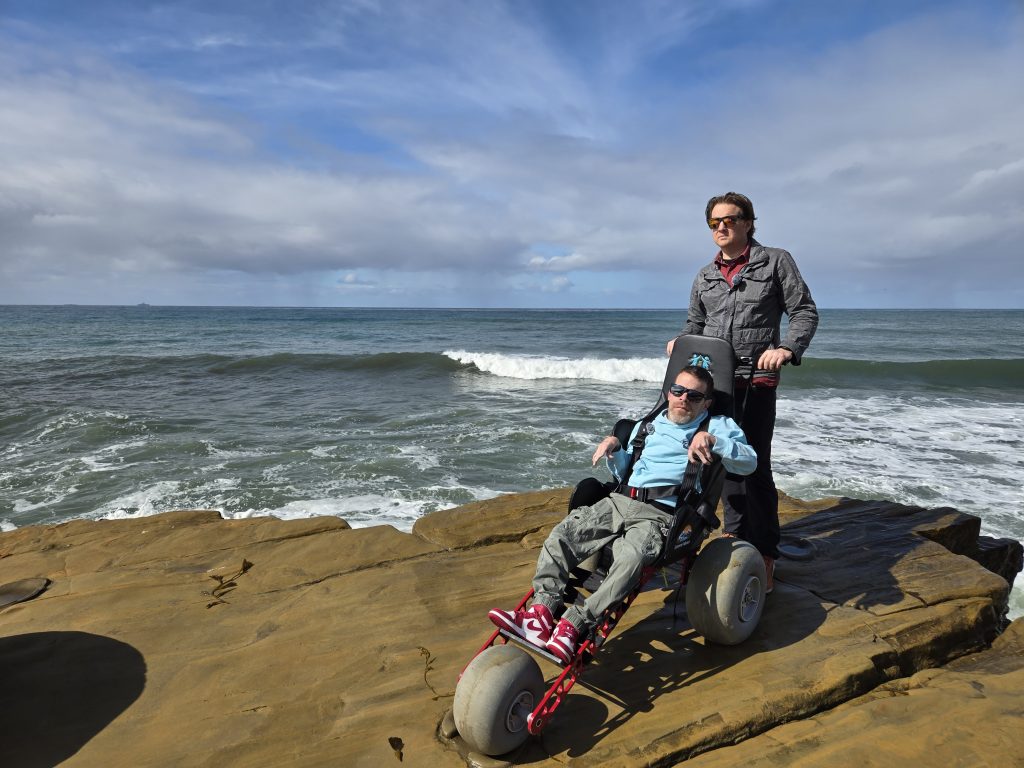
1. Extreme Motus: The Best All-Terrain Hybrid
While many beach chairs are “single-purpose,” the Extreme Motus all-terrain wheelchair is designed for the family that wants to go from the sand dunes to a mountain trail.
- Why it wins: It’s the lightest “hybrid” in its class. At 55 lbs, it’s easy to lift into an SUV.
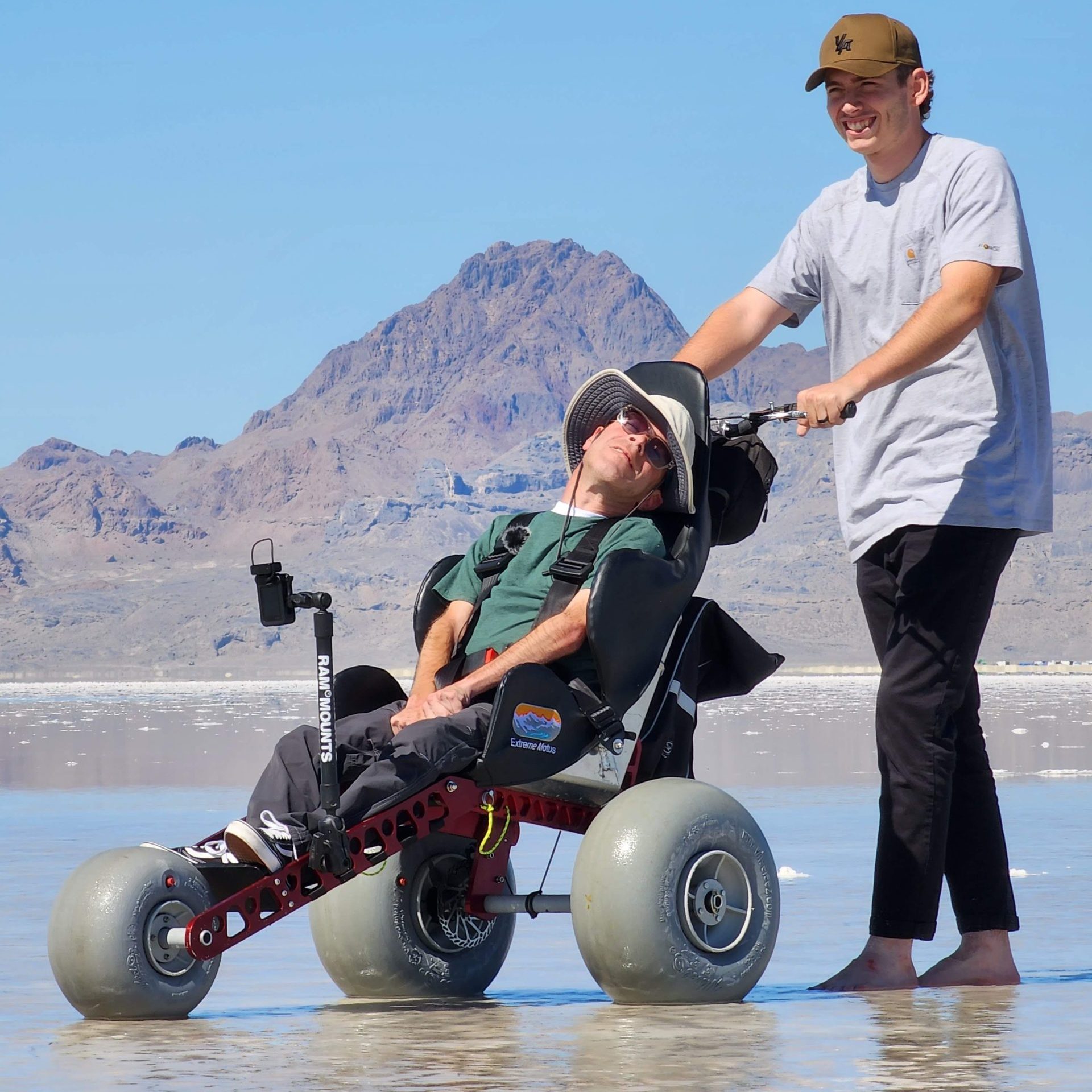
- The “Floating” Secret: The oversized low-pressure tires act as both suspension and flotation devices. You don’t just sit on the sand; you can actually glide into the waves.
- Price: $4,500 in 2026, plus $375 shipping in the U.S.
- Expert Tip: For 2026, ensure you rinse the anodized aluminum frame with fresh water after every salt-water dip to keep it looking brand new for years.
If you would like to try out a Motus near you, fill out this demo request form.
2. DeBug Outdoor Wheelchair: The Clinical Professional
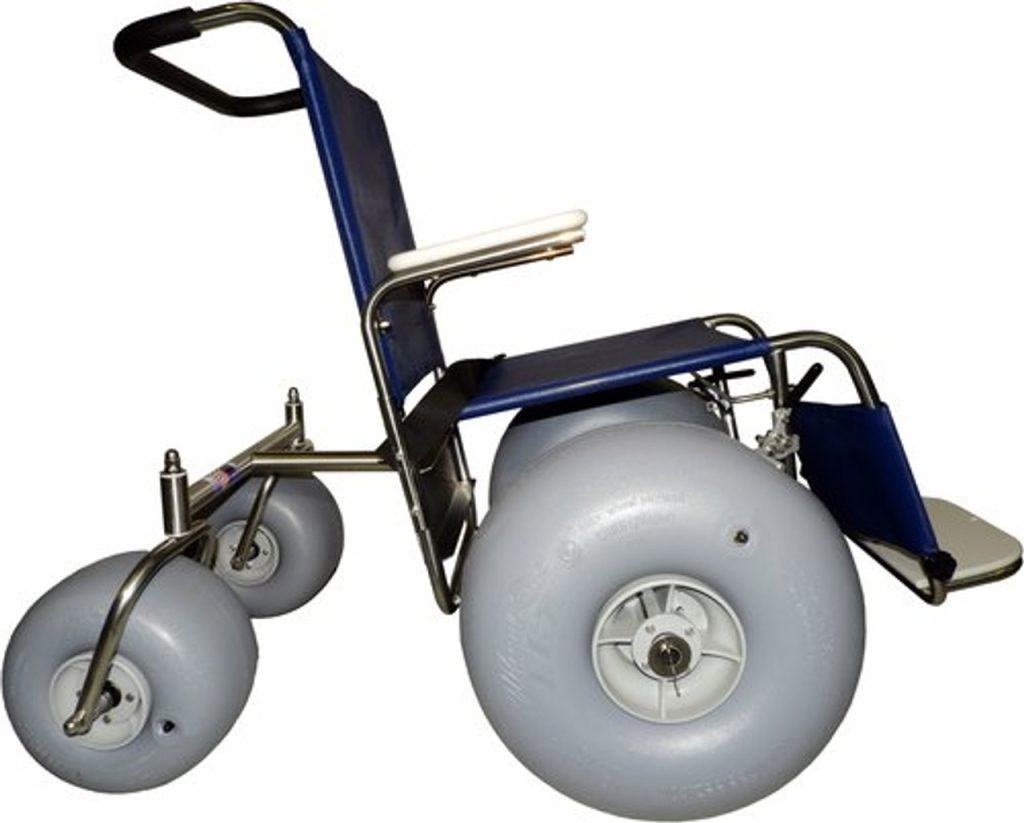
If the rider needs specialized postural support (like tilt-in-space), the DeBug is the industry standard.
- Best for: Riders who spend long hours at the beach and need precise seating adjustments.
- Note: Built like a tank from 316L Stainless Steel, making it highly corrosion-resistant but heavier than aluminum options.
3. Vipamat Hippocampe: The Independent Choice
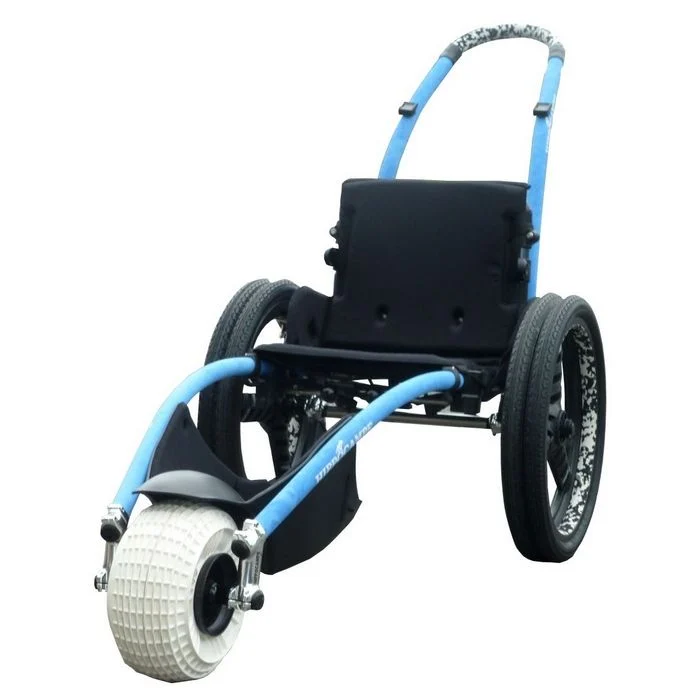
Known for its low profile and sleek design, the Hippocampe is one of the few beach chairs that allows for a degree of self-propulsion.
- The Advantage: Incredibly compact and can even be taken as checked luggage on many airlines.
- The Limit: Because of its low seat height, transfers can be more difficult for some users.
4. EZ Roller Floating Surf Wheelchair: The Wave Runner
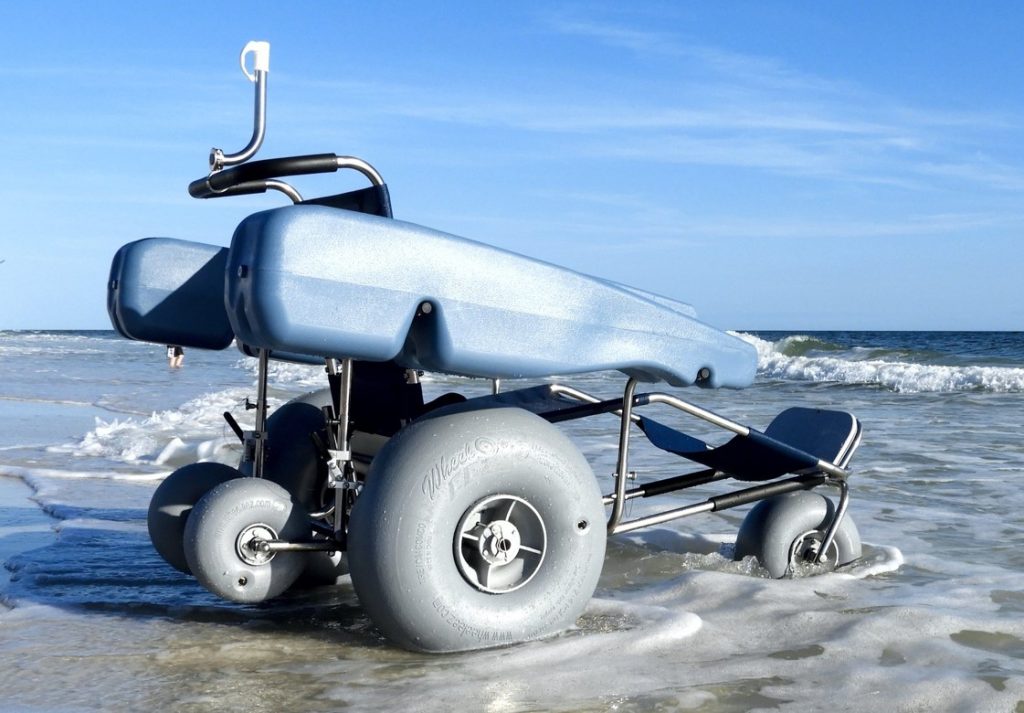
The EZ Roller is specifically designed for users who want to transition from the boardwalk directly into the surf.
- Why it wins: Features high-quality buoyant armrests and tires, making it one of the most stable platforms for floating in the water.
- The Frame: Built with 316L Stainless Steel — designed to live in salt water without the “rust anxiety” of cheaper models.
- Expert Tip: The chair has a castering front wheel. On hard surfaces it’s a dream to turn; in deep soft sand, you’ll want to pull it backward for the best experience.
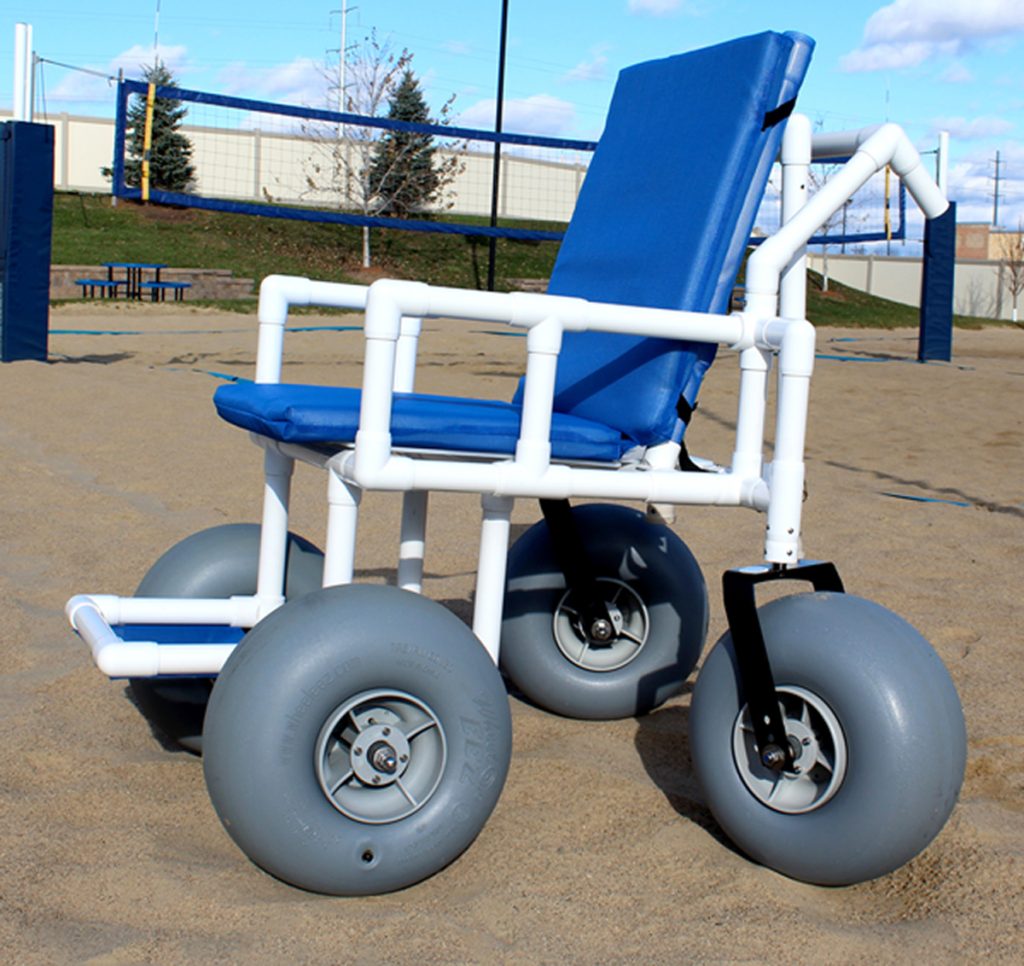
5. AquaTrek AQ-1000: The Pool & Deck Hybrid
Not every “beach” trip involves a trek through 50 yards of sand. Sometimes you just need to get across the pool deck and down a ramp.
- Why it wins: Constructed from furniture-grade UV-rated PVC with an aluminum interior. Lightweight and won’t get “sun-scalding” hot like metal frames.
- Weight Capacity: Despite its plastic appearance, a workhorse with a 350 lb capacity.
- Expert Tip: Best choice for community centers, spas, and public pools where the chair will be used primarily on wet, flat surfaces and ramps.
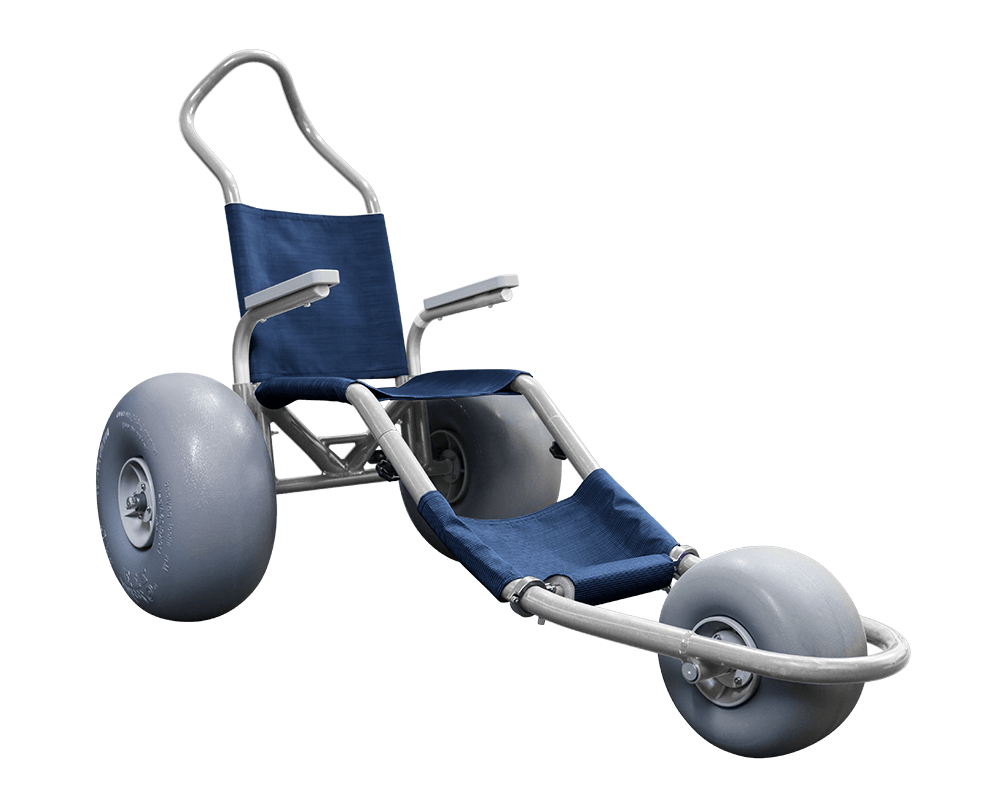
6. Sand Rider: The Traveler’s Choice
If you have a small car and big dreams, the Sand Rider is a top contender.
- Why it wins: Specifically designed to be disassembled quickly. The largest piece weighs less than 12 lbs, fitting in almost any trunk.
- The Look: One of the most stylish chairs on the list — powder-coated aluminum frame that looks more like outdoor gear than medical equipment.
- Expert Tip: Light enough for a single caretaker to manage, even on steep dunes.
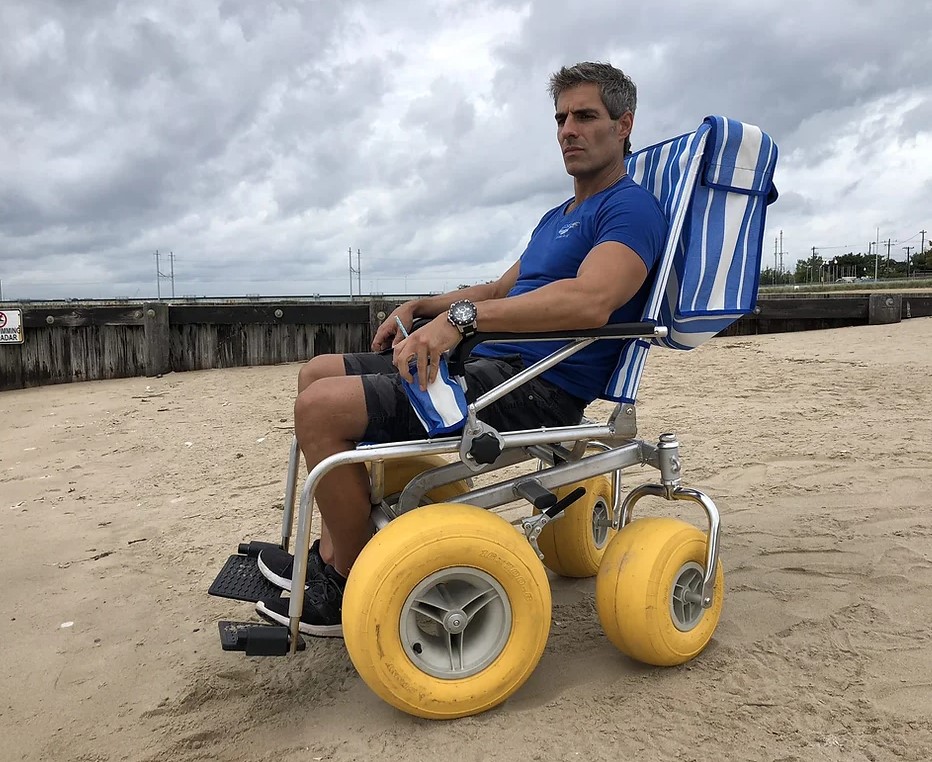
7. AccessRec TerraWheels: The Heavy-Duty Workhorse
You’ll often see these at high-end resorts or public beach rental stands because they are built to be “indestructible.”
- Why it wins: Incredibly wide seat (20 inches) and reclining backrest, making it accessible for a very broad range of body types.
- The Trade-off: At 88 lbs, the heaviest chair on this list. Not one you’ll lift in and out of a truck solo every day.
- Expert Tip: Best for stationary use (like a beach house) or as a rental fleet chair where it stays on the sand.
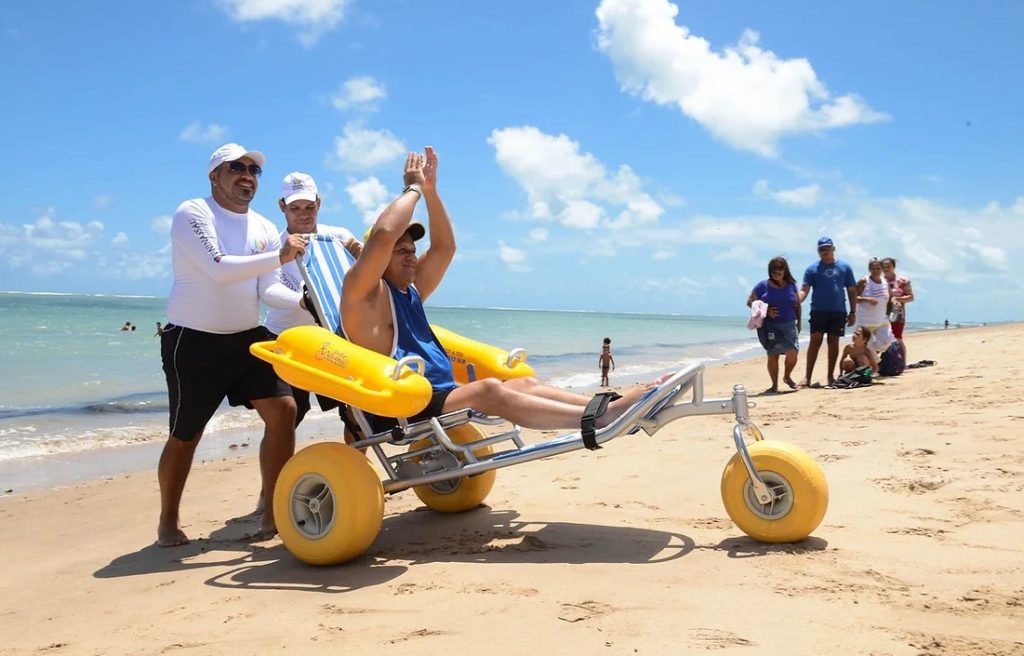
8. Waterwheels: The Flotation Master
If your primary goal is to be in the water rather than just on it, Waterwheels is the specialist.
- Why it wins: The bright yellow armrests are actually floats. Provides a highly visible, very buoyant “lounge” experience in the water.
- Portability: Folds up remarkably well for a chair offering this much stability in waves.
- Expert Tip: The three-position reclining seat makes this the “luxury lounger” of the beach wheelchair world. Perfect for a long afternoon of floating under the sun.
Cost of Ownership: Rental vs. Buying
In 2026, renting a beach wheelchair typically costs $75–$150 per day.
- The Rental Trap: Most beach rentals are TerraWheels or PVC chairs that have been sitting in the sun for years. Often heavy, hard to push, and lack comfortable seating.
- The Investment: If you go to the beach more than 5 times a year, purchasing your own chair like a Motus or Sand Rider pays for itself in just two seasons and offers a vastly superior ride.
→ See all 59 locations on our interactive map
If $4,500 still feels like a leap of faith, you can test-drive a Motus on real terrain first — at parks, zoos, adaptive sports nonprofits, and rental programs across the US, Canada, Australia, and the UK. Find a location near you on our map →
Frequently Asked Questions
What is the best beach wheelchair overall?
The best choice depends on your priority. For families who want one chair that handles the beach, mountain trails, and floating in water, the Extreme Motus all-terrain wheelchair ($4,500) is hard to beat. For pure flotation in waves, the EZ Roller or Waterwheels excel. For maximum portability in a small car, the Sand Rider is unmatched.
Do beach wheelchairs really float?
Some do. Chairs with low-pressure balloon tires (like the Extreme Motus) and chairs with buoyant armrests (like the EZ Roller and Waterwheels) actually float. Standard beach wheelchairs with thinner pneumatic tires won’t float and shouldn’t be taken into deep water.
How much do beach wheelchairs cost in 2026?
Beach wheelchairs range from about $1,500 (basic PVC pool chairs) to $5,500+ (high-end clinical-grade chairs). The Extreme Motus, which doubles as an all-terrain hiking chair, is $4,500. Renting at the beach typically runs $75–$150 per day.
Can I bring a beach wheelchair on a plane?
Some compact models like the Vipamat Hippocampe and Sand Rider disassemble small enough to be checked as luggage. The Extreme Motus folds and fits in most SUVs but is typically too large for airline checked baggage — most owners rent or borrow at their destination, or ship the chair ahead.
Are beach wheelchairs covered by insurance?
Generally no. Most insurance and Medicare classify beach wheelchairs as recreational rather than medically necessary. Some state Medicaid waivers and disability-focused grants will cover them — see our Grants Finder for funding options.
Try the Motus before you buy
Ride a Motus on real terrain near you. Feel the weight, test the suspension, see how it loads in your vehicle — all before you commit.
Free demo experience. No pressure. Locations across the U.S.
Request a demo experience →How Much Does a Beach Wheelchair Cost?
Beach wheelchair prices range from a few hundred dollars for basic PVC frame models to well over $10,000 for powered chairs. The sweet spot for a chair that handles soft sand comfortably is usually $2,000–$8,000.
The Extreme Motus all-terrain wheelchair is $4,500 — it rolls over soft sand, floats in the water, weighs 55 lbs, and folds into any SUV, so one chair covers the beach, trails, and snow. Monthly payment plans and grants can cover part or all of the cost.


How it all started - Meet Sam & Ryan
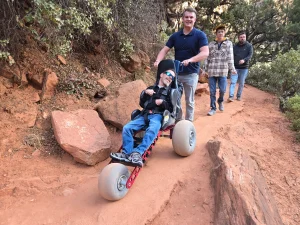
Since 2019, Sam and Ryan have been demonstrating that nature is wheelchair accessible with the Extreme Motus All Terrain Wheelchair. From National Parks to Skateparks, their adventures prove that a manual off-road wheelchair can offer laughter and joy while navigating diverse terrains.
Join us as we continue to share these inspiring journeys.
Discover Freedom with the Extreme Motus All Terrain Wheelchair
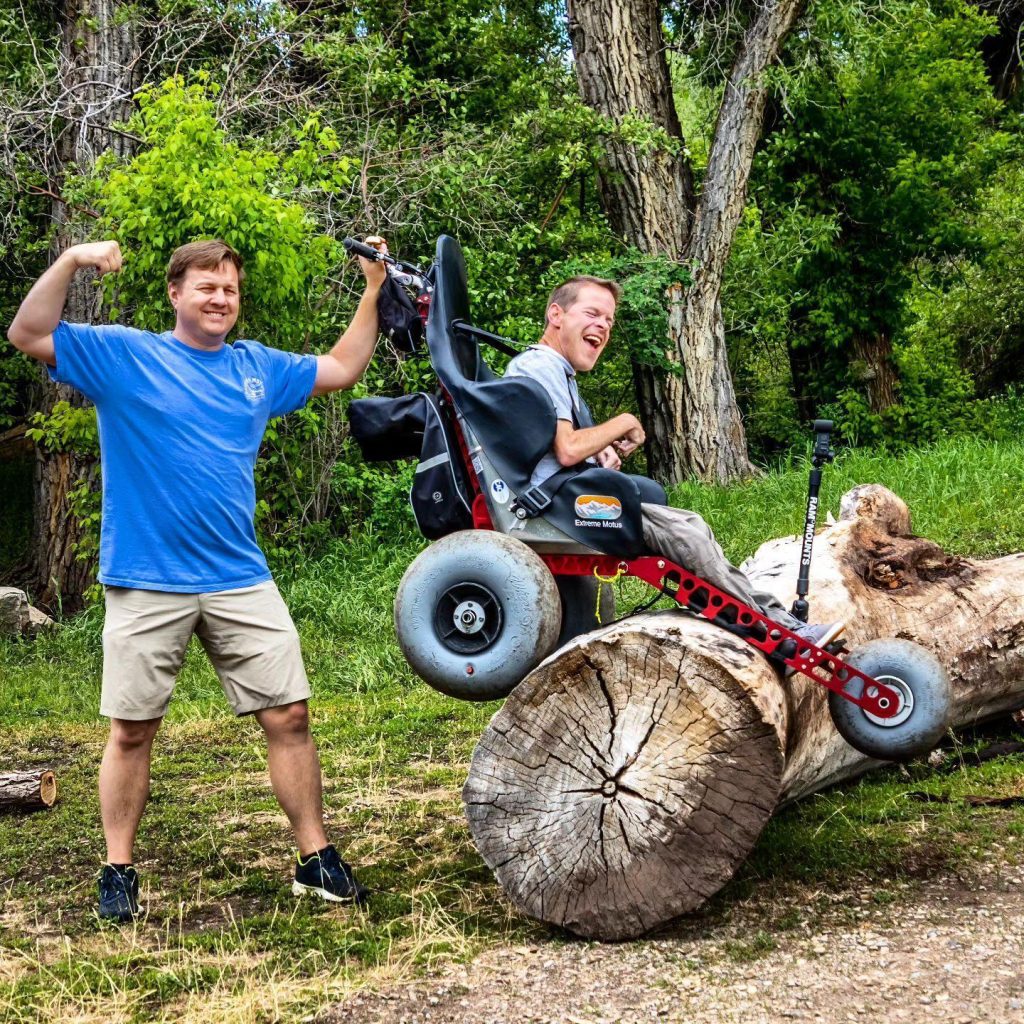
Light, comfortable, and compact, the Extreme Motus glides over sand, rocks, grass, gravel, and even floats in water.
It's more than a outdoor wheelchair; it's your ticket to freedom. Embrace the outdoors with confidence, knowing our off-road wheelchair is engineered for durability and ease of use.
Be the first to hear about new gear, upcoming adventures, and exclusive offers. As a welcome gift, you'll get a $100 coupon toward the Motus All-Terrain Wheelchair — delivered straight to your inbox.
By subscribing you agree to receive marketing communications from Extreme Motus, including product updates, promotions, and special offers. I understand I can unsubscribe at any time.