

Quick answer
Adults with physical disabilities are at much higher risk of loneliness and isolation than their non-disabled peers. Inclusive outdoor recreation — accessible trails, adaptive equipment, mixed-ability programming — is one of the best-studied tools for building real friendships across ability lines. This guest post by Lisa Drennan, founder of MERGE Diverse Abilities Inclusion Consulting, lays out why friendships matter, what gets in the way, and concrete steps non-disabled people can take to build authentic connections in outdoor settings.
Sam and I met Lisa Drennan, founder of MERGE, at the NRPA show in Atlanta, Georgia. MERGE’s mission is to build more inclusive communities — places where friendships across ability lines can actually form. We invited her to write a guest post for the Extreme Motus blog because everything she does fits the second half of what we’re trying to do here.
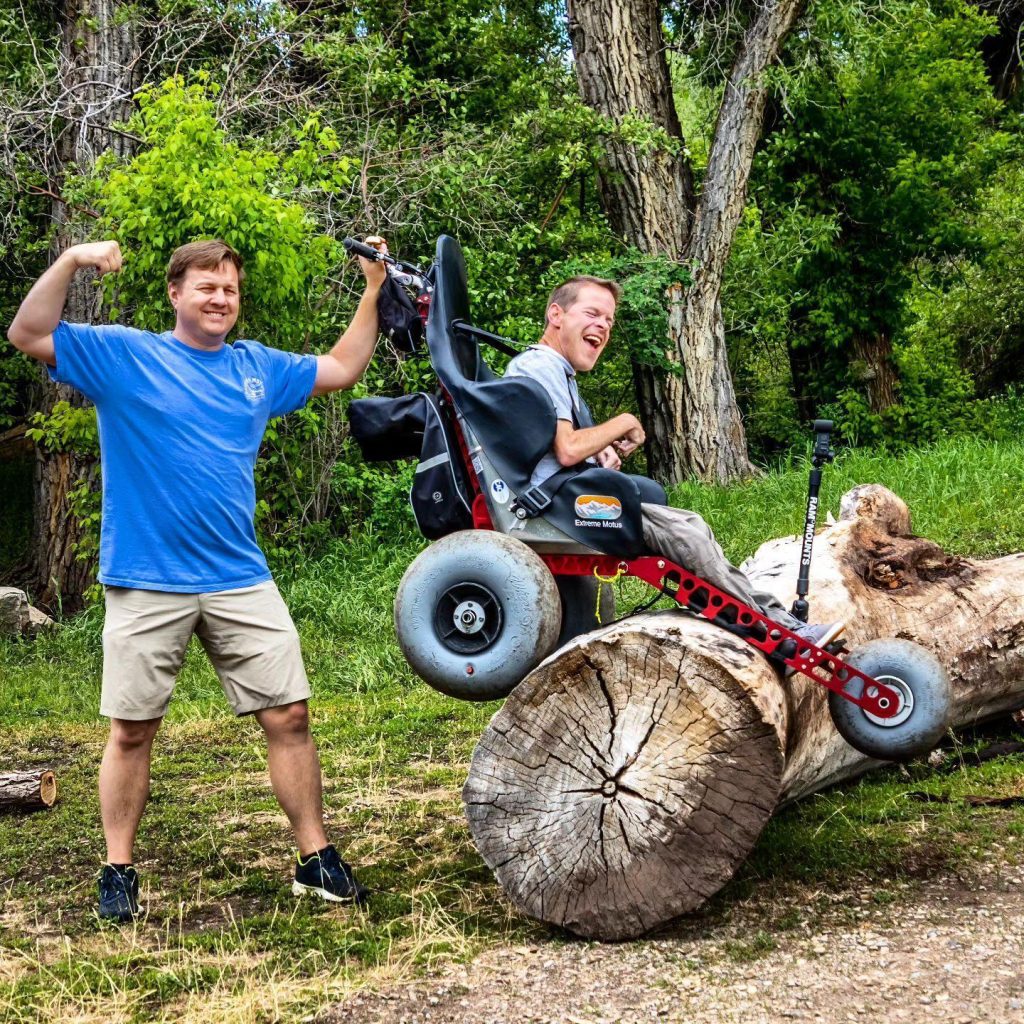
Sam and I have two goals with what we put on social media. The first is educational — we want people to understand what an all-terrain wheelchair can do and how it changes a family’s life. The second is bigger: we want to show that interabled friendships are real, normal, and the best part of life. You can be friends with people who are different from you. You should treat people the same even if they look or sound different. That’s it. That’s the message.
Here’s Lisa.
Guest post by Lisa Drennan
When we focus on the strengths and contributions that adults with physical disabilities bring to their communities, we open the door to fostering meaningful friendships. Outdoor recreation spaces — from adaptive hiking trails to accessible kayaking programs — offer a unique opportunity for connection and camaraderie to flourish.
In this post we’ll cover:
- Why friendships are essential for adults with physical disabilities
- The challenges of loneliness and isolation
- How outdoor recreation can create pathways for connection
- Tips for fostering authentic friendships
Loneliness and isolation
For adults with physical disabilities, barriers to accessibility and social stigma often limit opportunities to connect with others. Research shows that individuals with disabilities are more likely to experience loneliness due to fewer friendships, reduced social networks, and less access to recreational spaces.
Building meaningful friendships is key to overcoming these challenges. Friends provide not only companionship but also a sense of belonging, mutual support, and emotional well-being — essentials for a thriving, inclusive community.
Why friendships matter
Friendships offer countless benefits, including:
- Improved mental and physical health: Companionship reduces stress, fosters happiness, and promotes a sense of connection.
- Reciprocity: Meaningful friendships allow individuals to both give and receive support, creating mutual respect and shared purpose.
- Increased social inclusion: Friendships help break down stereotypes, fostering understanding and acceptance.
Why outdoor recreation specifically?
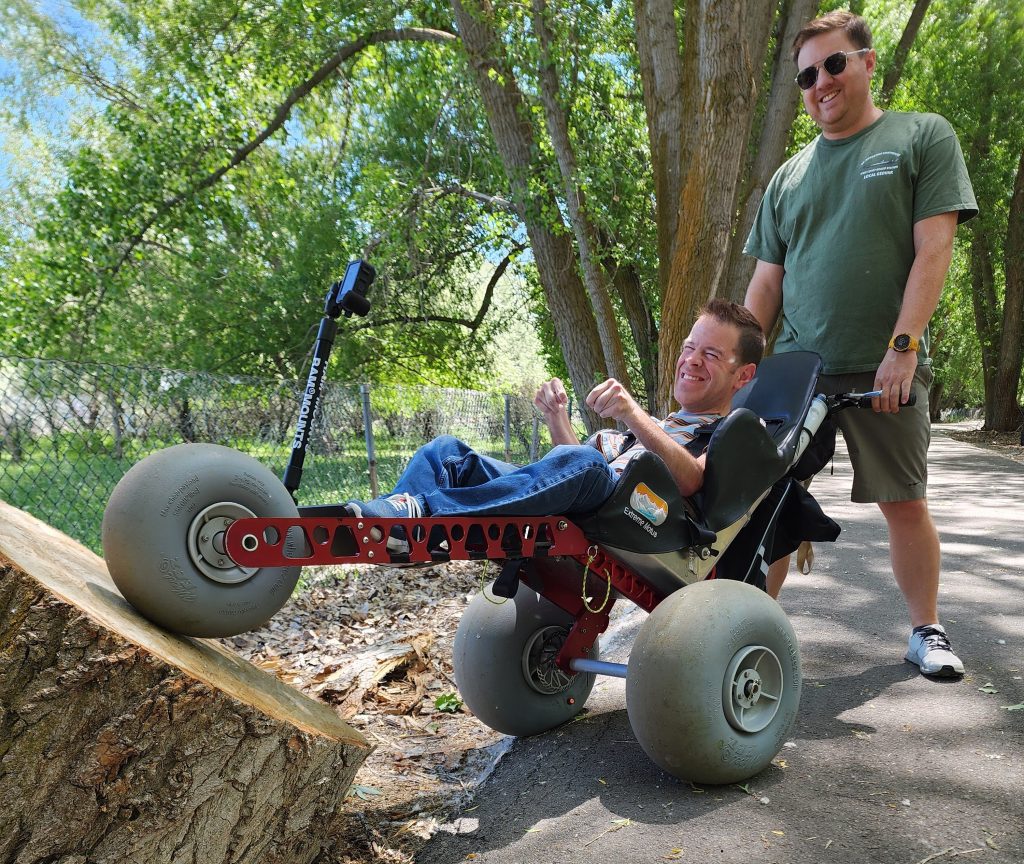
Outdoor recreation provides the perfect setting for friendships to form. Activities like hiking, adaptive cycling, fishing, or even enjoying a picnic foster shared experiences that bring people together. Unlike work or structured environments, recreation emphasizes fun, joy, and collaboration — creating a natural platform for connection.
By designing accessible outdoor spaces — incorporating adaptive equipment, universally designed trails, and inclusive programming — we can create environments where individuals with and without disabilities can bond over their shared love of nature and activity.
5 tips for initiating authentic friendships
For non-disabled people, here are practical ways to foster authentic friendships in outdoor recreation settings:
- Start with shared interests. Invite someone with a disability to join you in a recreational activity. Shared passions are the foundation of connection.
- Respect independence. Offer help when needed, but avoid making assumptions about someone’s abilities. Ask if and how you can assist.
- Celebrate commonalities. Focus on what unites you — shared hobbies, favorite trails, or mutual goals.
- Be open and curious. Engage in conversations that show genuine interest in the other person’s experiences and perspectives.
- Create opportunities for connection. Encourage inclusive group outings or activities to build relationships within a broader community.
Outdoor recreation isn’t just about access — it’s about creating spaces where friendships and connections can thrive. By fostering inclusion in these settings, we take a significant step toward building a more welcoming and supportive community for all.
What steps will you take today to create an inclusive outdoor space?
→ Start at a place that’s already inclusive.
If you’re looking for an outdoor space where you can bring a friend or family member who uses a wheelchair, our interactive location map shows 59 parks, zoos, and adaptive sports programs across the US, Canada, Australia, and the UK that already keep an Extreme Motus available for visitors. The hard part is solved — just show up and roll.
About the author
Lisa Drennan is the founder of MERGE Diverse Abilities Inclusion Consulting, specializing in staff training and expert consultation for recreation, camp, sport, and community organizations to promote meaningful inclusion for individuals with diverse abilities. She is the primary author of Building Friendships Between People with and People without Disabilities, published with support from The Arc Massachusetts.
Contact Lisa:
Lisadrennan@mergeconsulting.org
www.mergeconsulting.org
781-724-1918
FAQ: Inclusive outdoor recreation
What does “inclusive outdoor recreation” mean?
Inclusive outdoor recreation means designing trails, programs, equipment, and culture so that people of all abilities can participate together — not in parallel programs, but in the same activities at the same time. It includes accessible trails, adaptive equipment loaner programs (like all-terrain wheelchairs), inclusive group structures, and trained staff who know how to facilitate mixed-ability participation.
How do I start an inclusive outdoor program at my organization?
Start with a single activity or trail and a partner organization that already serves people with disabilities. MERGE consults on exactly this. Adaptive sports nonprofits, your state’s grant programs, and local Independent Living Centers are good starting points. The biggest mistake organizations make is trying to do too much at once — pick one thing and do it well.
What’s the right way to ask if someone needs help?
Just ask, plainly. “Do you want a hand with that?” or “Is there anything I can do to help?” — and then accept the answer. Don’t grab the chair. Don’t make decisions for the person. Don’t assume help is needed because they have a disability. Most adaptive equipment users have a system; respect it.
Where can I read more about Sam and Ryan’s friendship?
The story of how Sam and I became friends in high school and started Extreme Motus together runs through most of our content. “The Truth About Being in a Wheelchair” is the most personal one, written from my perspective as Sam’s caregiver and best friend.
Thanks Lisa
Big thanks to Lisa for the guest post and for the work MERGE does. If you run a recreation organization, camp, parks district, or community group and want to make your programs genuinely inclusive — reach out to her.
Ryan Grassley
Owner, Extreme Motus
ryan@extrememotus.com
See the Extreme Motus · 2026 Price Guide
How it all started - Meet Sam & Ryan
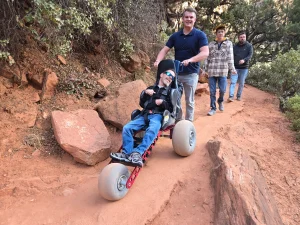
Since 2019, Sam and Ryan have been demonstrating that nature is wheelchair accessible with the Extreme Motus All Terrain Wheelchair. From National Parks to Skateparks, their adventures prove that a manual off-road wheelchair can offer laughter and joy while navigating diverse terrains.
Join us as we continue to share these inspiring journeys.
Discover Freedom with the Extreme Motus All Terrain Wheelchair
Light, comfortable, and compact, the Extreme Motus glides over sand, rocks, grass, gravel, and even floats in water.
It's more than a outdoor wheelchair; it's your ticket to freedom. Embrace the outdoors with confidence, knowing our off-road wheelchair is engineered for durability and ease of use.
Be the first to hear about new gear, upcoming adventures, and exclusive offers. As a welcome gift, you'll get a $100 coupon toward the Motus All-Terrain Wheelchair — delivered straight to your inbox.
By subscribing you agree to receive marketing communications from Extreme Motus, including product updates, promotions, and special offers. I understand I can unsubscribe at any time.