

Quick answer
Yes — fishing from a wheelchair is absolutely possible, even off-pavement. The trick is using an all-terrain wheelchair built for sand, mud, gravel, and snow so you can actually reach the water. The 55-lb manual Extreme Motus ($4,500) rolls onto beaches, ice, riverbanks, and bumpy boat ramps that defeat regular chairs. Pair it with a rod holder, an electric reel if grip is limited, and a fishing buddy, and the only thing stopping you is the bite.
Outdoor activities like fishing can feel out of reach when you have mobility challenges — but they aren’t. With the right equipment, wheelchair fishing opens up rivers, lakes, ocean shores, ice-covered ponds, and quiet trout streams that most accessible-fishing platforms never get close to. This guide covers the why, the how, the gear, and the real-world challenges of all-terrain wheelchair fishing, plus answers to the questions we hear most from new owners.
Find your all-terrain wheelchair
Why all-terrain wheelchair fishing is worth it
Fishing isn’t just about catching fish. It’s a mix of physical activity, time outside, mental quiet, and (often) good company. Here’s what the people we work with tell us they get out of it.
Time in nature
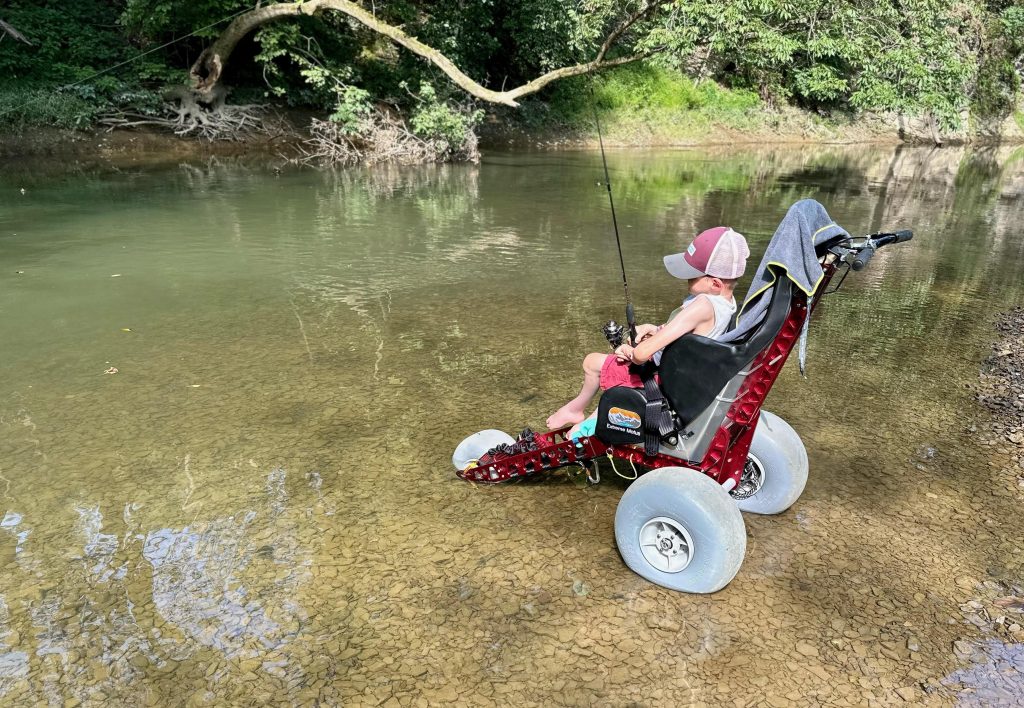
Fishing happens in beautiful places — riverbanks, alpine lakes, oceans, quiet ponds. Getting back to those places after a mobility change is huge. The fresh air, water sounds, and slower pace are reason enough to go, even on the days nothing’s biting.
Stress relief and focus
Casting, watching the line, and waiting for a bite is genuinely meditative. A lot of our customers describe a fishing trip as the first time their head felt quiet in months. The repetition and focus pull you out of the day-to-day.
A real challenge
Fishing has a learning curve — bait, rigs, reading water, timing the cast — and that’s a feature, not a bug. There’s always something to get better at, which keeps it interesting trip after trip.
Time with people who matter
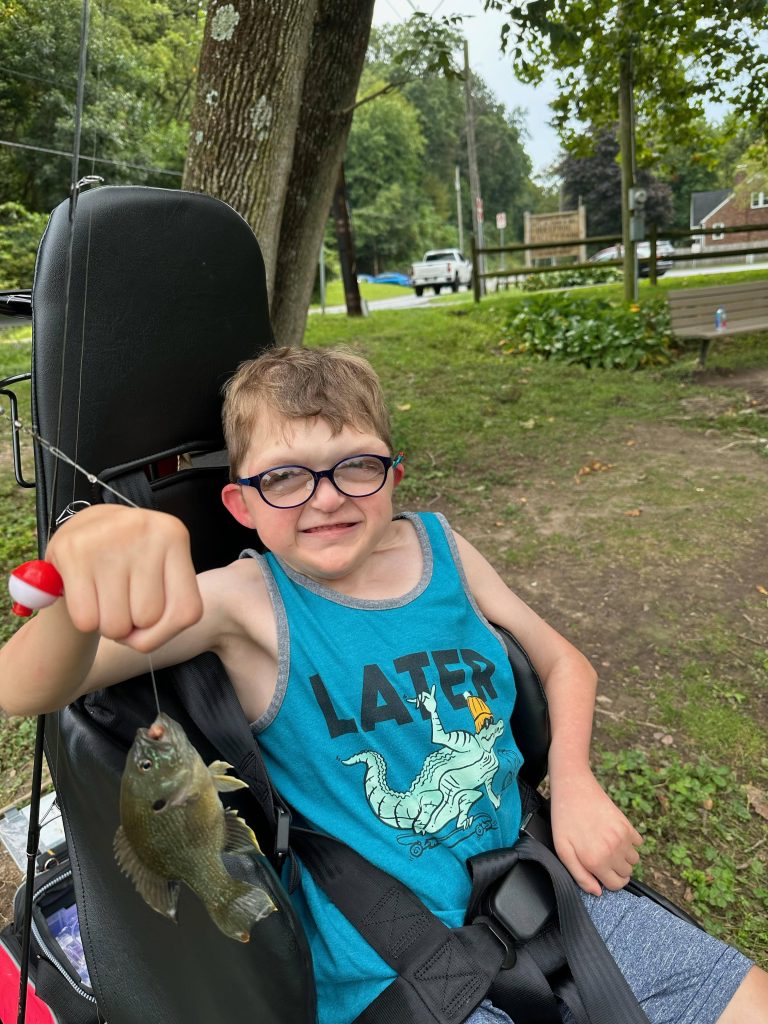
Fishing tends to happen with someone — a spouse, a kid, a friend, a fishing club. For families adjusting to a mobility change, having an activity you can all do together again is a big deal. We’ve seen it bring grandparents and grandkids back into the same boat (literally).
Real physical activity
Pushing across uneven ground, casting, reeling, repositioning — that’s exercise. Not gym exercise, but the kind that leaves you tired in a good way at the end of the day.
The challenges (and how to get around them)
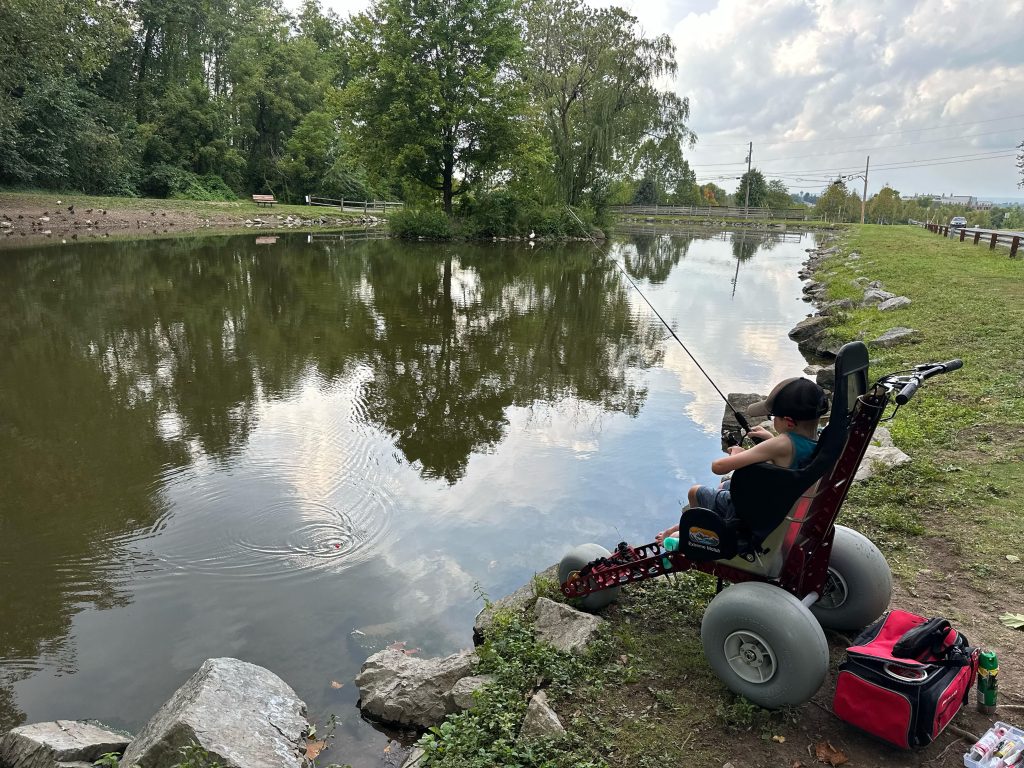
Most fishing spots weren’t designed with wheelchairs in mind. Here’s what gets in the way and what actually solves it.
Getting to the water
Problem: The path from the parking lot to the water is rarely paved. Gravel, roots, mud, sand, and short steep drops are normal.
Fix: An all-terrain wheelchair with low-pressure balloon tires (like the Wheeleez tires on the Extreme Motus) handles soft ground that stops a regular chair cold. Hydraulic disc brakes matter on downhill approaches. If you’ll often need a push down a steep bank, plan for a buddy or two to help.
Docks, piers, and ramps
Problem: Public docks vary wildly. Some have great accessible platforms; many have a 4-inch lip, narrow boards, or no railing.
Fix: Scout ahead — Google Maps Street View, state park accessibility pages, and Facebook groups for adaptive anglers in your region are gold. Wheelchairtraveling.com has a solid primer on accessible fishing spots. Many state DNRs now flag fully accessible piers on their websites.
Beaches, mud, and snow
Problem: Sand, mud, and snow swallow standard wheelchair tires.
Fix: Big, soft, low-pressure tires float across what skinny hard tires sink into. The Motus rolls on Wheeleez polyurethane balloon tires — the same family of tires used on beach carts and dune buggies. They’re the difference between “I made it 10 feet” and “I went wherever I wanted.”
Handling rods and tackle
Problem: A standard wheelchair has nowhere to put a rod, no place for a tackle box, and the seating geometry isn’t great for casting.
Fix: A rod holder mounted to the chair frame is the single best $20 you’ll spend. Add a small dry bag or backpack on the back of the seat for tackle. If grip strength is limited, an electric reel (Daiwa Tanacom or Shimano Beastmaster) lets you fight bigger fish one-handed.
Stability and safety
Problem: Wet rocks, sloping banks, and slippery boat ramps are real fall risks.
Fix: Pick stable spots — flat banks, accessible platforms, gradual gravel beaches. A chair with a wide wheelbase and a low center of gravity (the Motus is built that way) is much harder to tip than a narrow daily chair. Always tell someone where you’re fishing and when you’ll be back, especially on remote water.
Gear checklist for wheelchair fishing
- All-terrain wheelchair — sand, mud, snow, and gravel capability is non-negotiable for off-pavement spots
- Rod holder mounted to your chair frame (clamp-on models work on most chairs)
- Tackle bag that hangs off the seat back or armrest — keeps weight low and centered
- Electric reel if grip strength or one-handed use is a factor
- PFD any time you’re near deep water — non-negotiable for ice fishing
- Sunshade or umbrella mount — long days outdoors add up fast
- Phone in a waterproof pouch for safety and the obligatory grip-and-grin photo
Wheelchair ice fishing
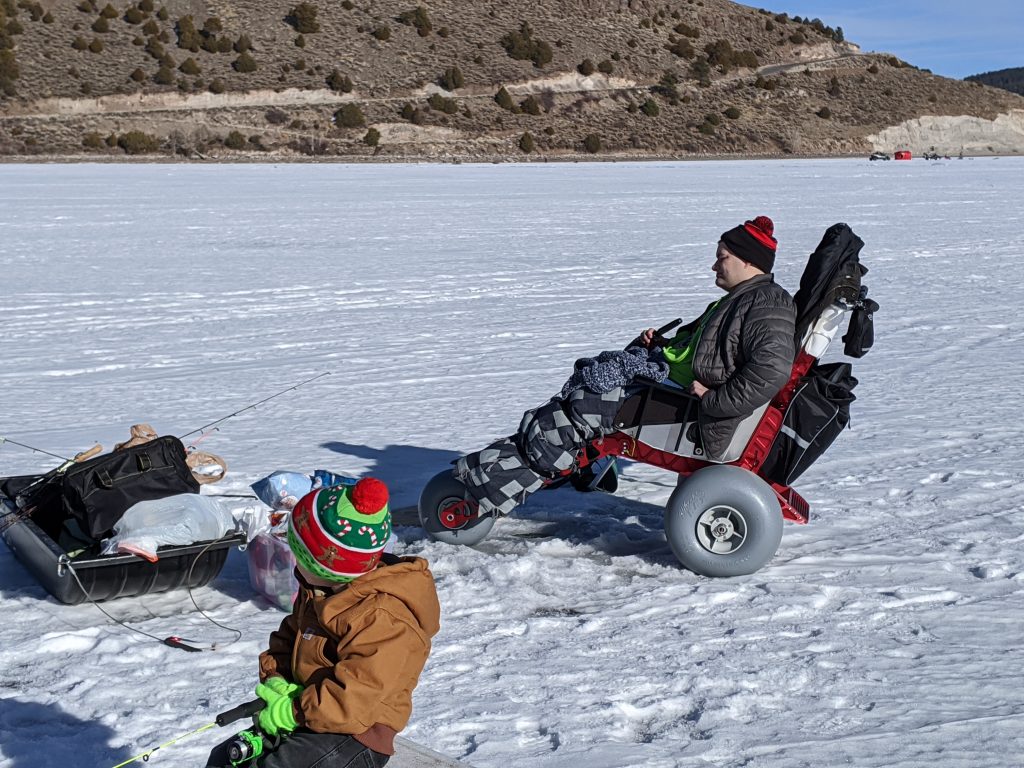
This is the question we get every winter: can I take an all-terrain wheelchair on the ice? Short answer: yes, our customers do it every season. The Extreme Motus’s wide low-pressure tires distribute weight well across snow and ice, and the chair handles the trip from the truck to the shanty without drama. A few notes:
- Stick to ice you’d trust on foot — the chair is light (55 lbs) but you still need solid ice for safety.
- Watch for slush — wet snow on top of ice is the only condition that really slows the Motus down.
- Plan transfers carefully if you’re fishing inside a heated shanty — bring a board or beach mat to keep snow out of the chair.
FAQ: All-terrain wheelchair fishing
What’s the best wheelchair for fishing off-pavement?
For shore fishing on sand, mud, gravel, and snow, you want a manual all-terrain wheelchair with low-pressure balloon tires. The 55-lb Extreme Motus ($4,500) is built for this — Wheeleez tires, hydraulic disc brakes, fits in a car trunk. Powered options like the Magic Mobility X8 or Action Trackchair work too but cost 3–5x as much and are much harder to transport.
Can I really take an all-terrain wheelchair on the beach?
Yes. Beach access is one of the most common things our customers use the Motus for. The Wheeleez balloon tires are the same family of tires used on commercial beach carts — they float across soft sand instead of digging in. Wet, packed sand is even easier than dry.
Do I need a special fishing rod or reel for wheelchair use?
Not necessarily. A standard rod-and-reel setup works fine for most people. If grip strength or one-handed use is a factor, an electric reel (Daiwa Tanacom is the popular pick) makes a big difference — especially for bigger fish. Adaptive casting aids and rod-holder mounts are widely available and inexpensive.
How do I find wheelchair-accessible fishing spots near me?
Start with your state DNR or Fish & Wildlife website — most flag accessible piers and platforms. National Parks, Forest Service sites, and many county parks have accessibility pages. Adaptive sports organizations and local Facebook groups for disabled anglers are great for word-of-mouth recommendations on spots that actually work (versus ones that just have an “accessible” label).
Is wheelchair ice fishing safe?
It can be, if you follow standard ice-safety rules: minimum 4 inches of clear ice for foot travel (which an all-terrain wheelchair plus rider weight stays well under), check with locals on current conditions, never go alone, and wear a PFD or float suit. The Motus’s wide tires actually distribute weight better than walking — but the ice still has to be safe in the first place.
How much does an all-terrain fishing wheelchair cost?
The Extreme Motus is $4,500 standard, which is the lowest price point for a true all-terrain manual wheelchair we know of. Comparable manual chairs from GRIT and Vipamat run $4,000–$8,000+. Powered all-terrain chairs (Action Trackchair, TerrainHopper, Magic Mobility) start around $15,000 and go up from there. Full 2026 price guide here.
Ready to get back on the water?
Fishing is one of the most-cited reasons our customers buy a Motus, and we love seeing the photos come back. If you have questions about whether the chair will work for your specific spot, your transfer style, or your fishing rig, just ask. I’m happy to talk it through.
Ryan Grassley
Owner, Extreme Motus
ryan@extrememotus.com
See the Extreme Motus · 2026 Price Guide

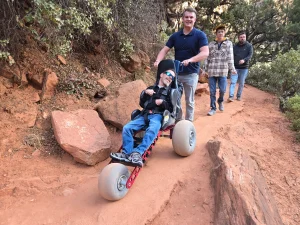
How it all started - Meet Sam & Ryan
Since 2019, Sam and Ryan have been demonstrating that nature is wheelchair accessible with the Extreme Motus All Terrain Wheelchair. From National Parks to Skateparks, their adventures prove that a manual off-road wheelchair can offer laughter and joy while navigating diverse terrains.
Join us as we continue to share these inspiring journeys.
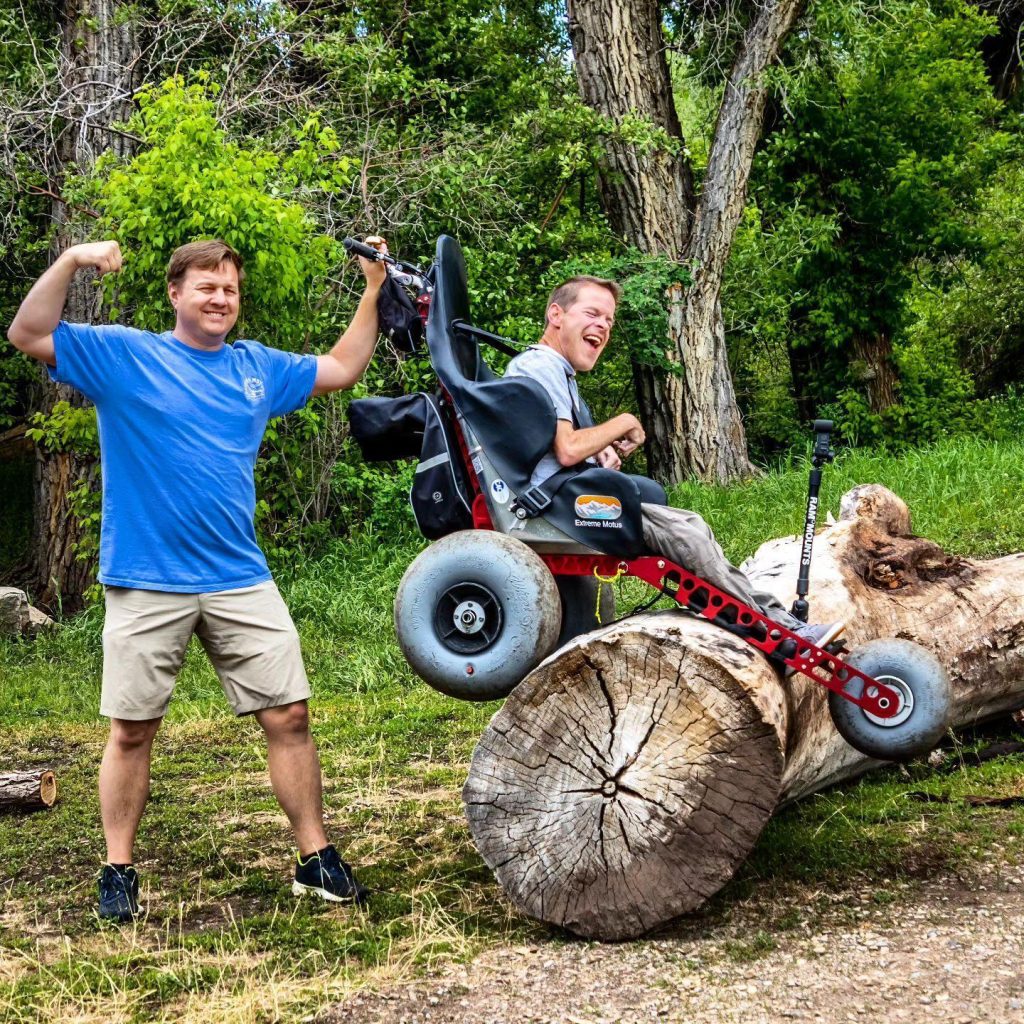
Discover Freedom with the Extreme Motus All Terrain Wheelchair
Light, comfortable, and compact, the Extreme Motus glides over sand, rocks, grass, gravel, and even floats in water.
It's more than a outdoor wheelchair; it's your ticket to freedom. Embrace the outdoors with confidence, knowing our off-road wheelchair is engineered for durability and ease of use.
Be the first to hear about new gear, upcoming adventures, and exclusive offers. As a welcome gift, you'll get a $100 coupon toward the Motus All-Terrain Wheelchair — delivered straight to your inbox.
By subscribing you agree to receive marketing communications from Extreme Motus, including product updates, promotions, and special offers. I understand I can unsubscribe at any time.