

If you need a wheelchair and you’re on Medicare, you might be wondering: can I actually get one covered? The good news is yes — but there’s a specific path to follow, and many people miss important steps that cause their claims to be denied.
“Medicare covers the chair that keeps you in the house.
We build the chair that gets you out of it.”
Last updated: May 9, 2026 · By Ryan Grassley
Quick answer: Medicare Part B covers standard manual wheelchairs, lightweight manuals, power wheelchairs, and mobility scooters — but only if deemed medically necessary by a doctor. You need a face-to-face evaluation, a written prescription, prior authorization (for power chairs), and a Medicare-approved DME supplier. Medicare pays 80% after your $283 Part B deductible (2026); you pay 20%. All-terrain wheelchairs are almost never covered (classified as recreational). Some states offer Medicaid waivers that may help, and disability-focused grants are how most outdoor families fund their chairs.

Find your grant in 90 seconds
Answer 5–7 quick questions and we’ll narrow 50+ adaptive-equipment grants down to the ones you’re most likely to win.
Free. No email required. Plus a 30-min strategy call with Kenny if you want help applying.
Take the Grant Match Quiz →1. Standard Manual Wheelchairs — Medicare Approved
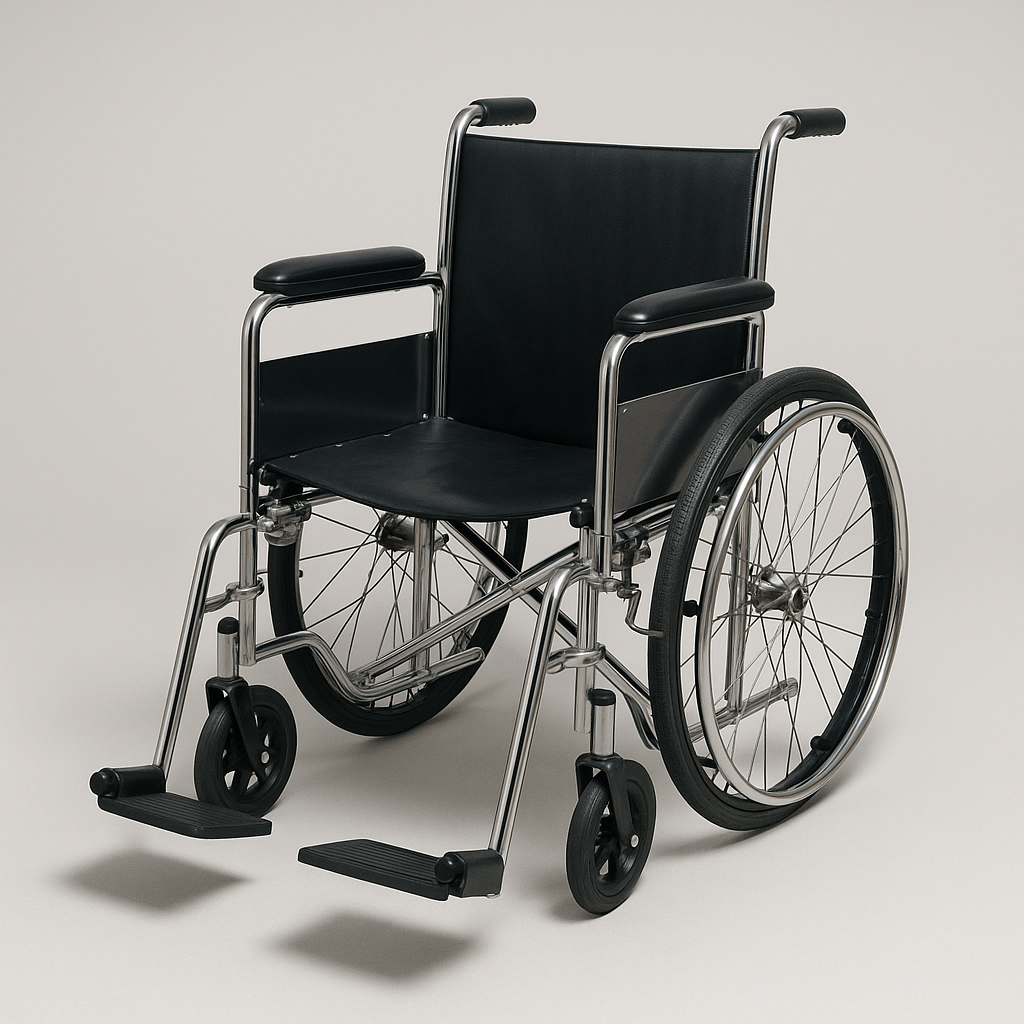
These are the basic wheelchairs most people think of. They’re suitable for folks who can operate the chair using their arms and have adequate upper-body strength.
Medicare coverage: Yes, with a doctor’s prescription and evidence of medical necessity. You’ll need a face-to-face evaluation showing why you need the chair for activities of daily living (ADL) or mobility within your home.
2. Lightweight Manual Wheelchairs — Medicare Approved
Lighter than standard models, these are easier to transport and maneuver. They’re ideal for more active users or when a caregiver needs to lift the chair.
Medicare coverage: Yes, if the patient cannot use a standard chair effectively and needs a lighter option due to strength or transport limitations. The doctor must document why the standard model won’t work.
3. Heavy Duty and Bariatric Wheelchairs — Medicare Approved
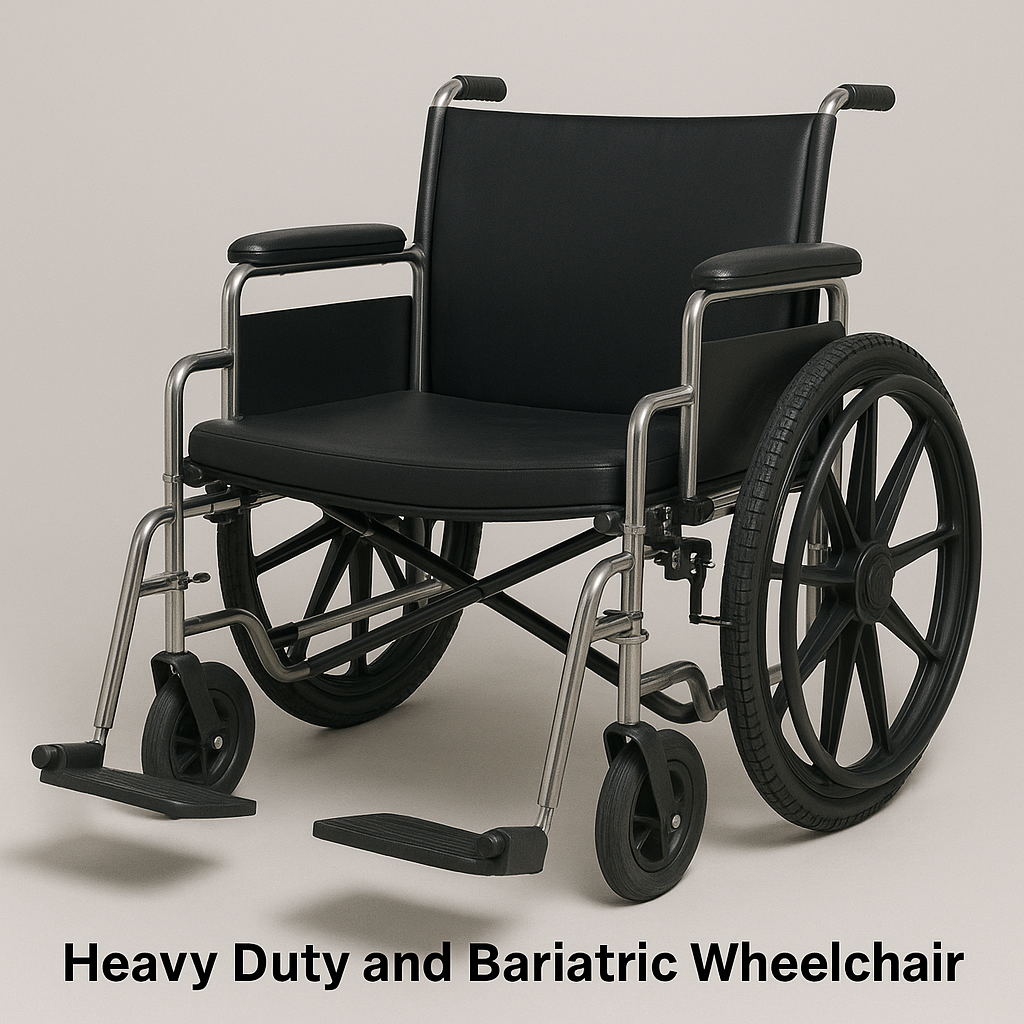
Built for riders over 250 lbs with reinforced frames and wider seats. These are medically necessary for people whose weight requires special construction.
Medicare coverage: Yes, if medically necessary due to the patient’s weight or physical size. The doctor must document that a standard-capacity chair won’t safely accommodate the patient.
4. Power Wheelchairs — Medicare Approved (With Higher Barriers)
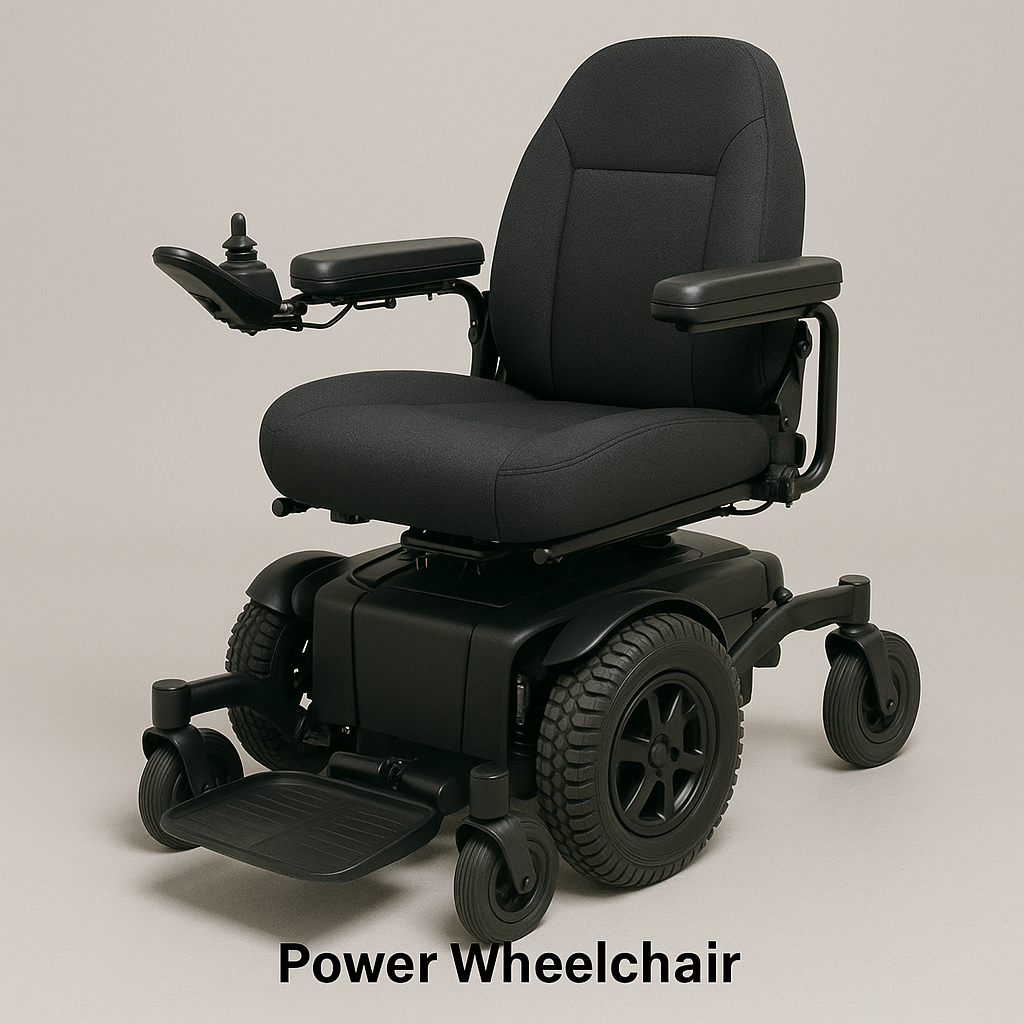
Powered wheelchairs are life-changing for people with limited upper-body strength or chronic conditions like ALS, MS, and spinal cord injuries. But Medicare approval is stricter.
Who qualifies:
- Cannot propel a manual wheelchair due to upper-body limitations
- Need the wheelchair for in-home mobility
- Cannot operate a joystick-controlled scooter
Medicare coverage: Yes, but approval requires a face-to-face evaluation, prior authorization, home assessment (for some categories), and documentation of medical necessity. Many initial requests are denied — appeal if yours is.
5. Power-Operated Vehicles (Scooters) — Medicare Approved
Scooters work when the user can safely get in and out, sit upright without special trunk support, and operate the controls independently. They’re great for outdoor or large indoor spaces.
Medicare coverage: Yes, with prior authorization and documented medical necessity. Like power wheelchairs, scooter approvals require a face-to-face evaluation showing why the patient cannot use a manual wheelchair.
Why Medicare Won’t Cover Off-Road Wheelchairs (And How to Get One Anyway)
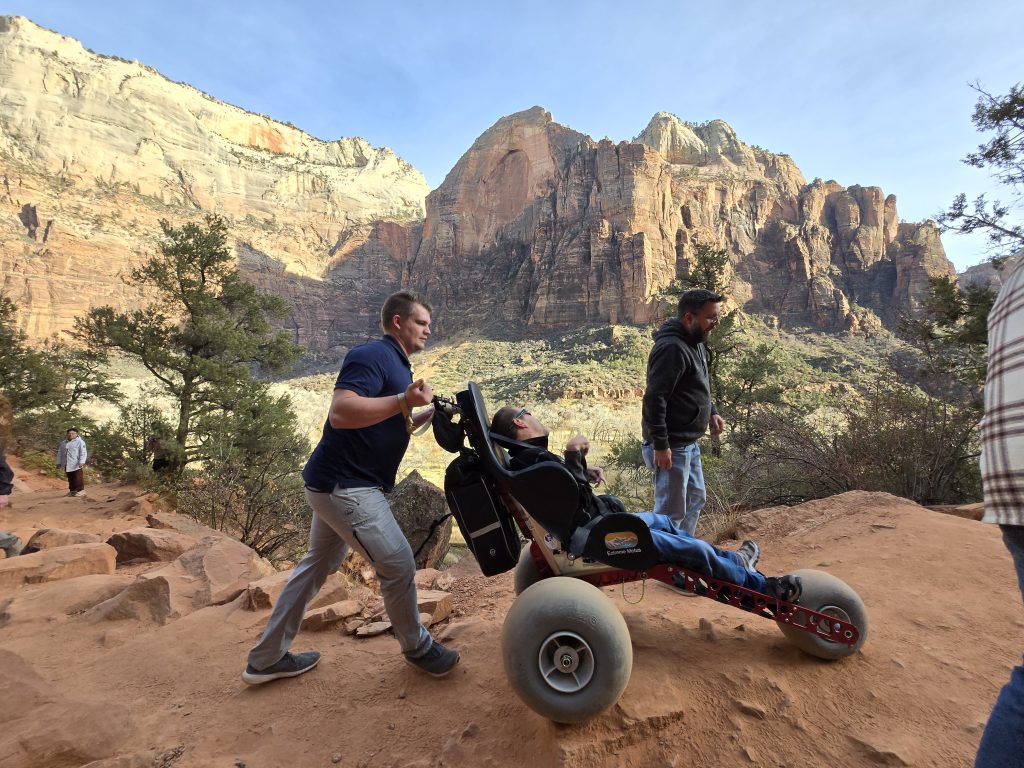
All-terrain wheelchairs — like those made by Extreme Motus — are not typically covered by standard Medicare plans. Medicare classifies them as “not medically necessary” because they’re designed for outdoor recreation, not for in-home mobility or activities of daily living.
I get the frustration. We built the Extreme Motus all-terrain wheelchair specifically because people need to get outside, and a chair that only works on pavement doesn’t meet that need. But we’re not in charge of Medicare’s classification — so we built a different funding playbook instead.
Side-by-Side: Medicare-Approved Chair vs. Extreme Motus
| Feature | Medicare-Approved Chair | Extreme Motus |
|---|---|---|
| Designed for | Indoor mobility, hallways, sidewalks | Trails, beaches, sand, snow, mud, water |
| Tire type | Hard, narrow | Low-pressure balloon (floats in water) |
| Floats in water | ✗ No | ✓ Yes |
| Sand & snow capable | ✗ No | ✓ Yes |
| Best use case | Activities of daily living at home | Outdoor adventures with family |
| Sticker price | $1,000–$8,000 | $4,500 |
| Out-of-pocket via Medicare | $0–$1,600 (Medicare pays 80%) | Not covered |
| Funding paths | Medicare, Medigap, Medicaid | Grants, payment plans, state Medicaid waivers |
| The vibe | Clinical, medical | Adventure, family-friendly |
Medicare covers the basics. We cover the memories.
The point isn’t that one is better than the other. They’re built for different lives. If your goal is in-home mobility, a Medicare chair will serve you well. If your goal is to keep doing the things you used to do — hike with your family, sit on a beach, watch a sunset on a trail — you’ll need a different kind of chair, and a different funding path. Read how customers like the Durst family and Kevin and Jacque (Hawaii to Zion) got there.
How to actually fund an Extreme Motus
Three paths most of our customers use:
- Grants Finder: A database of disability-focused grants that fund adaptive equipment. Many of our customers have been approved — our 11 Best Grants guide walks through application paths and contacts.
- State Medicaid Waivers (HCBS): Some states cover all-terrain mobility under Home and Community-Based Services waivers. Documentation showing quality-of-life and community-participation benefits is the key. Contact your state’s Medicaid office to check eligibility.
- 0% interest payment plans: If grants and waivers aren’t an option, financing the Motus over 12–24 months keeps the monthly cost manageable. See the full price guide for the math.
→ See all 59 locations on our interactive map
If $4,500 still feels like a leap of faith, you can test-drive a Motus on real terrain first — at parks, zoos, adaptive sports nonprofits, and rental programs across the US, Canada, Australia, and the UK. Find a location near you on our map →
How to Get a Medicare-Approved Wheelchair: 4-Step Process
Here’s the exact process that works:
- Visit your doctor for a face-to-face evaluation. Medicare requires documentation showing why you need a wheelchair for mobility or activities of daily living. Your doctor must explain the medical reason in writing.
- Get a written prescription. Your doctor must submit a detailed order specifying the type of wheelchair, special features, and medical justification. This goes to a Medicare-approved DME supplier, not directly to Medicare.
- Choose a Medicare-approved DME supplier. Only Durable Medical Equipment suppliers enrolled in Medicare can bill them directly. Ask your doctor for a list or search Medicare’s approved supplier directory.
- Get prior authorization (if required). For power wheelchairs and scooters, Medicare requires prior authorization before delivery. The DME supplier usually handles this, but confirm in writing that authorization is approved before you receive the equipment.
What Does Medicare Actually Pay?
Medicare Part B covers 80% of the approved amount after you meet your Part B deductible ($283/year in 2026). You pay 20% coinsurance, plus anything the chair costs above Medicare’s allowable charge.
Example: If a manual wheelchair’s approved Medicare amount is $1,000, Medicare pays $800 (80%). You pay $200 (20%). If the actual chair costs $1,200, you also pay the extra $200.
Supplemental insurance (Medigap) may cover some or all of your 20% coinsurance, depending on your plan.
Common Reasons Medicare Denies Wheelchair Claims
Rejections happen. Here’s how to avoid them:
- No face-to-face doctor visit: Medicare requires an in-person evaluation. Telemedicine doesn’t count.
- Weak medical justification: “Patient needs wheelchair” isn’t enough. “Patient has severe arthritis limiting ambulation to 20 feet” is better.
- Using a non-approved supplier: If your supplier isn’t Medicare-enrolled, the claim gets denied and you eat the cost.
- No prior authorization for power chairs: Power wheelchairs and scooters require pre-approval. Ordering without it almost always results in denial.
- Requesting a non-covered item: All-terrain wheelchairs, recreational equipment, or upgrades beyond the Medicare allowable amount won’t be covered.
If your claim is denied: You have the right to appeal. Most denials can be overturned if you provide additional medical documentation or a stronger justification from your doctor.
Which Chair Do You Actually Need?
Not sure which direction to go? In 30 seconds:
- Mostly indoors, basic mobility? A Medicare-approved standard or lightweight manual chair will serve you. Talk to your doctor about a face-to-face evaluation.
- Limited upper-body strength? A Medicare-approved power wheelchair or scooter. Higher barrier to qualify, but the same Medicare path works.
- Want to hike, hit the beach, go camping, or travel with family? You need an all-terrain chair. The Extreme Motus handles the surfaces a standard chair can’t touch — see how it handled Bryce Canyon or Delicate Arch.
- Worried about cost? Start with our Grants Finder for funding options, or check the 0% interest payment plan.
Frequently Asked Questions
Does Medicare cover wheelchairs at all?
Yes. Medicare Part B covers manual wheelchairs, lightweight wheelchairs, bariatric wheelchairs, power wheelchairs, and mobility scooters — but only if they’re medically necessary and prescribed by a doctor. All-terrain and recreational wheelchairs are not covered.
How much does Medicare pay for a wheelchair?
Medicare pays 80% of the approved amount after your $283 Part B deductible (2026). The approved amount varies by wheelchair type — typically $1,000–3,000 for manual chairs, $5,000–8,000 for power chairs. You pay 20% coinsurance plus any costs above the approved amount. Supplemental insurance may cover part of your 20%.
What’s required to qualify for Medicare wheelchair coverage?
You need: (1) a face-to-face doctor’s evaluation; (2) a written prescription documenting medical necessity; (3) a Medicare-approved DME supplier; (4) prior authorization for power chairs/scooters. Missing any of these steps usually results in denial.
How do I find a Medicare-approved wheelchair supplier?
Ask your doctor for a list, or search Medicare’s Durable Medical Equipment Supplier Directory at dmepos.cms.gov. Always confirm the supplier is enrolled before ordering.
Can I appeal if Medicare denies my claim?
Yes. Work with your doctor to submit additional medical documentation, get a stronger justification letter, or provide evidence that you meet Medicare’s criteria. Many denials are overturned on appeal.
Will Medicare cover an all-terrain wheelchair?
Almost never. Medicare classifies all-terrain wheelchairs as recreational equipment, not medically necessary for in-home mobility. However, some states offer Medicaid waivers (HCBS) that may help. Disability-focused grants and 0% financing are also common funding paths — see our Grants Finder and price guide for options.
How much does the Extreme Motus all-terrain wheelchair cost?
The Extreme Motus is $4,500 in 2026, plus $375 shipping in the U.S. If Medicare won’t cover it, common funding paths include disability-focused grants, state Medicaid HCBS waivers, and 0% interest payment plans that bring the monthly cost into a manageable range. You can also test-drive one for free at any of 59 locations before you commit.
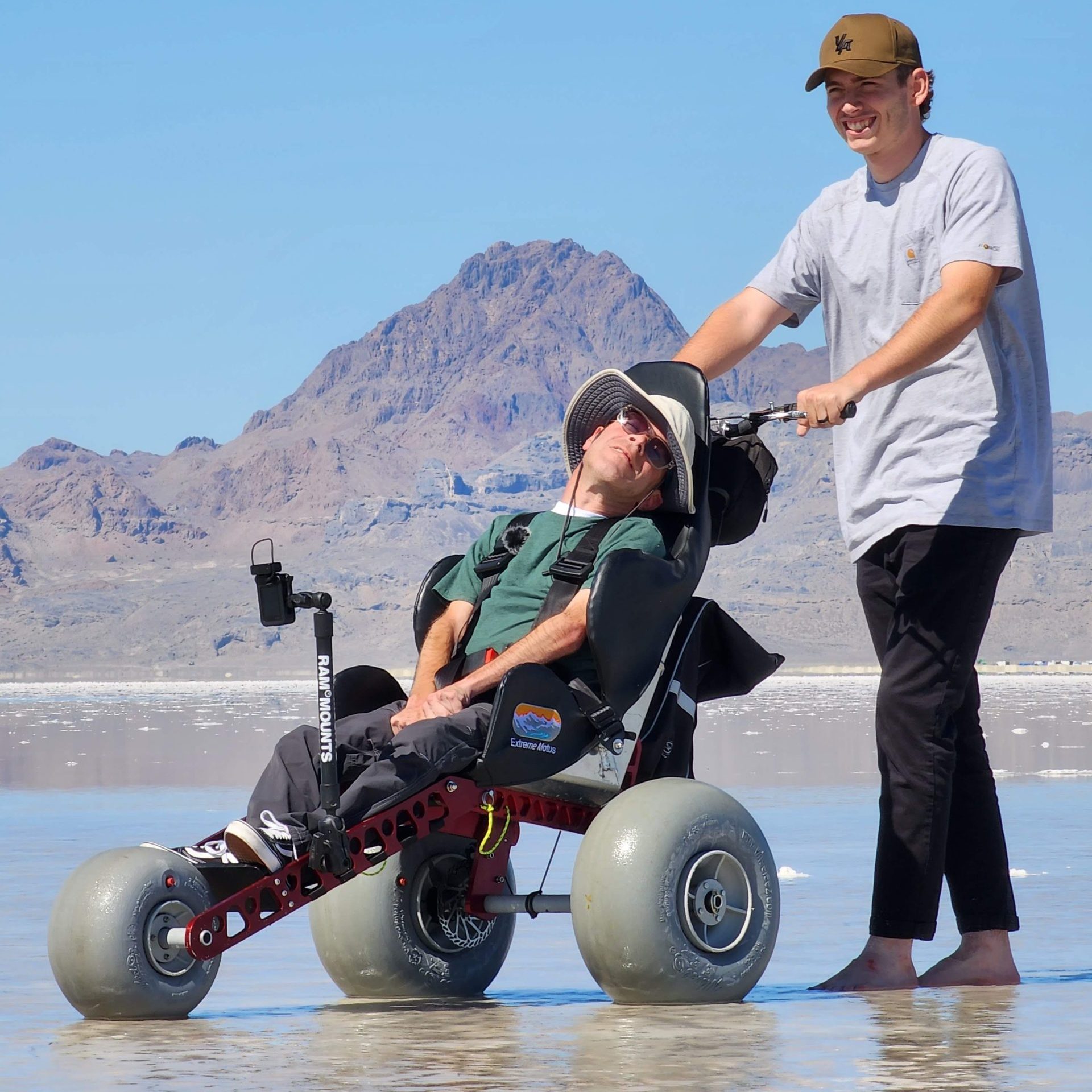
Try the Motus before you buy
Ride a Motus on real terrain near you. Feel the weight, test the suspension, see how it loads in your vehicle — all before you commit.
Free demo experience. No pressure. Locations across the U.S.
Request a demo experience →Bottom Line
Medicare does cover wheelchairs, but you have to follow the rules. Get a face-to-face doctor’s visit, use an approved supplier, and submit proper documentation. If you’re denied, appeal — most denials can be overturned.
And if a Medicare-approved indoor chair isn’t enough — if you want to keep doing the things you used to love — there are funding paths that work. A Medicare chair is a starting line. Don’t let it be your finish line.
Want to see what life beyond the sidewalk looks like?
→ See the Extreme Motus all-terrain wheelchair
→ Find a demo location near you (free test ride)
Ryan Grassley · ryan@extrememotus.com
Does Medicare Cover All-Terrain Wheelchairs?
Usually not. Medicare Part B covers wheelchairs as durable medical equipment when a doctor certifies you need one for use inside your home. Because all-terrain and beach wheelchairs are built for outdoor use, they generally don’t meet that in-home requirement — so Medicare typically won’t pay for them, even with a prescription. Always confirm your specific situation with Medicare or your plan provider.
That doesn’t mean you’re on your own for outdoor mobility. Many families fund an all-terrain chair through wheelchair grants — nonprofits and foundations that regularly cover part or all of the cost — or spread it out with a monthly payment plan. We help buyers find and write grant applications at no charge.
How it all started - Meet Sam & Ryan
Since 2019, Sam and Ryan have been demonstrating that nature is wheelchair accessible with the Extreme Motus All Terrain Wheelchair. From National Parks to Skateparks, their adventures prove that a manual off-road wheelchair can offer laughter and joy while navigating diverse terrains.
Join us as we continue to share these inspiring journeys.
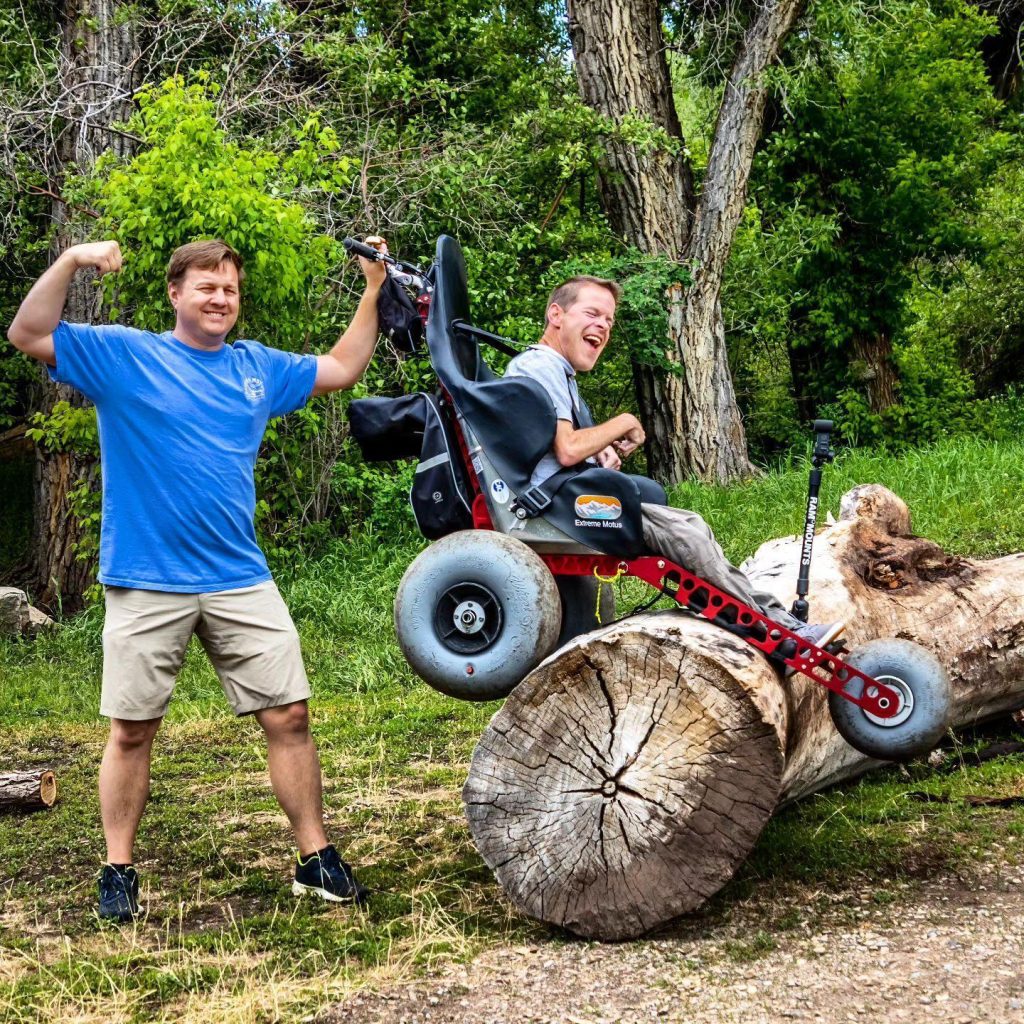
Discover Freedom with the Extreme Motus All Terrain Wheelchair
Light, comfortable, and compact, the Extreme Motus glides over sand, rocks, grass, gravel, and even floats in water.
It's more than a outdoor wheelchair; it's your ticket to freedom. Embrace the outdoors with confidence, knowing our off-road wheelchair is engineered for durability and ease of use.
Be the first to hear about new gear, upcoming adventures, and exclusive offers. As a welcome gift, you'll get a $100 coupon toward the Motus All-Terrain Wheelchair — delivered straight to your inbox.
By subscribing you agree to receive marketing communications from Extreme Motus, including product updates, promotions, and special offers. I understand I can unsubscribe at any time.