

Huntington’s Disease is a hereditary neurological condition that progressively impacts movement, cognition, and emotional regulation. Understanding its genetic basis, disease course, and support strategies—including outdoor mobility options—helps individuals and families navigate the diagnosis and plan for care.
Quick answer: Huntington’s disease is a rare genetic condition affecting 5–7 per 100,000 people. It is caused by an expanded CAG trinucleotide repeat in the HTT gene and follows autosomal dominant inheritance (50% transmission from affected parent). Symptom onset typically occurs in the 30s–50s. Currently incurable, but medications, therapies, and adaptive equipment like all-terrain wheelchairs help manage symptoms and maintain quality of life.
1. What Causes Huntington’s Disease?
Huntington’s Disease is caused by a genetic mutation in the HTT gene, which codes for the huntingtin protein. The mutation involves an abnormal expansion of a CAG trinucleotide repeat sequence. These expanded repeats (typically 40 or more CAG copies) produce a toxic form of the huntingtin protein that damages motor neurons and other brain cells, causing progressive neurodegeneration.
- Autosomal Dominant Inheritance: HD is inherited in an autosomal dominant pattern. A child has a 50% chance of inheriting the expanded gene if one parent is affected, regardless of the child’s sex.
- Genetic Penetrance: If an individual inherits the expanded mutation (40+ CAG repeats), they will develop HD with very high certainty during their lifetime.
2. How Common Is Huntington’s Disease?
Huntington’s Disease is rare. Globally, prevalence estimates range from approximately 4.88 per 100,000 people, with higher rates in populations of European ancestry (5–7 per 100,000 in Europe and North America). In the United States, an estimated 30,000 individuals have HD, with several thousand at-risk gene carriers. Symptom onset typically occurs between ages 30 and 50, with an average age of 40–45 years.
3. What Are the Treatment Options for Huntington’s Disease?
While there is no cure for Huntington’s Disease, FDA-approved medications and evidence-based therapies help manage symptoms and improve quality of life:
- Tetrabenazine (Xenazine): FDA-approved to manage involuntary movements (chorea), the hallmark motor symptom of HD.
- Antidepressants and Antipsychotics: Treat mood disturbances, depression, irritability, and behavioral changes common in HD.
- Physical Therapy: Maintains balance, coordination, and muscle function; reduces fall risk and maintains independence.
- Occupational Therapy: Adapts daily living activities and home environments to support functional independence.
- Speech and Swallowing Therapy: Addresses communication and swallowing difficulties that emerge during disease progression.
- Cognitive Therapy: Manages memory and attention deficits through structured interventions and strategies.
- Lifestyle Modifications: Regular supervised exercise, a balanced diet, stress management, and social engagement support overall health and slow symptom progression.
4. How Does Huntington’s Disease Affect Family Members?
Huntington’s Disease profoundly impacts families who support affected loved ones:
- Emotional Strain: Families experience grief, anxiety, and stress as they watch the disease progress.
- Caregiving Challenges: Physical care becomes increasingly demanding; managing behavioral changes requires patience and skill.
- Financial Pressure: Costs of medical care, long-term care facilities, therapies, and mobility aids accumulate significantly.
- Genetic Burden: Family members may face their own anxiety about genetic testing and personal risk of inheriting the disease.
5. Does Huntington’s Disease Require Wheelchair Mobility?
As Huntington’s Disease progresses, many individuals develop significant mobility challenges due to involuntary movements, loss of balance, and loss of motor control. Wheelchairs become essential for:
- Preventing Falls: Reduces injury risk from uncontrolled movements and balance loss.
- Supporting Independence: Enables mobility and participation in activities during advanced disease stages.
- Improving Comfort and Safety: Provides secure seating and reduces physical strain on caregivers.
6. Why Is Outdoor Access Important for People with Huntington’s Disease?
For individuals with Huntington’s Disease, outdoor activities provide essential therapeutic benefits:
- Mental Health Benefits: Nature reduces anxiety, depression, and emotional distress—critical for managing the psychiatric symptoms of HD.
- Physical Activity: Gentle movement in outdoor settings supports circulation and reduces stiffness.
- Social Connection: Parks and outdoor spaces encourage family and community interaction, combating isolation.
- Mood Enhancement: Sunlight exposure boosts serotonin, promoting emotional stability and positive affect.
- Cognitive Stimulation: Sensory experiences in nature support mental engagement and awareness.
7. How Can an All-Terrain Wheelchair Help People with Huntington’s Disease?
Standard wheelchairs limit users to paved surfaces and indoor settings. An all-terrain wheelchair empowers individuals with Huntington’s Disease to safely access outdoor environments:
- Navigates Diverse Terrain: Designed for grass, sand, gravel, dirt trails, and uneven surfaces standard chairs cannot traverse.
- Stability and Comfort: Ergonomic seating and shock absorption reduce discomfort and enhance safety during rough terrain use.
- Promotes Independence: Enables users to explore nature at their own pace or with family support.
- Encourages Family Inclusion: Facilitates participation in group outings, picnics, and recreational activities.
- Boosts Confidence: Overcoming mobility barriers helps users reclaim agency and connection with the natural world.

Frequently Asked Questions
Is Huntington’s disease hereditary?
Yes. Huntington’s disease is 100% hereditary, caused by an autosomal dominant HTT gene mutation. If a parent has the expanded mutation, each child has a 50% chance of inheriting it. Those who inherit the mutation will develop the disease during their lifetime if they live long enough.
What age does Huntington’s disease typically start?
Symptom onset typically occurs between ages 30 and 50, with an average age of 40–45 years. Early-onset cases (age 20–29) and late-onset cases (age 60+) do occur but are less common. Age at onset influences disease severity and progression rate.
Can genetic testing predict when Huntington’s symptoms will appear?
Genetic testing confirms the presence of an expanded CAG repeat and the number of repeats, which roughly correlates with age of onset: longer repeats typically associate with earlier symptom onset. However, individual variation is substantial, and testing cannot predict the exact age of symptom onset for any one person.
What is the life expectancy with Huntington’s disease?
Life expectancy after symptom onset varies widely, typically 15–20 years, though some individuals survive longer. Younger age at onset and good overall health support longer survival. With modern symptom management and care, quality of life during the disease can be significantly improved.
Are there any new treatments for Huntington’s disease?
Research into gene therapies, antisense oligonucleotide treatments, and HTT-lowering strategies is ongoing. While no disease-modifying cure exists yet, FDA-approved medications effectively manage involuntary movements and psychiatric symptoms. Clinical trials continue to explore new therapeutic approaches.
How does an all-terrain wheelchair improve quality of life for HD patients?
Standard wheelchairs confine users to pavement and indoor spaces. All-terrain wheelchairs open access to parks, trails, and nature—critical outlets for mental health and social connection. For people managing a progressive neurological disease, outdoor access can profoundly support emotional resilience and family cohesion.
Conclusion
Huntington’s disease is a serious hereditary condition, but advances in symptom management, therapy, and adaptive equipment help individuals maintain independence and quality of life. Ensuring outdoor access through all-terrain wheelchairs and family-centered care enables patients and loved ones to maintain connection, dignity, and moments of joy throughout the disease course.
Ryan Grassley · ryan@extrememotus.com

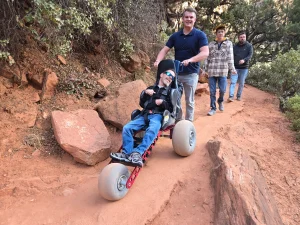

How it all started - Meet Sam & Ryan
Since 2019, Sam and Ryan have been demonstrating that nature is wheelchair accessible with the Extreme Motus All Terrain Wheelchair. From National Parks to Skateparks, their adventures prove that a manual off-road wheelchair can offer laughter and joy while navigating diverse terrains.
Join us as we continue to share these inspiring journeys.
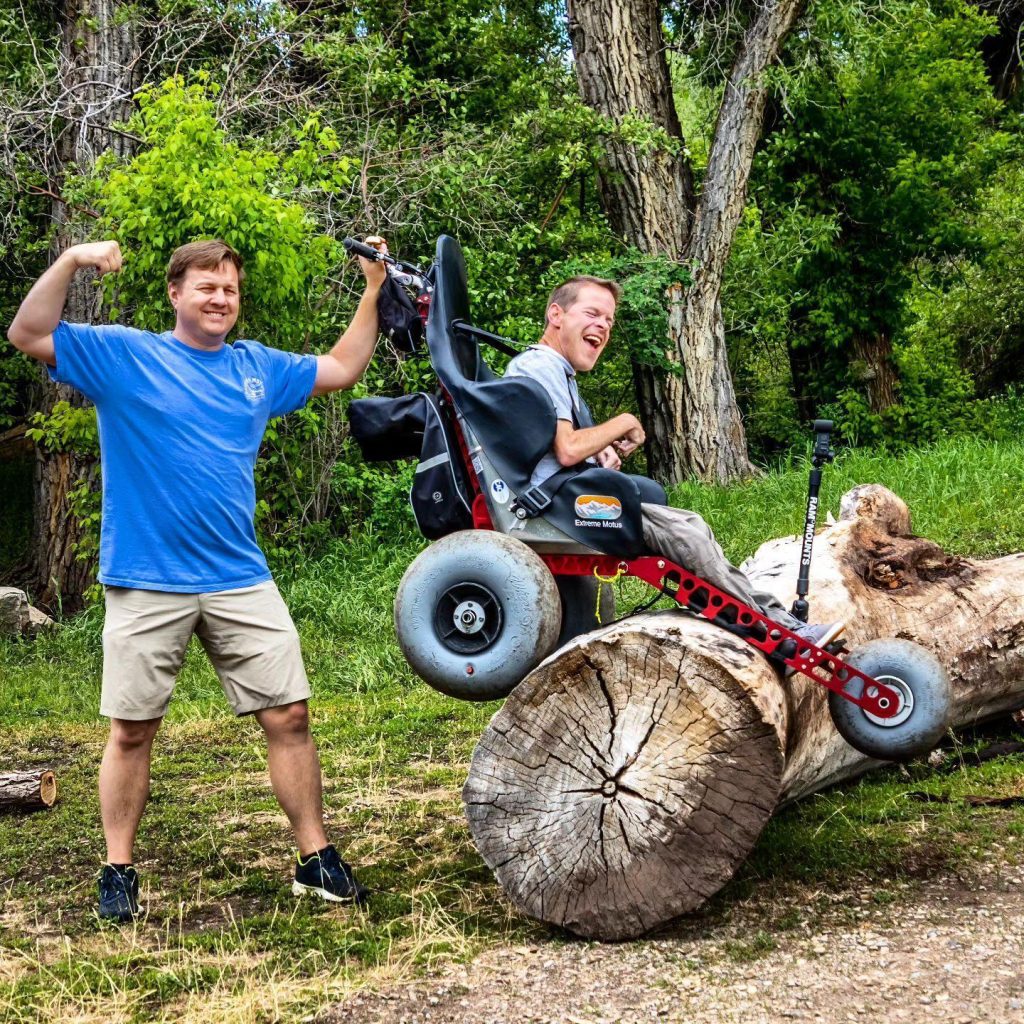
Discover Freedom with the Extreme Motus All Terrain Wheelchair
Light, comfortable, and compact, the Extreme Motus glides over sand, rocks, grass, gravel, and even floats in water.
It's more than a outdoor wheelchair; it's your ticket to freedom. Embrace the outdoors with confidence, knowing our off-road wheelchair is engineered for durability and ease of use.
Be the first to hear about new gear, upcoming adventures, and exclusive offers. As a welcome gift, you'll get a $100 coupon toward the Motus All-Terrain Wheelchair — delivered straight to your inbox.
By subscribing you agree to receive marketing communications from Extreme Motus, including product updates, promotions, and special offers. I understand I can unsubscribe at any time.