

Transverse Myelitis (TM) is a rare neurological disorder that causes acute inflammation of the spinal cord, resulting in weakness, paralysis, and sensory changes. Understanding this condition—its causes, treatments, and recovery patterns—can help those affected and their families navigate management and maintain quality of life.
Quick answer: Transverse Myelitis affects approximately 1,400 new patients per year in the US. This rare autoimmune or post-viral condition causes spinal cord inflammation, typically resulting in weakness or paralysis below the lesion site. Recovery varies: roughly one-third experience full recovery, one-third partial recovery, and one-third minimal improvement. Early treatment with corticosteroids and plasma exchange can improve outcomes.
1. What Causes Transverse Myelitis?
Transverse Myelitis results from inflammation that affects the full width of the spinal cord, disrupting nerve signals between the brain and body. Known triggers include:
- Autoimmune Disorders: Conditions like multiple sclerosis (MS) or neuromyelitis optica spectrum disorder (NMOSD).
- Post-Viral Infections: Reactions following herpes simplex virus (HSV), varicella-zoster virus (VZV), or other viral infections.
- Bacterial or Fungal Infections: Including Lyme disease, tuberculosis, or syphilis.
- Idiopathic Onset: In approximately 50% of cases, the exact trigger remains unidentified.
2. How Common Is Transverse Myelitis?
TM is a rare condition with an estimated incidence of 1 to 8 cases per million per year worldwide. In the United States, approximately 1,400 new cases are diagnosed annually. The condition shows a bimodal age distribution, with peaks in childhood (10–19 years) and mid-adulthood (30–39 years).
3. What Treatments Are Available?
Treatment for Transverse Myelitis aims to reduce inflammation, manage symptoms, and support neurological recovery:
- High-Dose Corticosteroids: Intravenous methylprednisolone is the first-line treatment to reduce spinal cord inflammation.
- Plasma Exchange (Plasmapheresis): Recommended for severe cases unresponsive to corticosteroids; removes harmful antibodies from the bloodstream.
- Intravenous Immunoglobulin (IVIG): May be used as an alternative immunomodulatory therapy.
- Symptom Management: Pain relief, muscle relaxants, and management of bladder/bowel function.
- Rehabilitation Therapies: Physical and occupational therapy to maximize functional recovery and mobility.
4. How Does TM Affect Families?
A diagnosis of Transverse Myelitis creates significant challenges for families:
- Emotional Impact: Sudden onset and unpredictable recovery can cause anxiety, depression, and grief.
- Caregiving Demands: Family members often provide physical assistance, especially in acute and recovery phases.
- Financial Strain: Costs of hospitalization, imaging, treatments, and long-term therapies accumulate.
- Lifestyle Adjustments: Families may need to modify the home and adjust daily routines for accessibility.
5. Can TM Result in Paralysis?
Yes. Depending on the spinal cord level affected and severity of inflammation, TM can cause partial or complete paralysis below the lesion site. Many individuals require assistive devices—including wheelchairs—for mobility. Recovery in the first 3 months is critical; those who don’t show improvement in this window face greater long-term disability. An estimated one-third of patients achieve full or near-full recovery, one-third experience partial recovery with residual deficits, and one-third have minimal improvement.
6. Why Is Outdoor Time Beneficial for TM Recovery?
For individuals managing TM, outdoor activities offer both psychological and physical benefits:
- Mental Health: Exposure to nature reduces stress, anxiety, and symptoms of depression—common secondary effects after TM diagnosis.
- Physical Engagement: Safe outdoor movement supports circulation, prevents secondary complications, and contributes to rehabilitation goals.
- Vitamin D Production: Sunlight exposure increases vitamin D synthesis, supporting bone health and immune regulation—important given immune-mediated TM.
- Social Connection: Parks and outdoor spaces enable meaningful interaction with family and community, reducing isolation.
7. How All-Terrain Mobility Supports Independence
For individuals with residual TM-related mobility loss, an all-terrain wheelchair removes environmental barriers and enables outdoor participation:
- Terrain Access: Navigates gravel, sand, grass, trails, and uneven paths that standard wheelchairs cannot handle.
- Comfort & Safety: Shock-absorbing design minimizes jarring, providing smooth mobility while protecting sensitive neurological tissue.
- Independence: Reduces reliance on caregivers, allowing users to initiate outdoor exploration and social activities.
- Inclusion: Family outings, picnics, community events, and nature experiences become accessible and enjoyable.
- Psychological Benefit: Overcoming mobility barriers fosters confidence, purpose, and quality-of-life improvements.
Frequently Asked Questions About Transverse Myelitis
Is Transverse Myelitis hereditary?
No. Transverse Myelitis is not an inherited condition. It is acquired through autoimmune activation, infection, or other environmental triggers. Genetic predisposition may increase susceptibility to autoimmune TM in some cases, but the condition itself is not passed from parent to child.
How is Transverse Myelitis diagnosed?
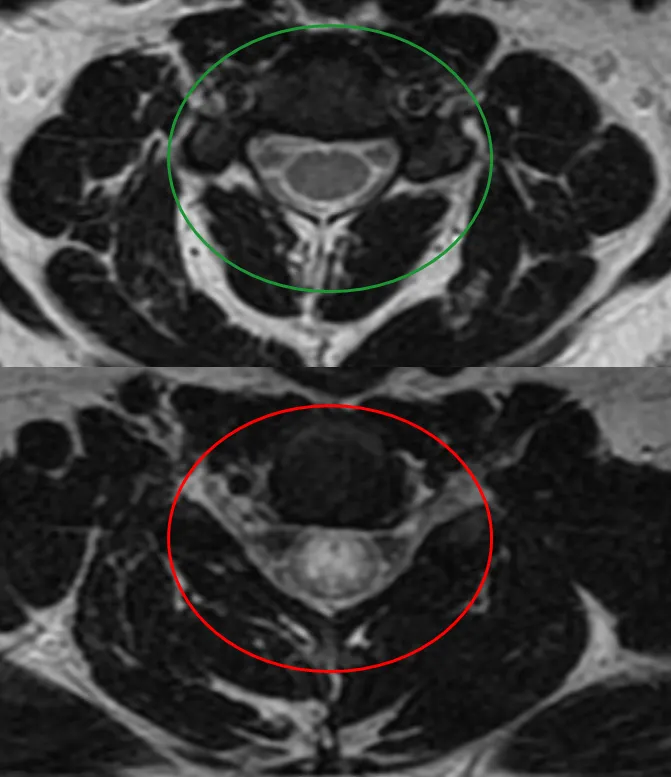
Diagnosis relies on clinical presentation, MRI imaging of the spinal cord (showing inflammation across the full width), and exclusion of other conditions. Lumbar puncture (spinal tap) may reveal elevated white blood cells or protein. Testing for autoimmune markers and infectious agents helps determine the underlying cause.
Will symptoms improve?
Recovery varies widely and depends on severity, location of spinal lesion, and speed of treatment initiation. Most improvement occurs in the first 3 months. While complete recovery is possible, many patients experience persistent weakness or sensory changes. Early aggressive treatment improves the likelihood of better outcomes.
Can Transverse Myelitis recur?
Isolated TM typically does not recur. However, if TM is later diagnosed as the first manifestation of MS or another demyelinating disease, future episodes are possible. Long-term neurological monitoring helps identify patients at risk for recurrence.
What support resources exist?
The Transverse Myelitis Association and Siegel Rare Neuroimmune Association provide education, support groups, and research updates. Many hospitals have physiatry (rehabilitation medicine) specialists skilled in TM management. Mental health services address emotional aspects of diagnosis and recovery.
Conclusion
Transverse Myelitis is a rare but serious condition that requires prompt diagnosis and aggressive early treatment to maximize recovery potential. While outcomes vary, many individuals achieve meaningful functional improvement, particularly with comprehensive rehabilitation. Access to outdoor activities—enabled by all-terrain mobility aids—supports both physical recovery and psychological resilience.
Ryan Grassley · ryan@extrememotus.com
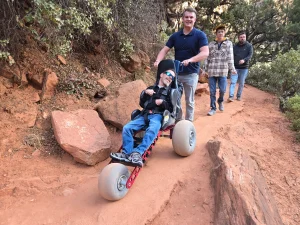

How it all started - Meet Sam & Ryan
Since 2019, Sam and Ryan have been demonstrating that nature is wheelchair accessible with the Extreme Motus All Terrain Wheelchair. From National Parks to Skateparks, their adventures prove that a manual off-road wheelchair can offer laughter and joy while navigating diverse terrains.
Join us as we continue to share these inspiring journeys.
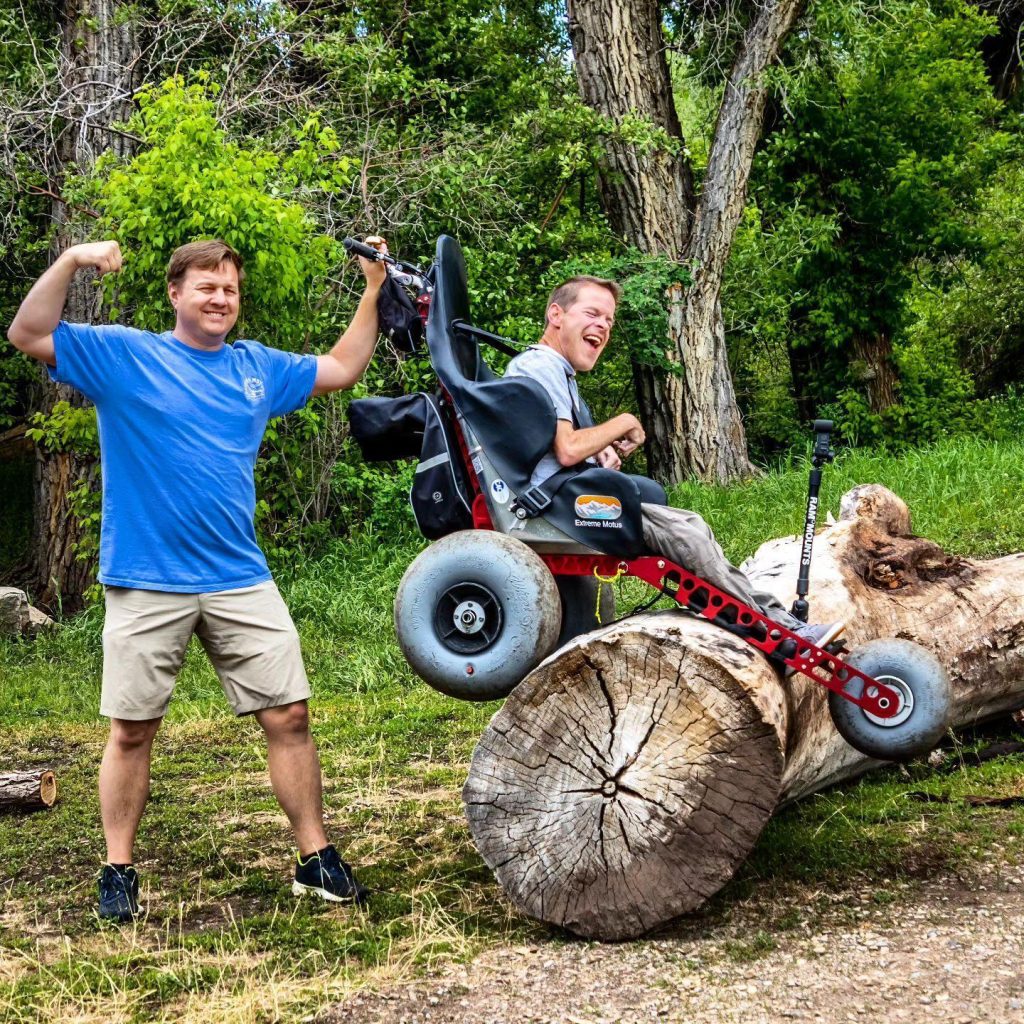
Discover Freedom with the Extreme Motus All Terrain Wheelchair
Light, comfortable, and compact, the Extreme Motus glides over sand, rocks, grass, gravel, and even floats in water.
It's more than a outdoor wheelchair; it's your ticket to freedom. Embrace the outdoors with confidence, knowing our off-road wheelchair is engineered for durability and ease of use.
Be the first to hear about new gear, upcoming adventures, and exclusive offers. As a welcome gift, you'll get a $100 coupon toward the Motus All-Terrain Wheelchair — delivered straight to your inbox.
By subscribing you agree to receive marketing communications from Extreme Motus, including product updates, promotions, and special offers. I understand I can unsubscribe at any time.