Quick answer: Severe scoliosis and kyphosis are spinal deformities affecting approximately 2–3% of the global population. Scoliosis involves sideways curvature; kyphosis refers to excessive forward rounding. While no cure exists, modern treatments—bracing, physical therapy, and surgical fusion—effectively manage symptoms and prevent progression in most cases.
What is Severe Scoliosis and Kyphosis?
Severe scoliosis and kyphosis are structural spinal deformities that can significantly impact mobility, respiratory function, and quality of life. Understanding their distinct mechanisms, causes, treatments, and the role of mobility aids provides essential context for individuals and families navigating these conditions.
1. What Distinguishes Scoliosis from Kyphosis?
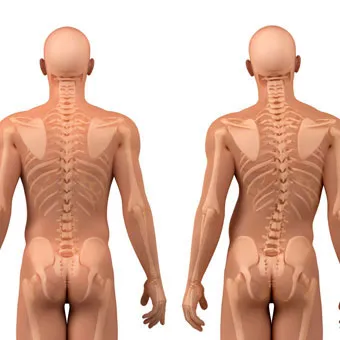
Scoliosis is a sideways (lateral) curvature of the spine, while kyphosis is an exaggerated forward (anterior) rounding. These are structurally distinct conditions, though they may coexist.
- Scoliosis causes: Idiopathic (unknown origin, ~80% of adolescent cases), congenital (spinal malformations), or neuromuscular (cerebral palsy, muscular dystrophy).
- Kyphosis causes: Age-related disc degeneration and osteoporosis (most common), post-traumatic fractures, or neuromuscular conditions.
2. How Prevalent Are These Conditions?
- Scoliosis: Affects approximately 2–3% of the global population. Idiopathic adolescent scoliosis is the most common form, accounting for roughly 80% of all scoliosis cases. Fewer than 1% of cases are considered severe.
- Kyphosis: More prevalent in older adults, affecting approximately 20–40% of individuals over age 60 due to age-related vertebral changes and bone loss.
3. How Is Severity Diagnosed?
Spinal curves are measured using the Cobb angle, determined by X-ray imaging. Curve magnitude guides treatment decisions:
- Diagnosis threshold: Curves greater than 10° are classified as scoliosis or kyphosis.
- Surgical consideration: Curves typically exceeding 40–50° are evaluated for surgical intervention, depending on progression, symptoms, and age.
4. What Are the Primary Treatment Options?
Treatment approaches depend on severity, age, progression rate, and symptoms:
- Observation: Mild curves in skeletally mature individuals are often monitored without intervention.
- Bracing: Prevents progression in growing adolescents with moderate curves (typically 25–40° Cobb angle). Effectiveness requires consistent wear during growth years.
- Physical therapy: Strengthens spinal stabilizers, improves posture, and manages pain through targeted exercises.
- Surgical fusion: Spinal instrumentation and fusion stabilize and straighten the spine, typically performed for curves exceeding 40–50° or those causing respiratory compromise, neurological symptoms, or significant functional impairment.
- Vertebral body tethering (VBT): A growth-modulating alternative to fusion for specific cases, particularly in younger patients, that allows continued spinal growth while correcting curvature.
5. How Do These Conditions Affect Family Dynamics?
- Emotional impact: Diagnosis and treatment decisions carry psychological weight for patients and caregivers alike.
- Financial burden: Surgical costs, bracing, physical therapy, and ongoing medical care create substantial financial strain.
- Activity modification: Families adjust recreational and daily activities to accommodate mobility limitations or post-surgical recovery.
- Caregiving demands: In severe cases, family members provide transportation, physical assistance, and emotional support.
6. Is Complete Resolution Possible?
There is no medical cure for scoliosis or kyphosis. However, early intervention and appropriate treatment—whether conservative or surgical—effectively manage symptoms, prevent progression, and preserve function in most cases. Even after fusion surgery, individuals require ongoing monitoring and activity modifications.
7. When Does Mobility Assistance Become Necessary?
Wheelchairs and mobility aids become necessary when severe spinal deformity, pain, or associated neurological symptoms significantly impair walking or standing capacity. This is particularly common in:
- Advanced untreated cases: Where spinal curves compress vital organs or nerves.
- Post-fusion complications: When fusion limits mobility or causes adjacent-segment degenerative changes.
- Pain-driven immobility: When upright postures trigger severe pain that outweighs functional benefit.
For individuals requiring wheels, all-terrain mobility aids enable participation in outdoor and community activities, supporting both physical activity and emotional well-being.
Frequently Asked Questions
Q: Can scoliosis or kyphosis be prevented?
Idiopathic scoliosis cannot be prevented, as its cause remains unknown. Age-related kyphosis may be partially prevented through exercise, adequate calcium intake, and osteoporosis management.
Q: Does exercise worsen spinal curves?
Appropriate exercise typically strengthens spinal support without worsening curves. However, high-impact activities should be discussed with physicians, particularly in those with severe deformity or recent surgery.
Q: What are the complications of untreated severe curves?
Severe untreated curves may lead to lung compression, heart strain, nerve damage, chronic pain, and functional disability. This is why early intervention is critical.
Q: How long is recovery from spinal fusion surgery?
Initial recovery typically spans 6–8 weeks; return to normal activity often takes 3–6 months. Full bony fusion may require 12–18 months.
Q: Can curves recur after fusion?
Curves do not recur at the fusion site once bone healing is complete. However, unfused segments above or below the fusion may gradually develop curves over time.
Q: How important is outdoor activity for spinal health?
Outdoor activity, when tolerated, supports mental health, vitamin D synthesis, and gentle movement. All-terrain wheelchairs make outdoor access feasible for those with mobility limitations.
The Role of All-Terrain Mobility in Quality of Life
For individuals with severe scoliosis or kyphosis who require mobility assistance, an all-terrain wheelchair enables outdoor participation, reduces social isolation, and provides psychological benefits. Such devices offer stability on varied terrain while minimizing discomfort through ergonomic design and shock absorption.
Conclusion
Severe scoliosis and kyphosis present distinct challenges rooted in spinal biomechanics. While no cure exists, modern medicine—combining bracing, physical therapy, and surgical options—provides effective pathways to manage symptoms and preserve function. For those facing mobility limitations, outdoor engagement remains therapeutic, supported by appropriate assistive technology.
Ryan Grassley · ryan@extrememotus.com
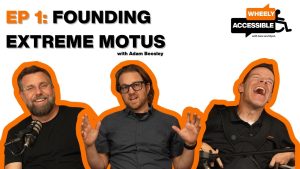
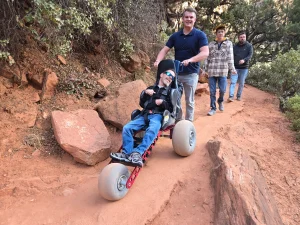
How it all started - Meet Sam & Ryan
Since 2019, Sam and Ryan have been demonstrating that nature is wheelchair accessible with the Extreme Motus All Terrain Wheelchair. From National Parks to Skateparks, their adventures prove that a manual off-road wheelchair can offer laughter and joy while navigating diverse terrains.
Join us as we continue to share these inspiring journeys.
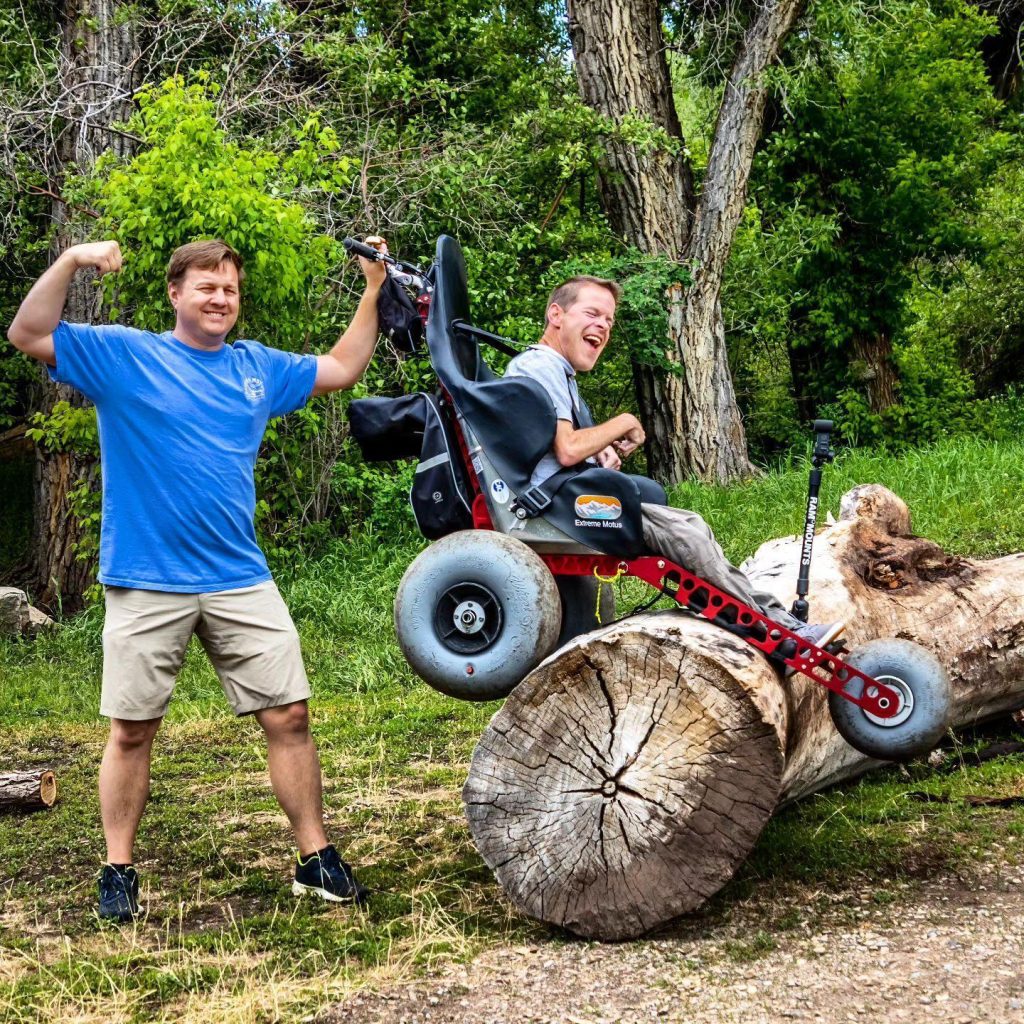
Discover Freedom with the Extreme Motus All Terrain Wheelchair
Light, comfortable, and compact, the Extreme Motus glides over sand, rocks, grass, gravel, and even floats in water.
It's more than a outdoor wheelchair; it's your ticket to freedom. Embrace the outdoors with confidence, knowing our off-road wheelchair is engineered for durability and ease of use.
Be the first to hear about new gear, upcoming adventures, and exclusive offers. As a welcome gift, you'll get a $100 coupon toward the Motus All-Terrain Wheelchair — delivered straight to your inbox.
By subscribing you agree to receive marketing communications from Extreme Motus, including product updates, promotions, and special offers. I understand I can unsubscribe at any time.