

Down Syndrome is one of the most common genetic conditions in the world, and most people who have it move through life with no more mobility difficulty than anyone else. This piece isn’t about Down Syndrome broadly — it’s about the smaller group within that community who also deal with severe mobility challenges, where the right information and the right equipment change what’s possible day to day.
Quick answer: Down Syndrome affects roughly 1 in 700 births, with about 250,000 Americans living with the condition today. For those also dealing with severe mobility challenges, life expectancy has climbed to around 60 years with modern care, and mobility aids like all-terrain wheelchairs make a real, measurable difference in independence and quality of life.
1. It comes down to one extra chromosome.
Down Syndrome happens when a person has three copies of chromosome 21 instead of two — geneticists call it trisomy 21. It’s set at conception, there’s no way to prevent it, and it affects every person who has it differently. Two people with the same diagnosis can have very different physical and cognitive profiles.
2. About 1 in every 700 babies is born with it.
That adds up to roughly 250,000 people living with Down Syndrome in the U.S. today. Older parents have a somewhat higher chance of having a baby with Down Syndrome, but it shows up across every age group — there’s no maternal age where the odds drop to zero.
3. Life expectancy has more than quintupled in six decades.
In the 1960s, a child born with Down Syndrome had an average life expectancy of about 10 years. Today, most live into their 60s and beyond. That’s not a small improvement — it’s one of the most dramatic gains in outcomes for any genetic condition, driven almost entirely by better medical care and more support built around daily life.
4. Heart defects show up in close to half of all cases.
Somewhere between 40% and 50% of people with Down Syndrome are born with a congenital heart defect. Some resolve on their own; others need surgery. Either way, early screening has turned what used to be a leading cause of early death into a manageable, treatable part of care.
5. Low muscle tone is often the real driver of mobility limits.
Hypotonia — low muscle tone — is common in Down Syndrome, and it’s usually the reason mobility becomes a serious issue rather than a minor one. Walking takes more effort, balance is harder to hold, and fatigue sets in fast. Physical therapy, occupational therapy, and the right mobility equipment don’t fix hypotonia, but they give people back the ability to keep up and stay active.
6. Starting therapy early pays off for years.
Physical, occupational, and speech therapy started in infancy give kids with Down Syndrome the best shot at hitting developmental milestones, and the benefit doesn’t stop in childhood — ongoing therapy keeps paying off well into adulthood.
7. Time outdoors isn’t a nice-to-have — it’s part of the treatment plan.
For someone dealing with real mobility limits, getting outside does more than lift a mood. It cuts stress, boosts vitamin D, encourages movement that’s gentle enough to be safe, and puts people in social settings they’d otherwise miss. When mobility is the barrier, that access has to be built, not assumed.
8. The right mobility equipment turns “can’t” into “can.”
This is where the Extreme Motus All-Terrain Wheelchair earns its place. A stable frame and real suspension mean trails, parks, and uneven ground stop being off-limits. For someone with Down Syndrome and severe mobility challenges, that’s not a luxury upgrade — it’s the difference between watching everyone else go to the park and going with them.
Frequently Asked Questions
Is Down Syndrome Preventable?
No. It’s a genetic condition that occurs at conception, and nothing during pregnancy causes or prevents it. Prenatal screening can detect it, but detection isn’t prevention. What actually changes outcomes is early intervention and steady support afterward.
Can People with Down Syndrome Live Independently?
Many do, fully or with a manageable level of support. How much support someone needs comes down to their individual strengths, how early they got access to intervention services, and what community resources are available to them. Mobility equipment expands that independence rather than working against it.
What Should Families Know About Atlantoaxial Instability?
It’s a misalignment of the top two vertebrae in the neck, and it affects an estimated 10% to 30% of people with Down Syndrome. Most people with it never notice a symptom, but some develop neck pain or neurological issues, which is why doctors typically screen for it and will flag any activity restrictions that make sense for a given person.
How Does Spending Time Outdoors Help People with Severe Mobility Issues?
Beyond the general mood and stress benefits everyone gets from being outside, it matters more for someone with limited mobility because the alternative — staying indoors by default — compounds isolation on top of the physical limitation. Outdoor access breaks that cycle: it supports independence, keeps people socially connected, and does real, measurable good for mental health.
What Resources Are Available for Families?
The National Down Syndrome Society (NDSS) is a solid starting point for education, advocacy, and connecting with other families. Beyond that, healthcare providers, school districts, and local community agencies are usually the fastest route to therapy services and assistive equipment. Talking to other families further down the same road tends to help more than any single resource.
Conclusion
Down Syndrome with severe mobility issues comes with real, practical challenges — but modern medicine, early intervention, and better mobility equipment have changed what “living with it” actually looks like. Access to the outdoors, specifically, opens doors that used to be closed by default. Families dealing with this deserve real resources and real equipment, not just reassurance — and that’s what actually moves the needle on independence, health, and day-to-day joy.
Ryan Grassley · ryan@extrememotus.com
How it all started - Meet Sam & Ryan
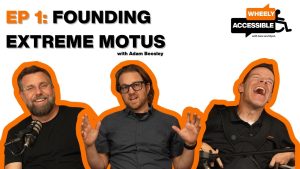
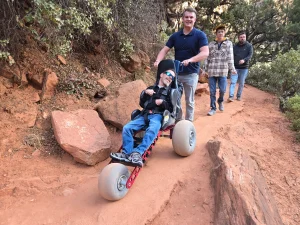
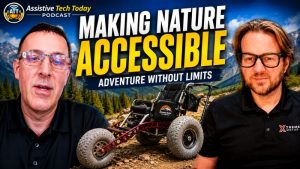
Since 2019, Sam and Ryan have been demonstrating that nature is wheelchair accessible with the Extreme Motus All Terrain Wheelchair. From National Parks to Skateparks, their adventures prove that a manual off-road wheelchair can offer laughter and joy while navigating diverse terrains.
Join us as we continue to share these inspiring journeys.
Discover Freedom with the Extreme Motus All Terrain Wheelchair
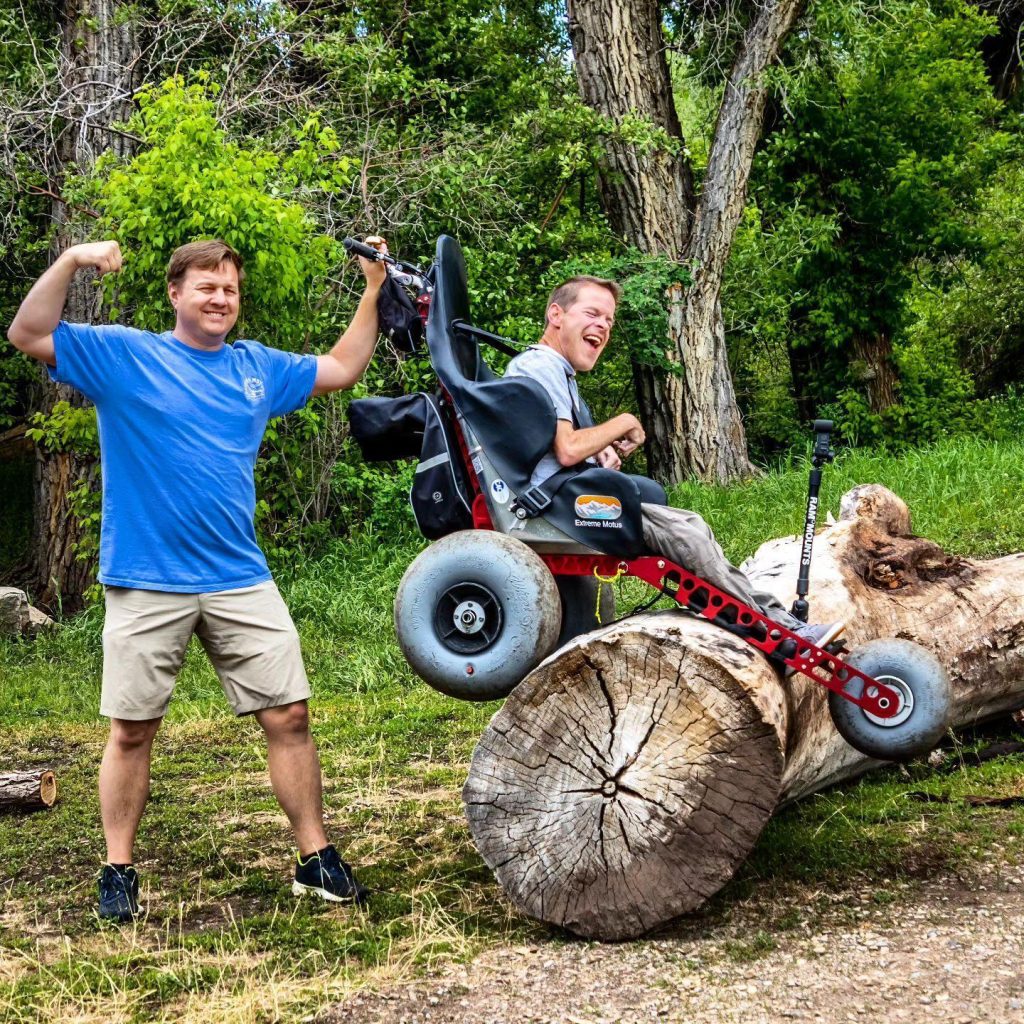
Light, comfortable, and compact, the Extreme Motus glides over sand, rocks, grass, gravel, and even floats in water.
It's more than a outdoor wheelchair; it's your ticket to freedom. Embrace the outdoors with confidence, knowing our off-road wheelchair is engineered for durability and ease of use.
Be the first to hear about new gear, upcoming adventures, and exclusive offers. As a welcome gift, you'll get a $100 coupon toward the Motus All-Terrain Wheelchair — delivered straight to your inbox.
By subscribing you agree to receive marketing communications from Extreme Motus, including product updates, promotions, and special offers. I understand I can unsubscribe at any time.