

Find your all-terrain wheelchair
Quick answer
To choose the right all-terrain wheelchair, weigh 10 factors in this order: 1. Propulsion, 2. Terrain, 3. Budget, 4. Transport, 5. Water needs, 6. Weight, 7. Comfort, 8. Durability, 9. Customization, 10. Warranty/service. Use the quiz above for a personalized match.
For people who crave the open air but face mobility challenges, an all-terrain wheelchair is the difference between watching adventures from the parking lot and going on them.
1. Propulsion — the biggest filter
- Self-propelled: GRIT Freedom Chair, Trekinetic K2.
- Caretaker-pushed: Extreme Motus, Hippocampe, AdvenChair.
- Team-pushed: Black Diamond TrailRider, Joëlette, Huckleberry Cascade.
- Powered: Action Trackchair, TrackMaster, TracFab, Magic Mobility X8, TerrainHopper, Not-A-Wheelchair Rig.
2. Terrain
- Sidewalks/parks/grass — most chairs handle this.
- Dirt and gravel — you need balloon or knobby tires.
- Sand/snow/water — Extreme Motus, Hippocampe, or powered tracked.
- Backcountry/hunting — sherpa chairs or 4×4 powered.
3. Budget
- Under $5K: Beach chairs, GRIT, Extreme Motus ($4,500).
- $5K–$10K: Trekinetic, Joëlette, TrailRider.
- $10K–$15K: AdvenChair + entry-level powered/tracked.
- $15K+: High-end powered, tracked, 4×4.
Insurance rarely covers all-terrain chairs.
4. Transport
Manual chairs (Motus, GRIT, Hippocampe) fold for a sedan trunk. Powered tracked chairs weigh 300–500 lbs and need a trailer.
5. Water and weather
Beaches/lakes? Extreme Motus and Hippocampe both float and handle salt water. Most powered chairs handle splashes but not submersion.
6. Weight
Trekinetic K2 (33 lbs carbon) and Hippocampe (37 lbs) are lightest; Motus (55 lbs) is most versatile in the lightweight class.
7. Comfort and seating
- Adjustable seat size and backrest.
- Pressure-relieving cushions for full-time wheelchair users.
- Optional 5-point harness for limited trunk control (Motus offers this).
8. Durability
Look for aluminum or stainless-steel frames, sealed bearings for water exposure, and standard mountain-bike components. Avoid proprietary parts.
9. Customization
Bodies and disabilities vary. Ask the manufacturer what’s possible: longer/shorter frame, custom cushion, mounted camera or fishing rod, larger pannier.
10. Warranty and try-before-you-buy
Look for: comprehensive warranty (the Motus has one plus 30-day money-back), responsive support, and a way to try before committing.
→ See all 59 locations on our interactive map
If $4,500 still feels like a leap of faith, you can test-drive a Motus on real terrain first — at parks, zoos, adaptive sports nonprofits, and rental programs across the US, Canada, Australia, and the UK. Find a location near you on our map →
How to use this guide
Start with the quiz at the top — 5 questions, top 3 personalized matches. Then read deeper comparisons on the chairs that match. We have detailed write-ups: Motus vs. GRIT, Best Beach Wheelchairs, Motus vs. AdvenChair.
Frequently asked questions
What’s the most important factor?
Propulsion — who’s pushing.
How much should I budget?
$4,500–$8,000 covers most capable manual chairs.
Can I try one before buying?
Yes — rental and demo network.
What’s the lightest manual all-terrain chair?
Trekinetic K2 at 33 lbs (carbon fiber).
Are there all-terrain wheelchairs for kids?
Yes — GRIT junior version, plus Motus pediatric sizing on request.
Will insurance cover this?
Rarely. Most are paid out of pocket or grant-funded.
Don’t hesitate to contact us. If our chair isn’t your best option, we’ll tell you.
How it all started - Meet Sam & Ryan
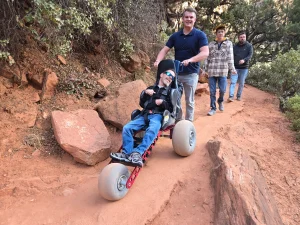
Since 2019, Sam and Ryan have been demonstrating that nature is wheelchair accessible with the Extreme Motus All Terrain Wheelchair. From National Parks to Skateparks, their adventures prove that a manual off-road wheelchair can offer laughter and joy while navigating diverse terrains.
Join us as we continue to share these inspiring journeys.
Discover Freedom with the Extreme Motus All Terrain Wheelchair
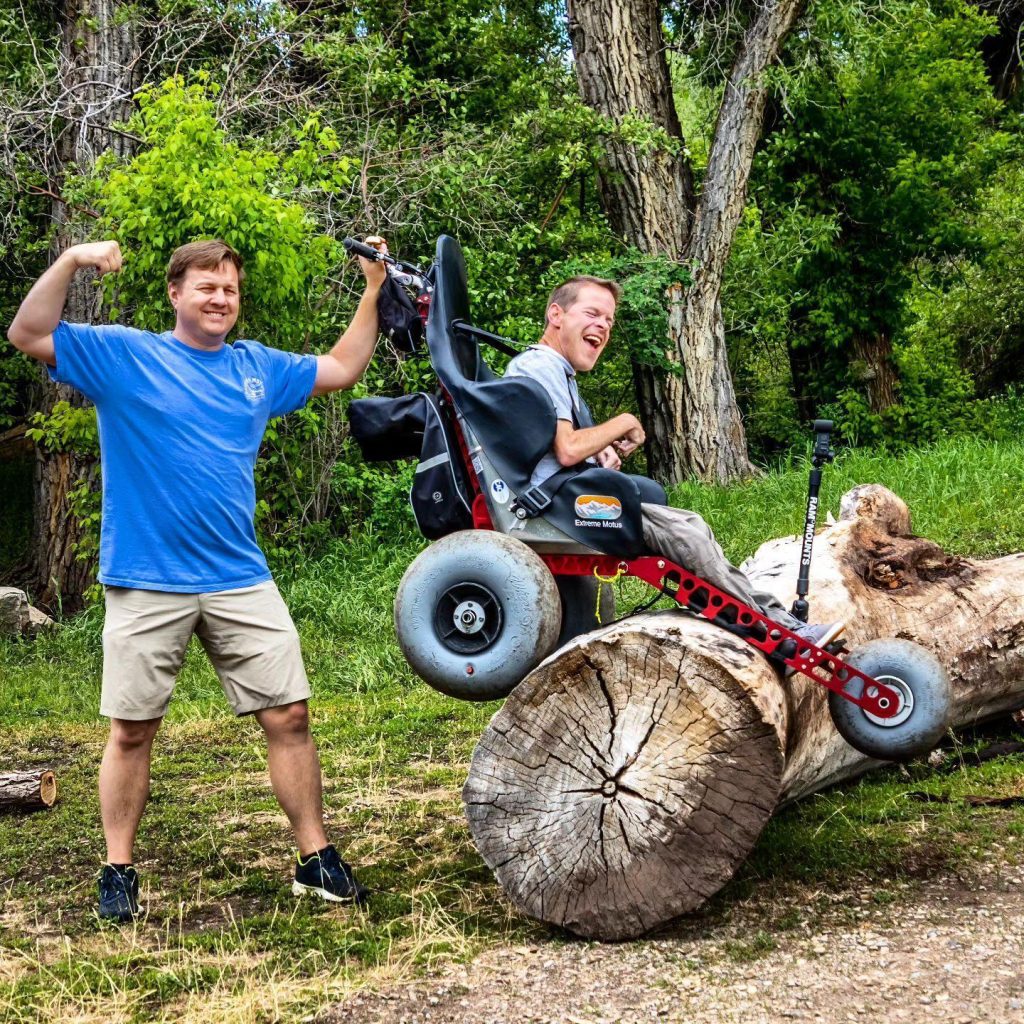
Light, comfortable, and compact, the Extreme Motus glides over sand, rocks, grass, gravel, and even floats in water.
It's more than a outdoor wheelchair; it's your ticket to freedom. Embrace the outdoors with confidence, knowing our off-road wheelchair is engineered for durability and ease of use.
Be the first to hear about new gear, upcoming adventures, and exclusive offers. As a welcome gift, you'll get a $100 coupon toward the Motus All-Terrain Wheelchair — delivered straight to your inbox.
By subscribing you agree to receive marketing communications from Extreme Motus, including product updates, promotions, and special offers. I understand I can unsubscribe at any time.