

Quick answer
An adaptive hiking wheelchair is a wheelchair built for off-pavement use — wider tires, stronger frames, and a geometry that handles dirt, rocks, sand, snow, and water. The Extreme Motus is a 55-lb manual adaptive hiking wheelchair priced at $4,500 (plus shipping). It folds into a car trunk, has Wheeleez balloon tires for soft ground, and is the most-affordable serious all-terrain option on the market. Many U.S. National Parks and state parks now loan adaptive hiking wheelchairs for free — see the full interactive location map for parks, zoos, and adaptive programs across the US, Canada, Australia, and the UK.

Find your grant in 90 seconds
Answer 5–7 quick questions and we’ll narrow 50+ adaptive-equipment grants down to the ones you’re most likely to win.
Free. No email required. Plus a 30-min strategy call with Kenny if you want help applying.
Take the Grant Match Quiz →The Extreme Motus adaptive hiking wheelchair is built so people with mobility challenges can get back on the trail. If you’re an outdoor person — or you have a kid, partner, or parent who is — the right adaptive hiking wheelchair is the difference between watching the family go and going with them.
Find your all-terrain wheelchair
What makes the Extreme Motus an adaptive hiking wheelchair
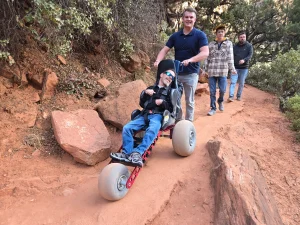
- Built for diverse terrain — sand, rocks, grass, gravel, snow, mud, and shallow water.
- Light and portable — CNC-machined aluminum frame, 55 lbs total, fits in a car trunk.
- Wheeleez balloon tires — large low-pressure tires that act as suspension and float over soft ground.
- Hydraulic disc brakes — real stopping power on downhill grades.
- Customizable — 5-point harness, racing seat, drink/ventilator bags, and more.
- Push, pull, or self-propel — designed for users with a wide range of mobility, from solo riders to teams of two pushing through tough terrain.
Why it matters
- Real mobility — trails, beaches, and overlooks that a standard chair can’t reach.
- Independence — the freedom to actually go on the family hike, not wait at the trailhead.
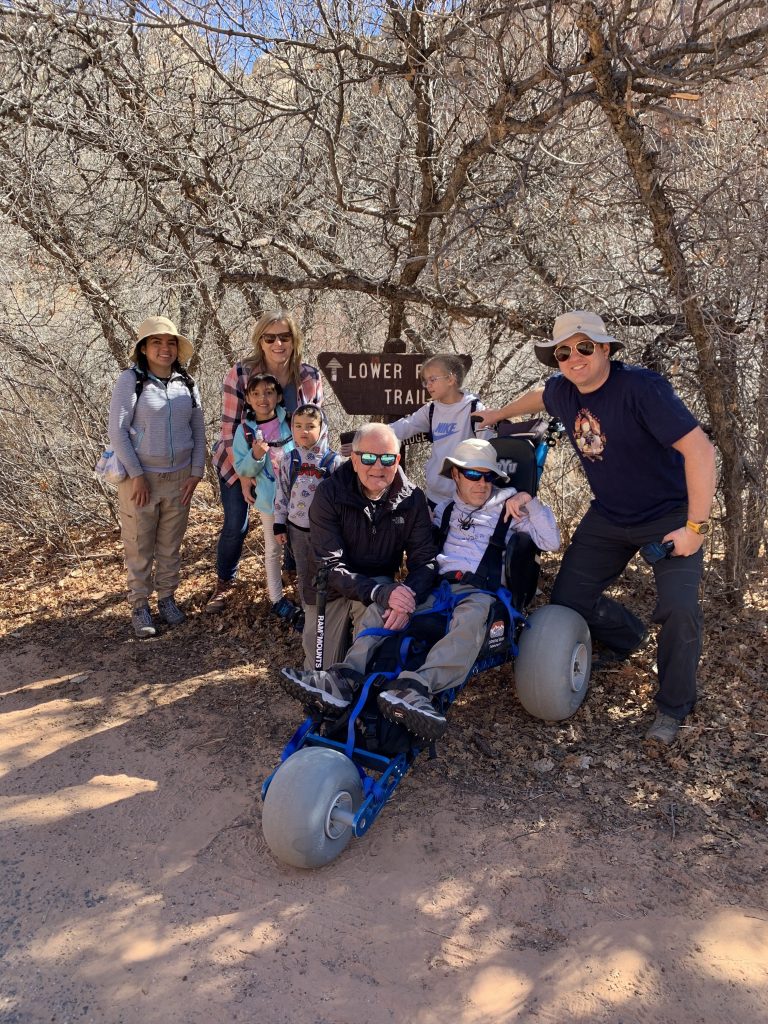
- Shared experiences — the chair brings the whole family back into the same outdoor activity.
How much does the Extreme Motus adaptive hiking wheelchair cost?
The Extreme Motus is $4,500 in standard configuration, plus around $375 in shipping (varies by destination). Optional add-ons — 5-point harness, hydration bag, ventilator bag, custom paint, alternative seat — can be added in our online store.
Compared to powered adaptive hiking wheelchairs, that’s the bargain end of the market. The 2026 All-Terrain Wheelchair Price Guide has the full breakdown — but here’s the short version: powered options like the Action Trackchair start around $15,000 and easily exceed $20,000–30,000. The Motus does most of what they do for a third of the price and a fraction of the weight.
Is the Extreme Motus powered or manual?
It’s manual. That’s a deliberate choice. Manual adaptive hiking wheelchairs cost a lot less, weigh a fraction of what powered chairs do, and don’t require a truck-and-trailer to get to the trailhead. They also don’t strand you in the backcountry when the battery dies. The trade-off is that you (or a partner) provide the propulsion — most owners run the chair as a one- or two-person team on rougher terrain.
Where can I find adaptive hiking wheelchair locations?
Over the last few years, there’s been real momentum on accessibility in public lands. Sam and I even went to the Utah State Capitol to speak before the legislative committee about why adaptive hiking wheelchairs need to be available in parks. The most common pushback we still hear is “we don’t get many wheelchair users here” or “no one’s ever asked for an all-terrain wheelchair.” That’s a chicken-and-egg problem.
The single most useful thing you can do is call your local state and national parks and ask if they offer accessibility equipment. When enough people request it, parks pay attention.
→ The interactive map.
We track every location with a public Extreme Motus on our interactive map — 59 parks, zoos, and adaptive sports programs across the US, Canada, Australia, and the UK. Filter by state, search by park name, or use the “near me” button to find the closest location to try one before you commit to the $4,500 purchase.
For broader accessibility resources beyond Extreme Motus locations:
- GRIT Freedom Chair’s Accessible Hikes in America Guide — comprehensive list of wheelchair-friendly trails across all 50 states.
- TrailLink — detailed maps, descriptions, photos, and reviews of wheelchair-accessible trails.
- Local Parks & Rec departments — many city/county parks now have accessibility info on their websites or by phone.
- DisabledTravelers.com and WheelchairTravel.org — accessible travel guides including hiking and outdoor activities.
- State DNR / Fish & Wildlife pages — most states now flag accessible trails and loaner equipment programs.
National Parks that loan adaptive hiking wheelchairs
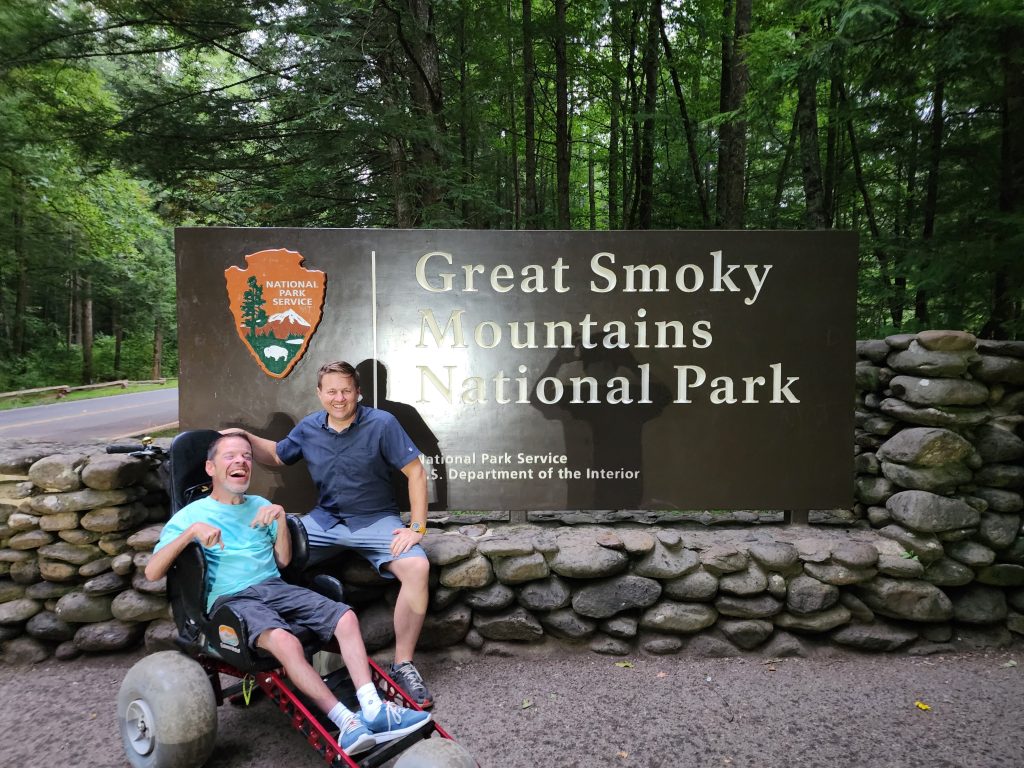
Many U.S. National Park sites loan adaptive hiking wheelchairs (often beach wheelchairs or track chairs) at no cost. Always call ahead — equipment is sometimes out for service or already reserved.
- Lake Clark National Park & Preserve, Alaska — beach wheelchairs.
- Great Sand Dunes National Park, Colorado — beach wheelchairs.
- Rocky Mountain National Park, Colorado — all-terrain manual chairs.
- Canaveral National Seashore, Florida — beach wheelchairs.
- Gulf Islands National Seashore, Florida — beach wheelchairs.
- Cumberland Island National Seashore, Georgia — beach wheelchairs and track chairs.
- Kennesaw Mountain National Battlefield Park, Georgia — track chairs.
- Indiana Dunes National Park, Indiana — beach wheelchairs and other devices.
- Acadia National Park, Maine — beach wheelchairs.
- Assateague Island National Seashore, Maryland — beach wheelchairs.
- Sleeping Bear Dunes National Lakeshore, Michigan — beach wheelchairs and track chairs.
- Cape Hatteras National Seashore, North Carolina — beach wheelchairs.
- Cape Lookout National Seashore, North Carolina — beach wheelchairs.
- Pu’uhonua o Hōnaunau National Historical Park, Hawaii — beach wheelchairs.
State Parks that loan adaptive hiking wheelchairs
Programs are growing fast. A non-exhaustive sample:
- Colorado — Staunton State Park (track chairs).
- Georgia — Cloudland Canyon, Fort Yargo, and others through the Aimee Copeland Foundation.
- Michigan — Tahquamenon Falls, Sleeping Bear Dunes, others.
- Minnesota — Jay Cooke State Park and pilot programs.
- South Dakota — multiple state parks, with expansion in progress.
- Tennessee — Fall Creek Falls, Cedars of Lebanon, others.
- Illinois — Forest Preserve District of DuPage County (Fullersburg Woods has an Extreme Motus on loan).
FAQ: Adaptive hiking wheelchairs
What is an adaptive hiking wheelchair?
An adaptive hiking wheelchair is a wheelchair specifically designed for use off-pavement — on dirt trails, sand, snow, rocks, mud, and shallow water. Compared to a daily wheelchair, it has wider/larger tires, a stronger frame, often a more reclined seating geometry for stability on slopes, and brakes built for downhill use. Some are powered (Action Trackchair, TerrainHopper); most affordable options like the Extreme Motus are manual.
How much does an adaptive hiking wheelchair cost?
Manual adaptive hiking wheelchairs run roughly $2,500–$8,000. The Extreme Motus is $4,500. Powered adaptive hiking wheelchairs (Action Trackchair, TerrainHopper, Magic Mobility X8) start around $15,000 and reach $30,000+. Our 2026 Price Guide covers every major brand.
Are adaptive hiking wheelchairs covered by insurance or Medicare?
Generally no. U.S. health insurance and Medicare classify adaptive hiking wheelchairs as recreational equipment rather than durable medical equipment, which means they aren’t typically covered. The good news: there are grants and nonprofit programs that fund adaptive equipment for individuals — Kelly Brush Foundation, High Fives Foundation, Challenged Athletes Foundation, and many regional groups.
Do I need a caregiver to use an adaptive hiking wheelchair?
It depends on the user and the terrain. The Motus can be self-propelled on flat or gently rolling ground, but most owners use it as a team — one person in the chair, one or two pushing on rougher terrain or steeper grades. Powered adaptive hiking wheelchairs eliminate that requirement at the cost of weight, transport hassle, and price.
Can adaptive hiking wheelchairs handle water and snow?
The Extreme Motus does. Wheeleez balloon tires float in shallow water and distribute weight well across snow and ice. Our customers use it for ice fishing, lake wading, sledding hills, and beach access regularly.
How do I find an adaptive hiking wheelchair to try before I buy?
Three good options: (1) check our interactive location map for the closest park, zoo, or adaptive sports program with a public Extreme Motus available, (2) borrow a different style of all-terrain chair from a National Park or state park program (lists above), or (3) attend an Abilities Expo — major adaptive equipment expos where manufacturers including us bring chairs to test. We’re also happy to talk through your specific situation directly.
Get back on the trail
Adaptive hiking wheelchairs aren’t just mobility devices — they’re permission to be outside again, with the people you want to be outside with. Whether you go with a Motus or a powered chair or borrow one from your local park, the right equipment opens the door.
If you have questions about whether the Extreme Motus would work for you, your kid, or someone you care for, just send me a note. I respond personally.
Ryan Grassley
Owner, Extreme Motus
ryan@extrememotus.com
See the Extreme Motus · 2026 Price Guide
Try the Motus before you buy
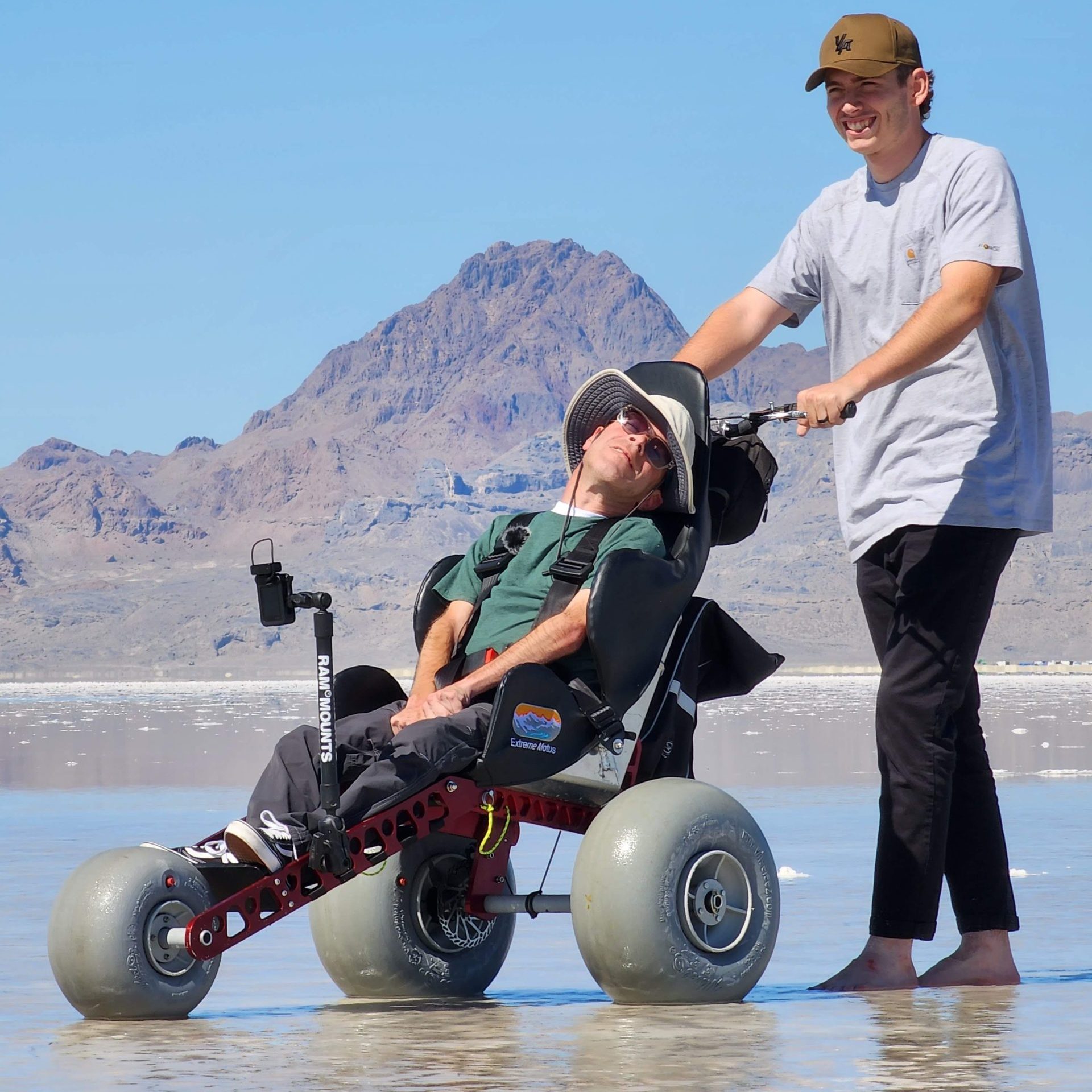
Ride a Motus on real terrain near you. Feel the weight, test the suspension, see how it loads in your vehicle — all before you commit.
Free demo experience. No pressure. Locations across the U.S.
Request a demo experience →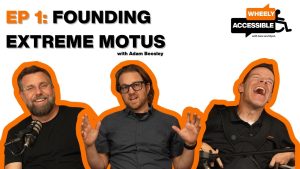
How it all started - Meet Sam & Ryan
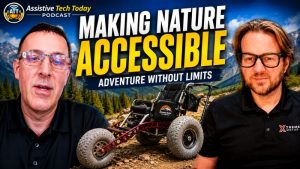
Since 2019, Sam and Ryan have been demonstrating that nature is wheelchair accessible with the Extreme Motus All Terrain Wheelchair. From National Parks to Skateparks, their adventures prove that a manual off-road wheelchair can offer laughter and joy while navigating diverse terrains.
Join us as we continue to share these inspiring journeys.
Discover Freedom with the Extreme Motus All Terrain Wheelchair
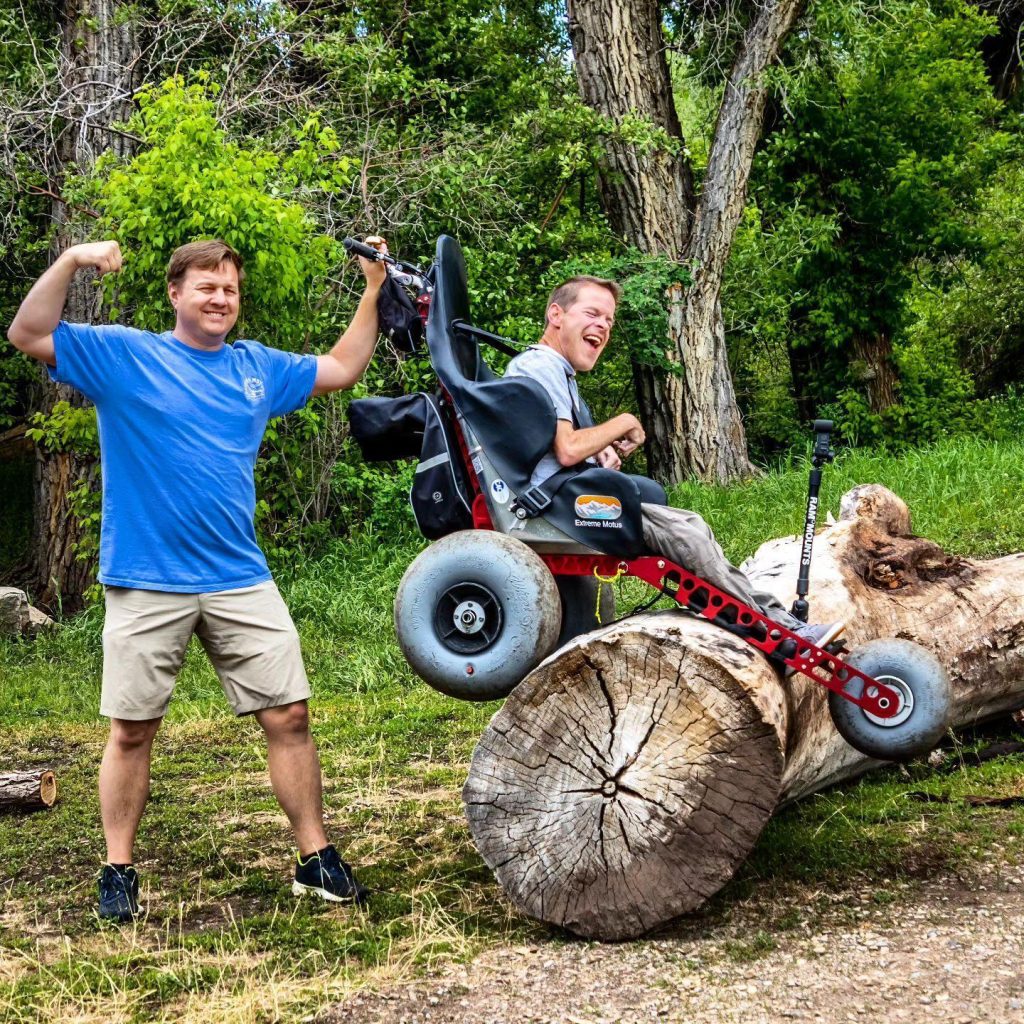
Light, comfortable, and compact, the Extreme Motus glides over sand, rocks, grass, gravel, and even floats in water.
It's more than a outdoor wheelchair; it's your ticket to freedom. Embrace the outdoors with confidence, knowing our off-road wheelchair is engineered for durability and ease of use.
Be the first to hear about new gear, upcoming adventures, and exclusive offers. As a welcome gift, you'll get a $100 coupon toward the Motus All-Terrain Wheelchair — delivered straight to your inbox.
By subscribing you agree to receive marketing communications from Extreme Motus, including product updates, promotions, and special offers. I understand I can unsubscribe at any time.