

Quick answer
A rough terrain wheelchair (also called all-terrain or off-road wheelchair) is a wheelchair built for surfaces a standard chair can’t safely cross — gravel, sand, snow, mud, and dirt trails. Manual models start around $3,500 and weigh 35–60 lbs; powered models run $10,000–$30,000+ and weigh 200–500 lbs. Use the quiz below to match your terrain, propulsion, and budget against the full catalog.
A rough terrain wheelchair is specifically designed for mobility over challenging surfaces standard wheelchairs cannot handle: gravel, sand, mud, snow, and rocky paths.
Find your all-terrain wheelchair
Common questions
Do off-road wheelchairs exist? Yes. Nature is wheelchair accessible. This article covers your best options.
Do wheelchairs work in gravel? The chairs in this list do.
Which wheelchair is stable on uneven terrain? Many on this list. Single-wheel chairs require strong helpers to stay stable; three- and four-wheeled chairs are more forgiving.
Will Medicare pay for one? Usually no — Medicare classifies these as recreational. Some customers qualify via state Medicaid waivers. Grants are typically a more reliable funding path.
Key features of rough terrain wheelchairs
- Large wheels or tracks: Wider, larger wheels or tank-tread tracks improve stability and traction.
- Suspension: Some models include shock absorbers; others use low-pressure tires that act as suspension.
- Soft tires: Many use low-pressure balloon tires (4 PSI) that mold to terrain instead of fighting it.
- Power options: Manual or motorized.
- Adjustable seating: Backrest, seat height, footrest customization.
- Portable designs: Many fold or break down for transport.
Benefits
- Increased mobility: Outdoor environments standard wheelchairs can’t reach.
- Independence: Hiking, beach outings, nature walks — without waiting on accessibility.
- Health gains: Outdoor activity boosts physical fitness and mental well-being.
- Social interaction: Family adventures, group hikes, community activities.
- Family togetherness: Shared outdoor memories build bonds nothing else does.
Drawbacks to weigh
- Cost: $3,500 to $30,000+ depending on model.
- Weight: Many are heavier than standard wheelchairs; powered tracked chairs weigh 400+ lbs.
- Storage and transport: Larger frames are harder to store; not all fold.
- Maintenance: Specialized parts may require more upkeep.
- Battery life (powered): Limited range, charging in remote areas can be hard.
- Terrain limits: Even the best chairs struggle in very deep sand or thick mud.
- Availability: Smaller market than standard wheelchairs.
Despite the drawbacks, the right rough terrain wheelchair greatly enhances mobility and independence for outdoor lovers. Manual chairs are easier on budget and easier to transport. Powered chairs trade weight and cost for full independence on flat-to-moderate terrain.
Popular manual rough terrain wheelchairs
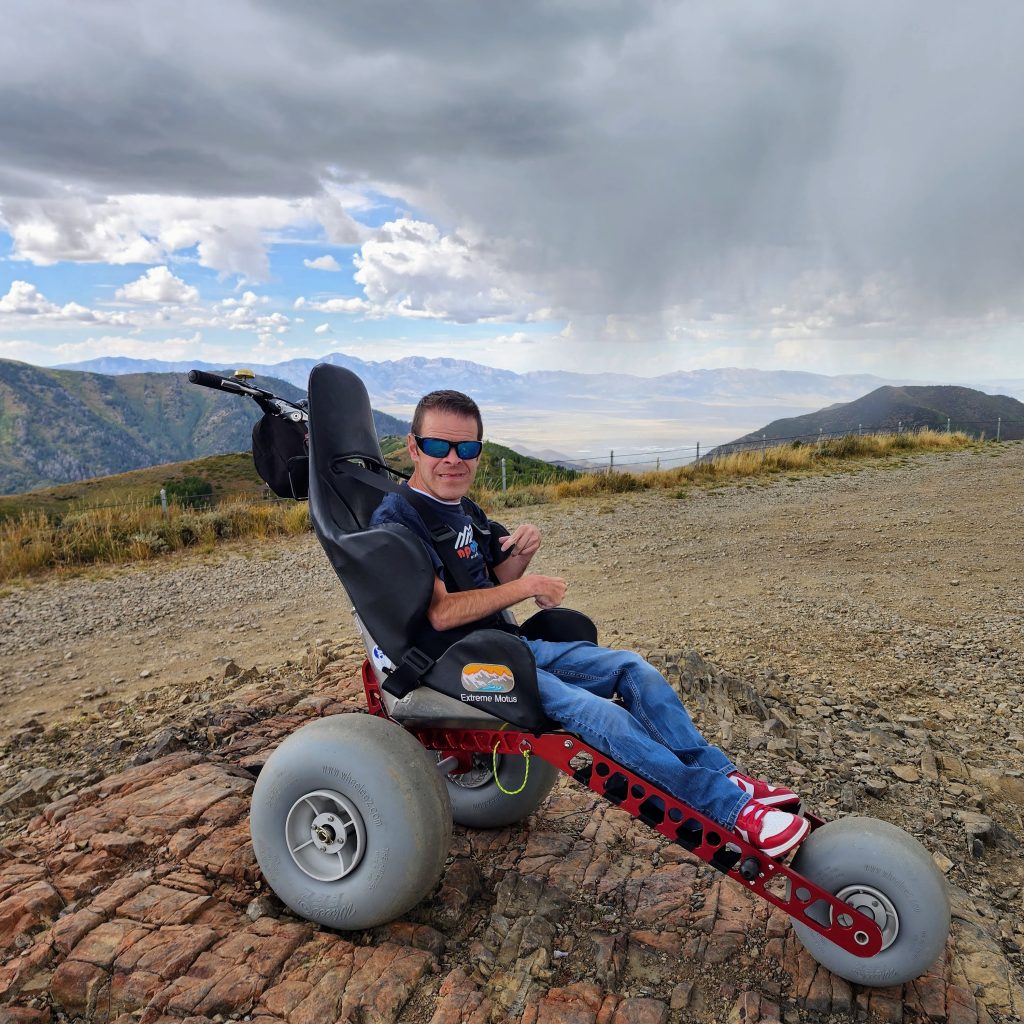
Extreme Motus All-Terrain Wheelchair
- Lightweight aluminum frame: 55 lbs.
- Three large low-pressure Wheeleez tires act as suspension.
- Buoyant — floats in water.
- Folds in half for sedan-trunk transport.
- Hydraulic disc brakes on rear wheels.
- Three seat sizes (14″, 16″, 18″). $4,500 standard.
ORC Off Road Wheelchair
- Robust design with adjustable seating, suspension.
- Disassembles or folds for transport.
GRIT Freedom Chair
- MIT-engineered lever-drive system, ~2x more efficient than standard wheelchair pushing.
- Industrial rubber tires, steel frame.
- Disassembles into car-trunk-sized pieces.
- Best for self-propelling riders with strong upper body. $2,995–$5,495.
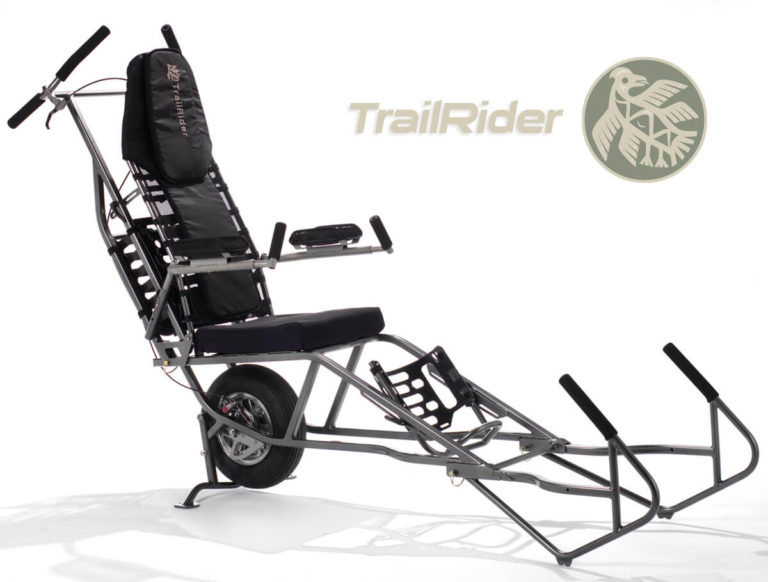
Black Diamond TrailRider
- Single-wheel sherpa design — narrow trail capable.
- ~50 lbs aluminum frame, folds in half.
- Disc braking, large pneumatic tire.
- Cargo compartment included.
- Long wheelbase makes sharp switchbacks tricky. Balancing one wheel is tiring for helpers.
Joëlette
- Single-wheel rickshaw-style design for narrow trails.
- Quality suspension, adjustable seating, on-board storage.
- Folds for transport.
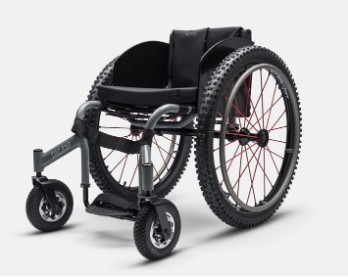
Top End Crossfire All-Terrain
- 6061T6 aluminum frame.
- 25″x2.5″ knobby rear tires, 8″x2″ front casters.
- Adjustable footrests, seat height, backrest. 250 lb capacity.
- Quick-release axles for transport.
Vipamat Hippocampe
- Versatile: beaches, hiking, snow, swimming, mountains.
- Balloon wheels for sand traction.
- Hydrophobic foam seat dries quickly.
- Available in S/M/L/XL. No brakes — skip on downhill.
Popular powered rough terrain wheelchairs
Powered chairs may be a better fit if you have a method to transport one (truck + trailer typically), can afford the higher price ($10K–$30K+), and can operate a joystick. Average weight: 350 lbs. For expensive equipment like these, research grants for funding help.
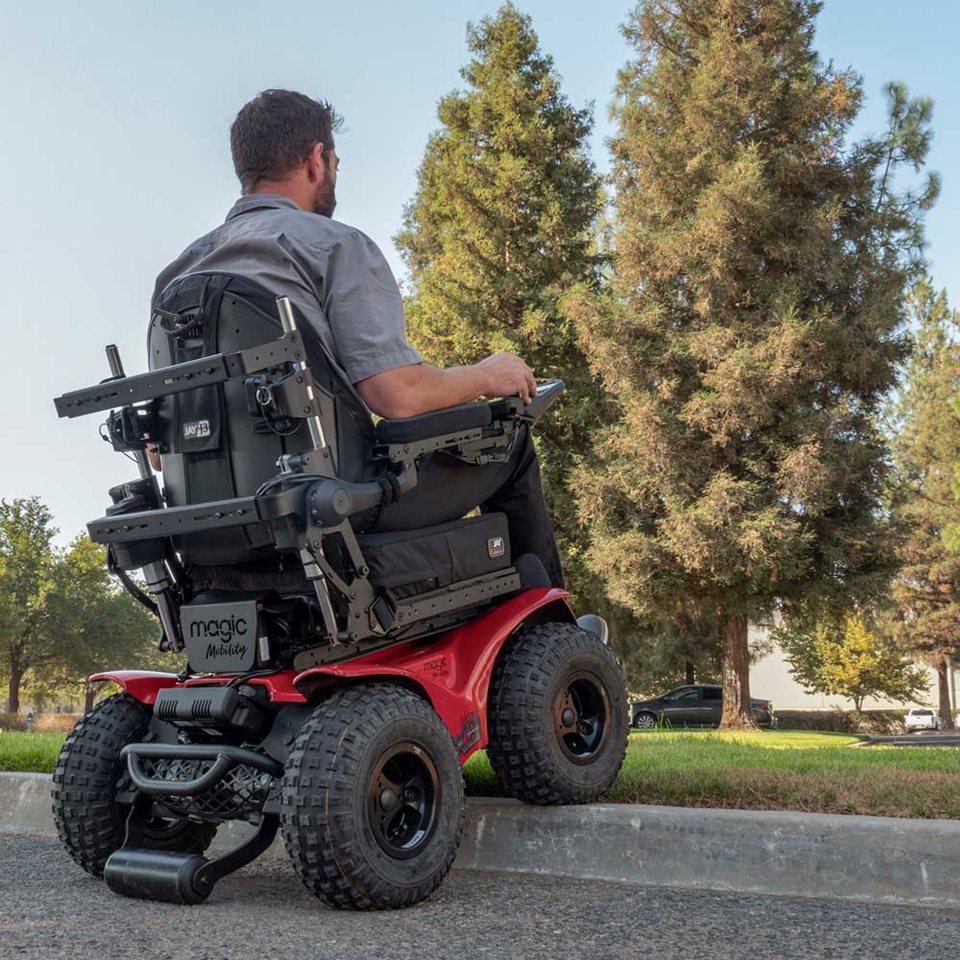
Magic Mobility Frontier V6
- Mid-wheel drive (MWD) for maneuverability.
- Articulating front bogie arms for climbing.
- Splash-resistant, LED lighting kit, 12″ power seat elevation.
Action Trackstander
- Only all-terrain wheelchair on the market that lets users stand while driving.
- Tank tracks (Type I or II) for mud, sand, snow.
- Adjustable seating, 4-point harness, tilt-on-the-fly.
- 20-amp battery charger, USB ports.
Outdoor Extreme Nomad Powerchair
- 350 lb capacity, adjustable recline.
- 6061 schedule-40 aircraft aluminum frame.
- Rear dual-shock suspension, marine-grade batteries.
- Wide 3-ply tires for stability.
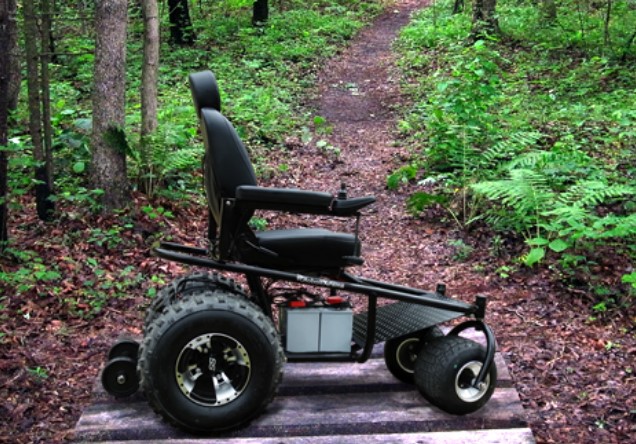
Outdoor Extreme Beach Cruiser
- Specifically designed for sand and beach.
- Wheeleez sand tires, corrosion-resistant powder-coated frame.
- Stainless steel hardware, marine-grade batteries.
Pride Mobility Jazzy 1450
- 600 lb weight capacity — heaviest-rider option on this list.
- Top speed 4.9 mph, range up to 16.5 miles.
- 14″ solid drive wheels, height-adjustable flip-up armrests.
Frequently asked questions
Do off-road wheelchairs really exist?
Yes. There’s a growing market of purpose-built rough terrain wheelchairs in both manual and powered versions.
Can a wheelchair work in gravel?
Standard wheelchairs struggle in gravel because their hard, narrow tires sink and snag. Rough terrain wheelchairs use larger, wider, low-pressure tires (or tracks) that float over gravel and distribute weight.
Will Medicare pay for a rough terrain wheelchair?
Usually no. Medicare classifies all-terrain wheelchairs as recreational rather than medically necessary. State Medicaid waivers occasionally work. Disability-focused grants are typically a more reliable funding path.
How much does a rough terrain wheelchair cost?
Manual chairs typically $3,500–$8,000. Powered models $10,000–$30,000+. See our 2026 all-terrain wheelchair price guide for the full breakdown.
Manual vs. powered — which is better?
Depends on rider’s upper-body strength, available helpers, and how you’ll transport the chair. Manual chairs are lighter, cheaper, and easier to transport but require an active rider or pushers. Powered chairs offer more independence on flat-to-moderate terrain but need a trailer.
Is the Extreme Motus waterproof?
The chair is corrosion-resistant aluminum and the tires float. Customers use it for lake swims, river crossings, and beach surf without issue.
Conclusion
Rough terrain wheelchairs are a game-changer for outdoor lovers facing mobility challenges. From the lever-driven GRIT Freedom Chair to the rugged Action Trackstander to our own Extreme Motus, there’s a chair for every situation. Use the quiz at the top of this page to narrow down the right match for your terrain, propulsion, budget, and transport needs.
Questions? Reach me directly:
Ryan Grassley · ryan@extrememotus.com · 801-683-9191
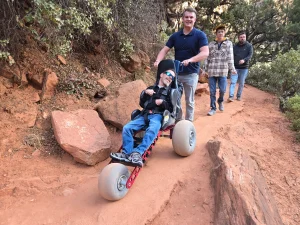
How it all started - Meet Sam & Ryan
Since 2019, Sam and Ryan have been demonstrating that nature is wheelchair accessible with the Extreme Motus All Terrain Wheelchair. From National Parks to Skateparks, their adventures prove that a manual off-road wheelchair can offer laughter and joy while navigating diverse terrains.
Join us as we continue to share these inspiring journeys.
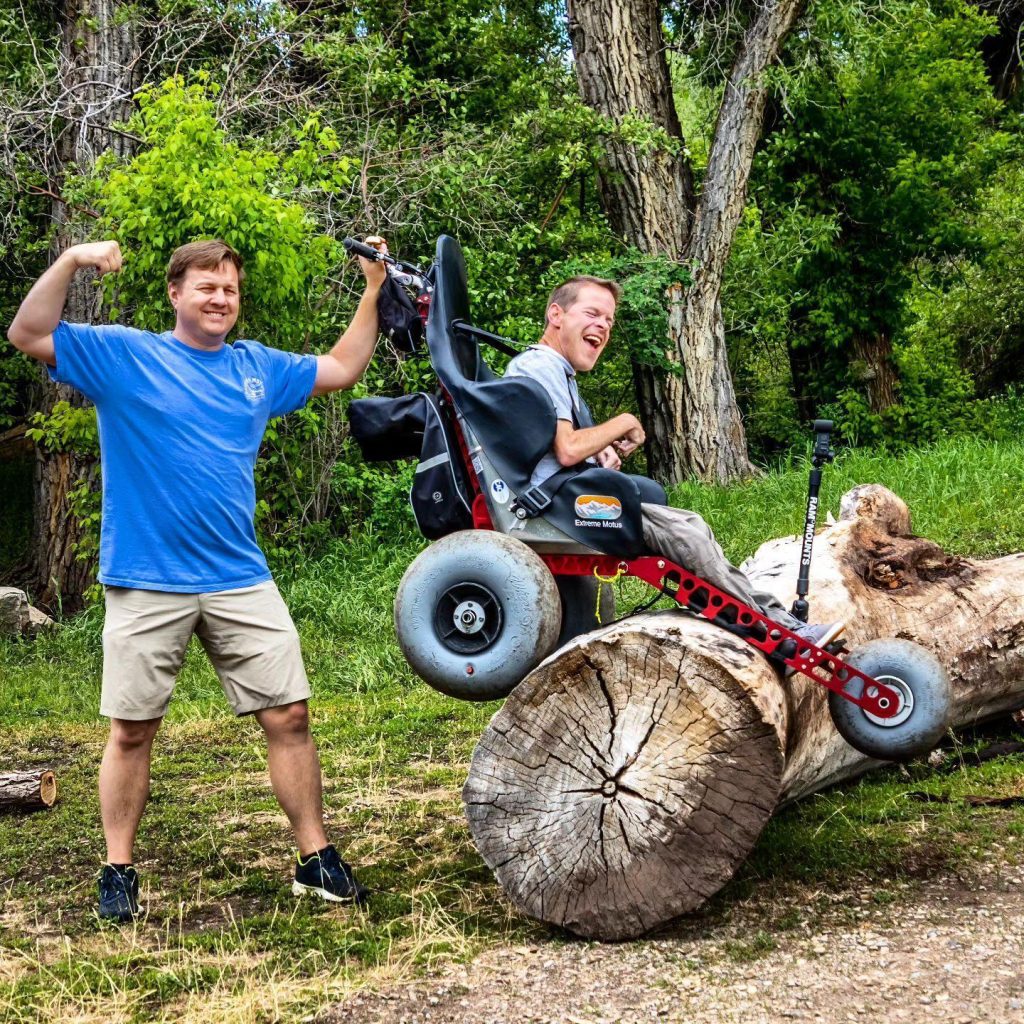
Discover Freedom with the Extreme Motus All Terrain Wheelchair
Light, comfortable, and compact, the Extreme Motus glides over sand, rocks, grass, gravel, and even floats in water.
It's more than a outdoor wheelchair; it's your ticket to freedom. Embrace the outdoors with confidence, knowing our off-road wheelchair is engineered for durability and ease of use.
Be the first to hear about new gear, upcoming adventures, and exclusive offers. As a welcome gift, you'll get a $100 coupon toward the Motus All-Terrain Wheelchair — delivered straight to your inbox.
By subscribing you agree to receive marketing communications from Extreme Motus, including product updates, promotions, and special offers. I understand I can unsubscribe at any time.