

Quick answer
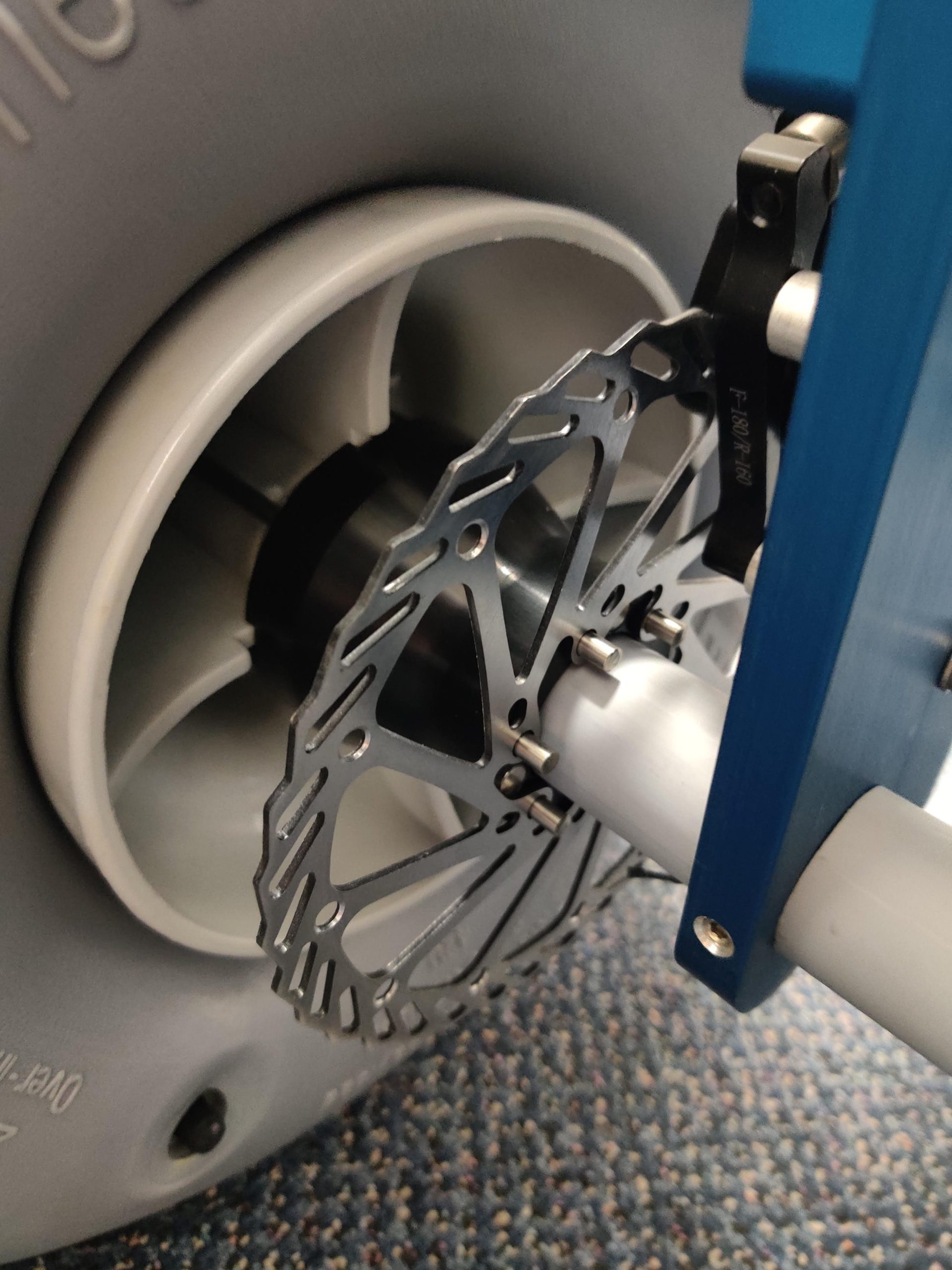
Yes — every Extreme Motus all-terrain wheelchair ships standard with hydraulic disc brakes on each rear wheel that double as parking brakes. To engage: pull back on the brake handle and push down on the locking pin. The brakes hold the chair on steep inclines, control downhill descents, and reduce strain on the person pushing. Unlike lever-style brakes that push a pad against the tire (common on daily wheelchairs), hydraulic disc brakes provide real stopping power even in mud, sand, or snow.
Parking brakes are one of the most-asked-about features on the Motus. The short answer is yes — every chair has them, they’re standard equipment, and they work better than what most daily wheelchairs use.
How the Extreme Motus brakes work
The Motus uses hydraulic disc brakes — the same kind you’ll find on a serious mountain bike. There’s an independent brake on each rear wheel, with squeeze handles mounted on the push bar.
To use them as parking brakes:
- Pull back on the brake handle to engage.
- Push down on the locking pin to lock it in the engaged position.
- To release: lift the pin and let the handle return to neutral.
Why this matters off-pavement
Most standard daily wheelchairs use lever-style brakes — essentially a metal pad that pushes against the tire when you flip a lever. They work fine on flat indoor floors. They’re nowhere near enough for steep trails, sandy banks, or icy hills.
Hydraulic disc brakes give you:
- Real stopping power on steep descents — the kind that protects the person pushing as much as the rider.
- Reliable hold on inclines — the chair won’t slowly creep when parked on a slope.
- Performance in wet, muddy, or sandy conditions where pad-on-tire brakes lose grip.
- Independent left-right control if you need to steer through tight turns by braking one side.
The tether strap (extra safety)
Every Motus also ships with a tether strap the caregiver can attach to their wrist. Even with reliable brakes, on steep terrain you want a physical connection to the chair as a backup. Belt and suspenders.
Customer report: Arches National Park
From a customer’s email after a trip to Arches: “When hiking in Arches National Park, the tires gripped the red rock so well, and the brakes were so effective that it felt like the chair could stop on a nearly vertical descent.”
That kind of confidence is exactly what hydraulic disc brakes are for.
FAQ: Parking brake on the Extreme Motus
Are the parking brakes an extra-cost option?
No. They’re standard on every Motus. There is nothing to add at checkout — the brakes come pre-installed and tested.
Do hydraulic brakes need maintenance?
Minimal. Inspect the brake pads every 6–12 months of regular use and replace if worn. Bleed the hydraulic line if the lever feels spongy (rare — mountain bike shops do this routinely). Keep the rotors free of grease and oil.
Can I replace the brake pads myself?
Yes — they’re standard mountain-bike-style brake pads. Any local bike shop can do it cheaply, or you can order pads online and swap them in 10 minutes with basic tools.
What happens if a brake fails on the trail?
You still have the second brake (one on each rear wheel) plus the tether strap. Hydraulic disc brake failures are rare and usually preceded by warning signs (spongy lever, fluid leak). Inspect before long descents.
How does the Motus brake compare to other all-terrain wheelchairs?
Most premium all-terrain chairs (GRIT, Vipamat, etc.) use disc brakes too. Cheaper or older designs sometimes still use drum or pad-on-tire brakes — avoid those for serious off-pavement use. 2026 price guide includes brake type per model.
Questions?
If you have specific questions about the brakes or anything else on the Motus, get in touch.
Ryan Grassley
Owner, Extreme Motus
ryan@extrememotus.com · 801-683-9191
See the Extreme Motus · 2026 Price Guide
How it all started - Meet Sam & Ryan
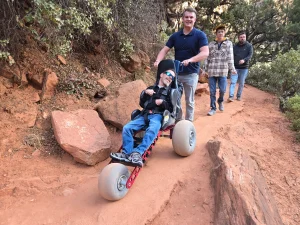
Since 2019, Sam and Ryan have been demonstrating that nature is wheelchair accessible with the Extreme Motus All Terrain Wheelchair. From National Parks to Skateparks, their adventures prove that a manual off-road wheelchair can offer laughter and joy while navigating diverse terrains.
Join us as we continue to share these inspiring journeys.
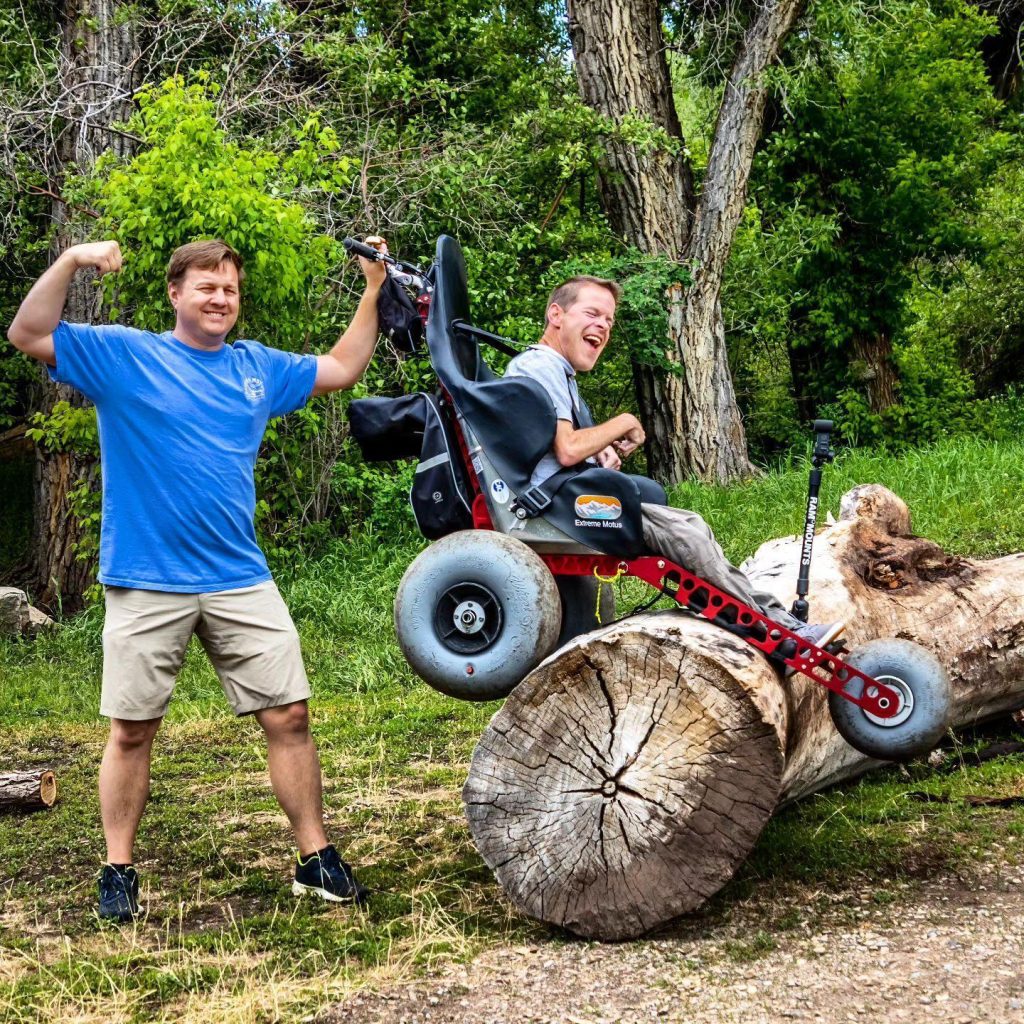
Discover Freedom with the Extreme Motus All Terrain Wheelchair
Light, comfortable, and compact, the Extreme Motus glides over sand, rocks, grass, gravel, and even floats in water.
It's more than a outdoor wheelchair; it's your ticket to freedom. Embrace the outdoors with confidence, knowing our off-road wheelchair is engineered for durability and ease of use.
Be the first to hear about new gear, upcoming adventures, and exclusive offers. As a welcome gift, you'll get a $100 coupon toward the Motus All-Terrain Wheelchair — delivered straight to your inbox.
By subscribing you agree to receive marketing communications from Extreme Motus, including product updates, promotions, and special offers. I understand I can unsubscribe at any time.