

Find your all-terrain wheelchair
Quick answer
The Extreme Motus is a 55-lb manual all-terrain wheelchair with a CNC-machined aluminum frame, three large low-pressure Wheeleez balloon tires, hydraulic disc brakes on both rear wheels, and a Kirkey Racing aluminum seat in three sizes. $4,500 standard ($375 flat shipping). 350 lb frame capacity. Folds in seconds with two pins. Rolls over sand, snow, gravel, dirt, rocks, and shallow water (yes, it floats). Designed and built in Utah. Backed by a 30-day money-back guarantee.
This is the comprehensive product post — every detail and frequently asked question about the Extreme Motus all-terrain wheelchair. If you’re researching the Motus, this is the page to bookmark.
What is the Extreme Motus?
The Extreme Motus is a lightweight, manual, three-wheeled wheelchair built for the outdoors. Large, low-pressure Wheeleez balloon tires give it a smooth ride over sand, gravel, rocks, grass, snow, and shallow water. The aluminum frame is light enough that one person can load it into a sedan trunk. Disc brakes on both rear wheels give you confidence on steep descents.
The features matter, but here’s the thing that matters more: the most beautiful places in this country don’t have sidewalks. They have trails. When you exclude a person with a mobility challenge from those places, you exclude their entire family. The Motus is built so the whole group can go together.
Lightweight, durable aluminum frame
The frame is made from CNC-machined corrosion-resistant aluminum — solid bars cut on our lathe and welded into the structure you see. You should feel confident pushing the Motus over and through obstacles knowing the frame can take a beating and keep going for years.
Sam and I have put our Motus through every kind of terrain together: grass, gravel, rocks, sand, mud, snow, pump tracks, skateparks, national parks, and state parks. Sam’s chair has its battle scars — a few scratches here and there — but it’s still going strong after 5+ years of hard living.
The frame has a 350 lb weight limit.
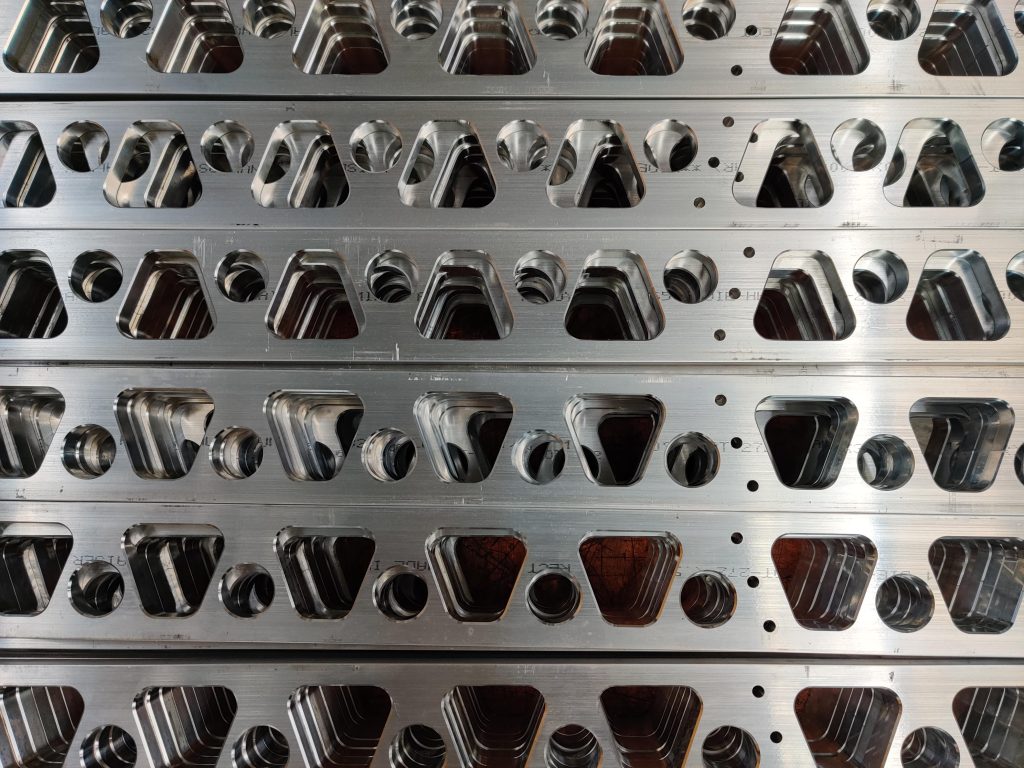
Powder-coated finish
The bare aluminum frames go to our powder coater for finish. We love the bright, consistent color powder coating gives. The first Motus chairs were anodized, but anodizing is a bit like dyeing an Easter egg — the longer it sits in the acid, the darker the color. That created an annoying problem where some parts on a single frame came back a slightly different shade than others.
Powder coating fixes that. Every part on every frame gets the same finish. We keep red and blue frames in stock. If you want a custom color we can make it happen — it adds some build time depending on how busy our powder coater is, plus an additional $400.
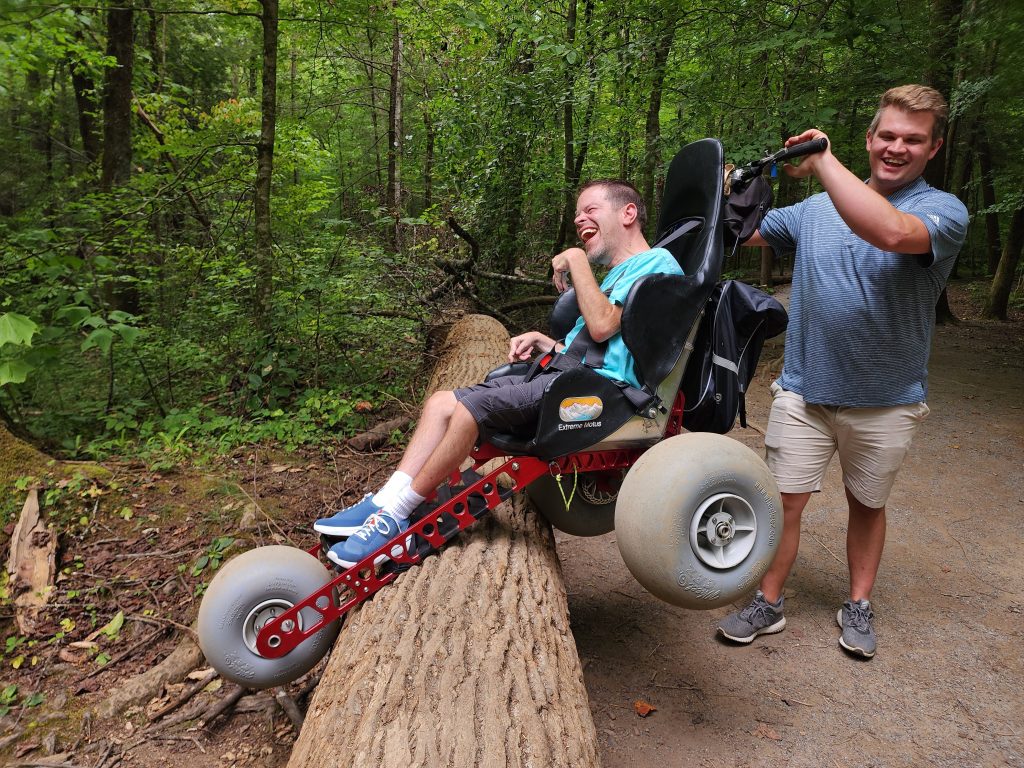
Kirkey Racing aluminum seat
The seat is also made from lightweight aluminum, manufactured by Kirkey Racing — a name you’ll recognize if you’ve ever built a custom race car. Race cars are obsessed with weight, and so are we. The Motus is a manual chair, so every ounce we save makes a real difference when you’re pushing up a hill.
The seat cover is removable without tools. After a beach day, slip it off, hang it up, and let it dry overnight. Way easier than trying to clean a built-in fabric seat.
Three seat sizes
You can order the Motus seat in three widths:
- Small — 14″ — Riders up to 80 lb (good for younger kids)
- Medium — 16″ — Riders 80–150 lb (most adults and teens)
- Large — 18″ — Riders 150–250 lb
Sam, who stars in our videos, weighs about 90 lb and uses a medium. I weigh around 200 lb and prefer the large for comfort, but I can squeeze into a medium. If you’re buying for a child who will keep growing, get the medium and add side padding now — you can remove the padding as they grow into the chair.
Extra-long frame for tall riders
If the rider is over 6 feet tall, get the extra-long frame option. It adds 5 inches to the length of the chair so taller riders aren’t cramped. Add-on cost: $200.
Wheeleez low-pressure tires
The bigger a wheel is, the easier it rolls over an obstacle. Our large, low-pressure Wheeleez tires let the Motus roll across grass, gravel, rocks, ice, snow — and float in shallow water.
At about 4 PSI, Wheeleez tires also act as the chair’s suspension. In a standard wheelchair, even a cruise around the neighborhood can be rough because of uneven sidewalks. With the Motus you stop feeling every crack in the sidewalk or rock on the trail.
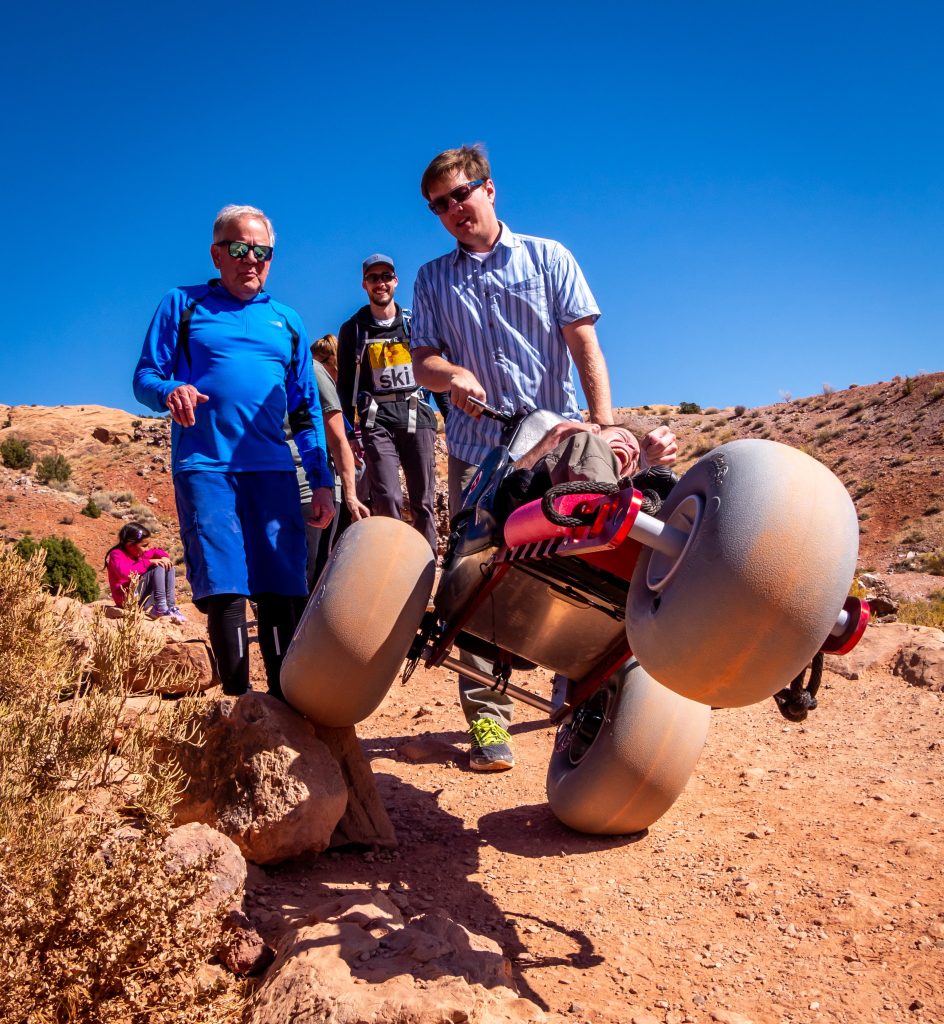
The tires are made from durable polyurethane. In 5+ years of adventuring, Sam and I have had exactly two flats — one after big jumps at a mountain bike park, and one from a Utah goat-head thorn. On serious long-distance trips in remote spots, we carry a spare. (You can add one to your order in our online store.)
With such low pressure, the tires are soft enough to roll over most sharp rocks and thorns without puncturing. They mold around obstacles instead of trying to resist them.
How to repair a flat tire
If you do get a flat, you can repair it with a soldering iron by melting the polyurethane back together. Full instructions are in our flat-tire repair guide, but the short version:
- Inflate the tire and find the hole using soapy water (look for bubbles).
- Mark the hole with a permanent marker.
- Melt the hole back together with a soldering iron.
- Let it cool, retest, and you’re back on the trail.
Adjustable handlebar
The push-handle height adjusts to fit whoever’s pushing. Loosen the Allen bolt under the stem, slide to your happy place, retighten. Takes 30 seconds with a multi-tool. Keep a small mountain-bike multitool in the handlebar bag — you’ll be glad you have it on the trail.
Independent disc brakes
The brakes are excellent. Two hydraulic disc brakes — one on each rear wheel — function as both regular brakes and a parking brake lock. They give you serious stopping power because they’re mounted on the rear wheels, directly under the rider, where the center of gravity is.
On the red rock sandstone of southern Utah, the Motus has what feels like unlimited stopping power because the tires grip the rock so well and the brakes are so strong.
In my experience, it’s actually easier to hike downhill with the Motus than without one. Hiking downhill is hard on the knees because you spend every step braking yourself with your quads. With the Motus, you have something to hold onto and you can use the chair’s brakes to control your descent — which takes pressure off your knees and lets you come down in a safe, controlled manner.
Each wheel has its own brake handle, and they operate independently. Squeezing one harder than the other helps you steer left or right going downhill.
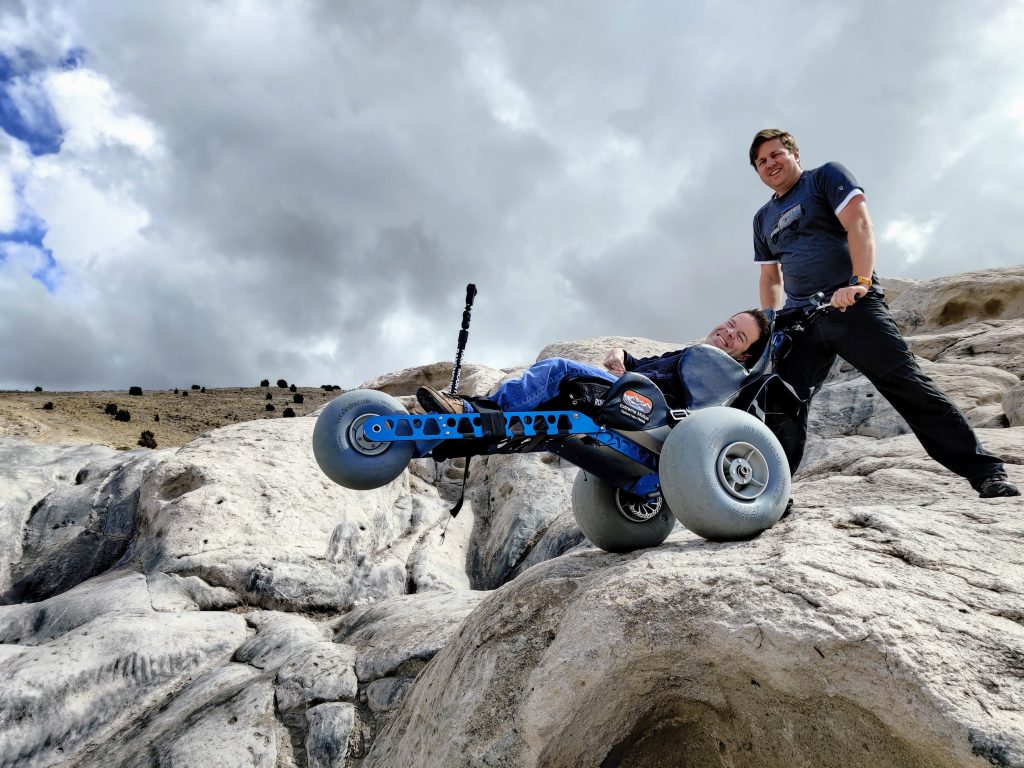
Storage: water bottles, bags, and accessories
Water bottle cages
Every Motus comes with two standard-size water bottle holders, one on each side of the spine that runs up to the handlebars behind the seat.
Handlebar bag
Small fanny-pack-sized bag mounted on the handlebars. Perfect for snacks, your phone, the multi-tool, and a small stack of business cards (you’ll get stopped on the trail and asked about the chair). $30 add-on.
Large pannier (seat bag)
The bag that mounts behind the seat is essentially one side of a bicycle pannier. It hangs from a metal rod bolted to the seat spine and is held steady with a bungee cord that attaches to the rear axle. Big enough for a light jacket, lunch, camera gear, drone, etc. The pannier is a roll-top bag — it handles rain, but it isn’t fully waterproof. Remove it before going into water or your gear will get soaked. $60 add-on.
Folding for storage and transport
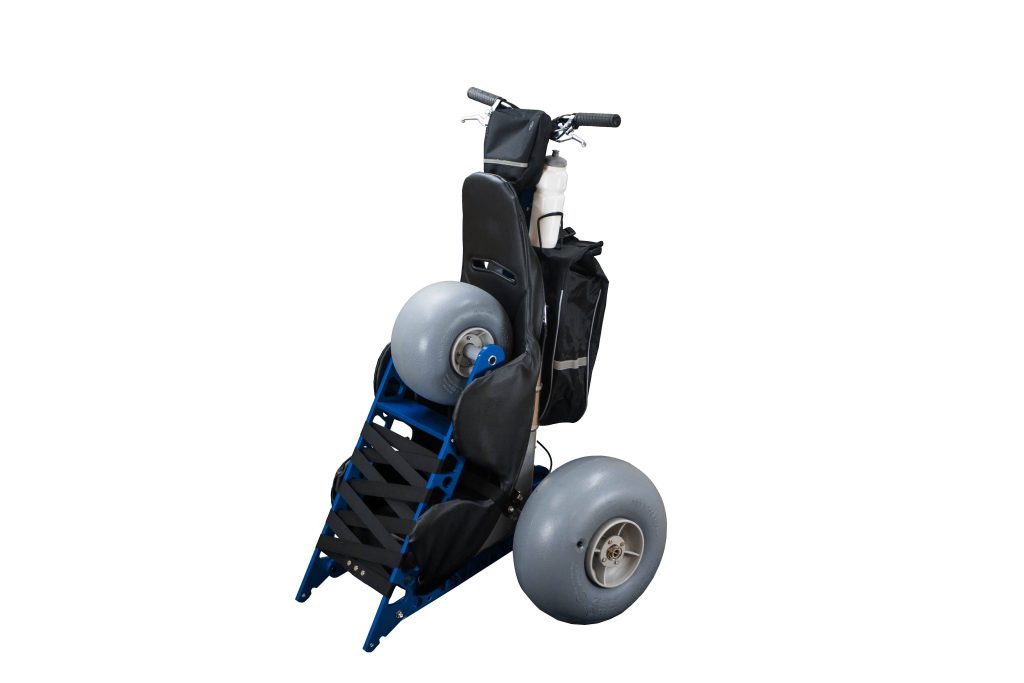
When you’re done with your adventure and want to put the chair away, remove two pins from the frame and the chair folds in seconds. The pins are tethered to the frame with small ropes so they don’t get lost.
Reclining angle adjustment
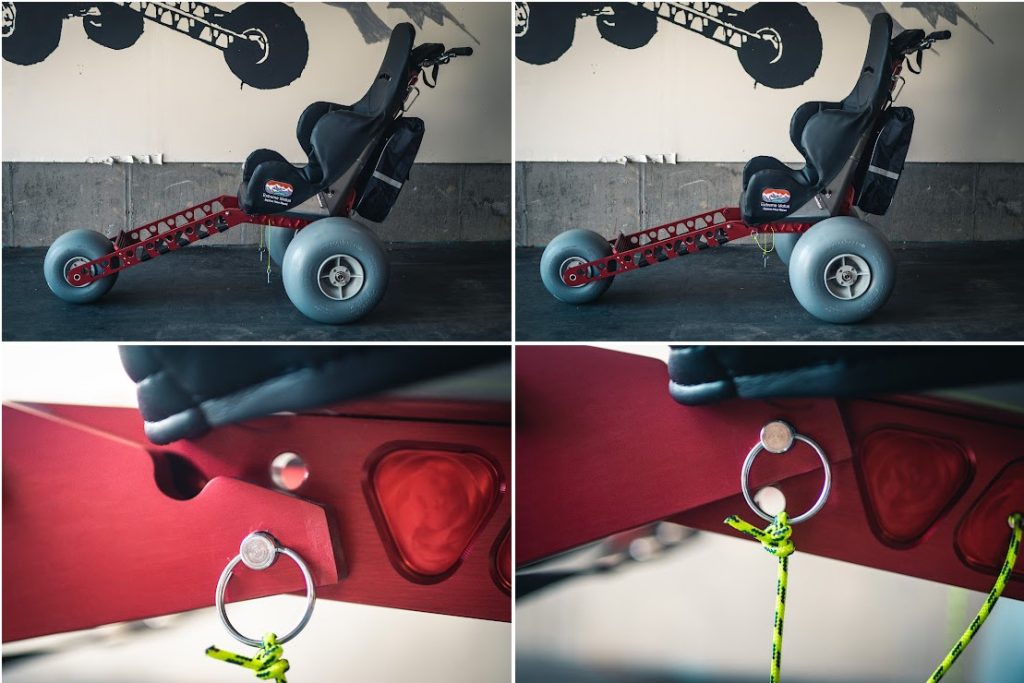
Multiple holes in the frame let you slightly change the seat angle. At its most reclined, the chair sits back about 30 degrees with the rider’s legs more bent. In the more upright configuration, the rider sits taller with straighter legs. You’ll want to experiment to find which is most comfortable for your specific rider. Takes about a minute to swap between them.
Removing wheels for transport
The wheels attach to the brakes the same way race cars swap tires at a pit stop. Pull the pin from the axle, mind the spacer, slide the wheel off. Done.
To put a wheel back on, slide it onto the axle and align the pins in the hub on the back side of the wheel with the holes in the disc brake. The hub has magnets, so you’ll feel the disc snap into the right position.
Pushing the Motus
How easy or hard the Motus is to push depends on a few factors:
- How heavy is the rider?
- How strong is the person pushing?
- What kind of terrain are you on?
- Uphill or downhill?
- Loose sand or hard-packed gravel?
- Are you alone, or do you have help?
The honest answer: the Motus is as easy or as hard as the adventure you choose. If you want hardcore off-road adventures, it can handle anything you throw at it. If you want relaxed long walks on the beach, it’s perfect for that too.
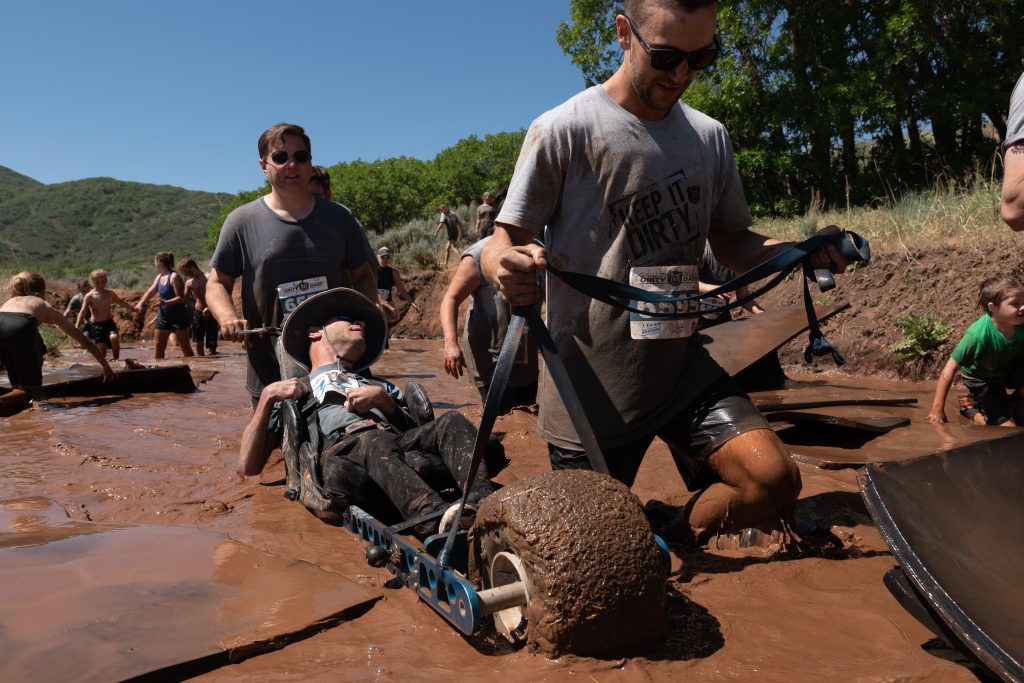
For tougher trails, we often have more than one person pushing — shoulder to shoulder with one person on each side of the handlebar. The frame has multiple attachment points where you can tie ropes for people to pull from the front, too.
On the steep sections of the Delicate Arch trail, we had 2 people pushing and 2 pulling — both to lighten the load and to keep us all from tiring out. What usually happens with 4 helpers is everyone feels like they’re not doing enough, so they speed up. Then everyone speeds up. Next thing you know, the four of you are running up a mountain. I usually have to stop and remind everyone to keep a steady pace.
As someone who has pushed and pulled the Motus a lot, I can say that while it’s a workout, it’s also a deeply rewarding experience. We’ve made friends on dozens of adventures who jump in to help Sam make it to the top of a trail. People are happy to help, and their hike becomes more meaningful because of the chance to do something for someone else.
Turning the Motus
The front wheel is fixed (no pivoting steering), so you turn the Motus by popping a small wheelie and pivoting on the rear wheels. This is easy to do because the center of gravity is over the back wheels.
It takes a little practice, but it’s like riding a bike — once you have the hang of it, it’s automatic.
Floating in water
The Wheeleez tires are large and buoyant enough to keep the chair afloat in shallow water. I’ll never forget the first time we took Sam blasting across the sand and into the water at our nearby reservoir. He was having so much fun playing in the water instead of being stuck baking on the shore.
Yes, the Motus floats. No, it is not an ocean-going vessel or a life-saving device. The rider’s weight makes the chair top-heavy in water — if the person pushing lets go, the chair will tip over.
Stay in calm, shallow water where the person pushing can keep both feet on the ground and stay completely in control. We also recommend using a life jacket and unbuckling the seat belt any time you go into amphibious mode.
Pricing
Standard Extreme Motus all-terrain wheelchair: $4,500.
That includes your choice of red or blue powder coat and your choice of small, medium, or large seat. Flat shipping fee of $375.
Optional accessories and upgrades
- 5-point harness: $135 — for riders with limited trunk control
- Extra-long frame: $200 — adds 5 inches for riders 6’+
- Custom powder coat color: $400 — pick any color, adds build time
- Handlebar bag: $30 — fanny-pack-sized for quick-access items
- Large pannier: $60 — water-resistant roll-top for jackets, lunch, camera gear
- Motus Protector: $180 — extra protection layer for the chair
- Motus Mover: $350 — easier-transport attachment
- Camera mount widget: $20 — RAM-compatible mount for camera, fishing pole, tablet
- Spare tire: add to order for remote-trip insurance
For the full pricing breakdown vs. competitor chairs, see our 2026 All-Terrain Wheelchair Price Guide.
30-day money-back guarantee
If the Motus isn’t everything you hoped, return it within 30 days for your money back. Keep the original shipping box for the full 30 days — you’ll need it for return shipping if you decide to send the chair back. Return shipping is paid by the customer.
Frequently asked questions
What does the Extreme Motus all-terrain wheelchair cost?
$4,500 for the standard chair plus $375 flat shipping. Accessories and options are itemized above.
How heavy is the Extreme Motus?
55 lbs. Light enough to load into a sedan trunk by yourself once it’s folded.
What’s the rider weight limit?
350 lb frame capacity. Seat sizes have their own ranges (small up to 80 lb, medium 80–150 lb, large 150–250 lb).
Is the Motus self-propelled or caretaker-pushed?
Caretaker-pushed. For self-propelled options, see our GRIT vs. Motus comparison.
Can the Motus go in water?
Yes — it floats in shallow water with a caretaker holding the chair. Stay in calm water no deeper than the seat, use a life jacket.
Does the Motus fit in a car?
Yes. Pull two pins, fold in half, fits a sedan trunk.
What terrain can the Motus handle?
Sand, gravel, dirt, mud, snow, grass, rocky trails, and shallow water.
How do I fix a flat tire?
Find the hole with soapy water, mark it, melt it back together with a soldering iron. Full guide: How to repair a flat Wheeleez tire.
What sizes does the Motus come in?
Three seat widths: small (14″), medium (16″), large (18″). Frame length can be extended 5″ for taller riders.
How long does shipping take?
Most orders ship within 1–2 weeks for in-stock colors (red and blue). Custom colors add build time.
Is there a warranty?
Yes, plus a 30-day money-back guarantee. Keep the original shipping box for the first 30 days.
Can children use the Motus?
Yes — the small seat (14″) fits riders up to 80 lb. For a growing child, the medium with extra side padding (removed as they grow) is often the best option.
Will insurance cover the Motus?
Insurance rarely covers all-terrain chairs. Most are paid out of pocket or funded through grants and nonprofits. Just ask — we’re happy to point you toward funding resources.
Contact
If you have questions, please don’t hesitate to call or text me directly:
Ryan Grassley
Phone: 801-683-9191
Email: ryan@extrememotus.com
If our chair isn’t the right fit for you, I’ll tell you and point you toward a better one. It’s in everyone’s interest that you get the right wheelchair for your situation.
How it all started - Meet Sam & Ryan
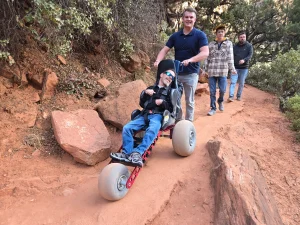
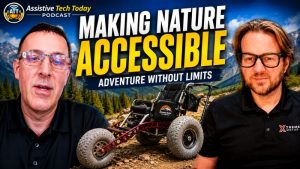
Since 2019, Sam and Ryan have been demonstrating that nature is wheelchair accessible with the Extreme Motus All Terrain Wheelchair. From National Parks to Skateparks, their adventures prove that a manual off-road wheelchair can offer laughter and joy while navigating diverse terrains.
Join us as we continue to share these inspiring journeys.
Discover Freedom with the Extreme Motus All Terrain Wheelchair
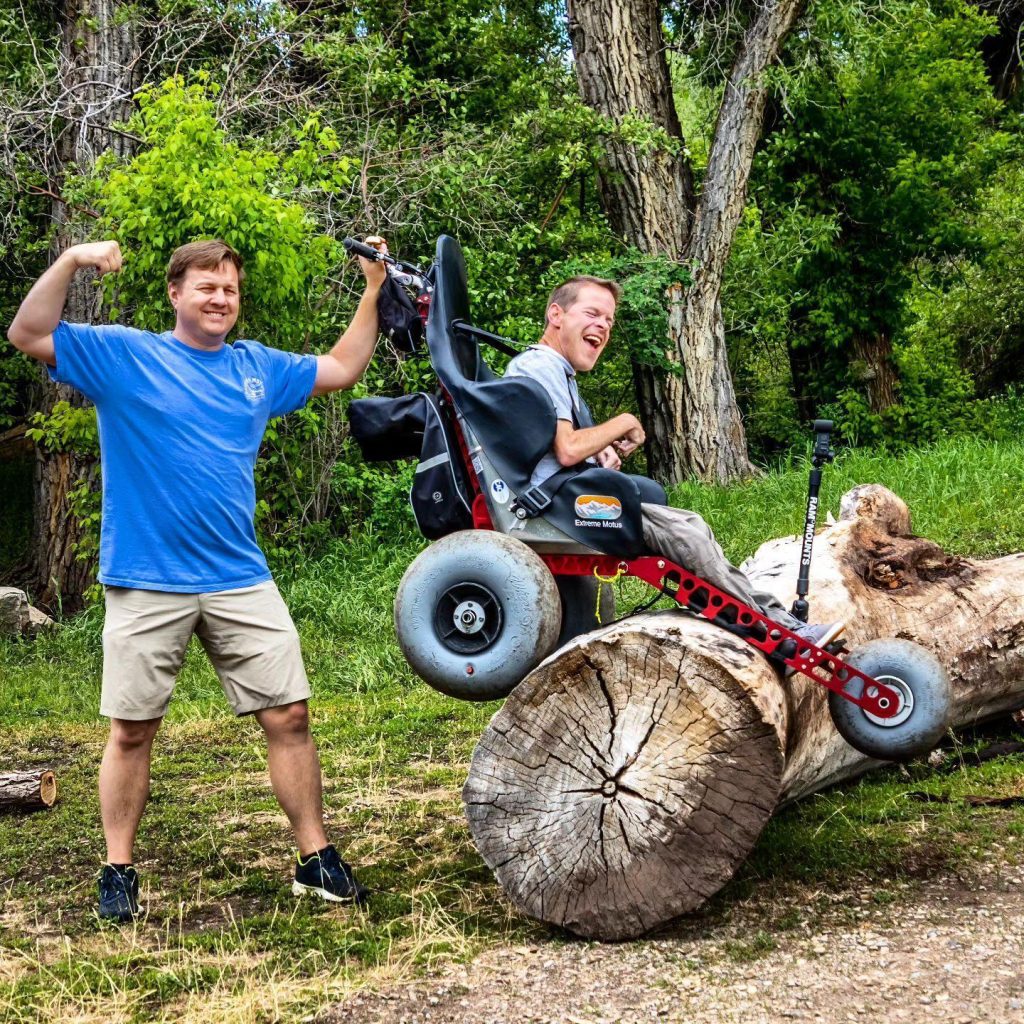
Light, comfortable, and compact, the Extreme Motus glides over sand, rocks, grass, gravel, and even floats in water.
It's more than a outdoor wheelchair; it's your ticket to freedom. Embrace the outdoors with confidence, knowing our off-road wheelchair is engineered for durability and ease of use.
Be the first to hear about new gear, upcoming adventures, and exclusive offers. As a welcome gift, you'll get a $100 coupon toward the Motus All-Terrain Wheelchair — delivered straight to your inbox.
By subscribing you agree to receive marketing communications from Extreme Motus, including product updates, promotions, and special offers. I understand I can unsubscribe at any time.